Standard dehumidifiers stop removing moisture in cold rooms below 15°C.
If you run a cold room in Australia, you have probably noticed condensation forming on walls, ceilings and product packaging despite the dehumidifier running at full power. The problem is almost always the technology inside the unit.
This article covers why refrigerant dehumidifiers fail in cold environments, which type actually works, and how to size a cold room dehumidifier for Australian conditions.
Need help choosing a cold room dehumidifier in Australia? Browse Moisture Cure Commercial’s range of desiccant dehumidifiers built for sub-zero to +50°C operation, or contact the team for sizing advice.
Why Most Cold Room Dehumidifiers Fail Below 15°C
Refrigerant dehumidifiers work by drawing warm, humid air over chilled evaporator coils. Moisture condenses on the coils, drips into a collection tray, and drier air returns to the room.
That process depends on a temperature gap between the incoming air and the coils. Below about 15°C, the coils drop below freezing and ice over.
Once the coils frost, the unit enters a defrost cycle. It stops dehumidifying, runs a heater to melt the ice, then restarts.
In a cold room at 2–5°C, a typical refrigerant dehumidifier spends more time defrosting than extracting moisture.
| Operating Temperature | Refrigerant Performance | Desiccant Performance |
|---|---|---|
| 20–30°C | Full rated capacity | Full rated capacity |
| 10–20°C | 50–70% of rated capacity | Full rated capacity |
| 0–10°C | Near zero extraction, constant defrost | Full rated capacity |
| Below 0°C | Cannot operate | Full rated capacity down to -20°C |
The rated extraction figures on a refrigerant unit are measured at 30°C and 80% RH. At cold room temperatures, the real-world figure can drop to less than 10% of the spec sheet number.
Why Desiccant Dehumidifiers Work in Cold Rooms
Desiccant dehumidifiers use a completely different mechanism. A slowly rotating wheel coated in silica gel adsorbs moisture from the process air stream without relying on condensation or coils.
Because there are no coils to freeze, desiccant units operate consistently from -20°C to +50°C. Performance at 2°C is the same as performance at 25°C.
- No defrost cycles. The unit runs continuously with no downtime for ice removal
- Lower achievable humidity. Desiccant units can reach 10–15% RH, compared to 25–30% RH for refrigerant models
- Regeneration heat stays outside. The hot reactivation air is ducted out of the cold room, so the unit does not warm the space
- Consistent extraction rate. The litres-per-day figure on a desiccant unit holds true across the full temperature range
For any cold room operating below 15°C in Australia, desiccant is the only technology that delivers reliable, continuous dehumidification.
How to Size a Cold Room Dehumidifier in Australia
Under-sizing is the most common mistake facility managers make when selecting a cold room dehumidifier. A unit sized for the room volume alone will fail if door traffic and air infiltration are not factored in.
The four inputs that determine correct sizing are:
- Room volume (m³). Length × width × height of the cold room. Larger rooms need proportionally more extraction capacity.
- Operating temperature (°C). A cool room at 4°C generates less moisture load from infiltration than a freezer at -20°C, but both require desiccant units.
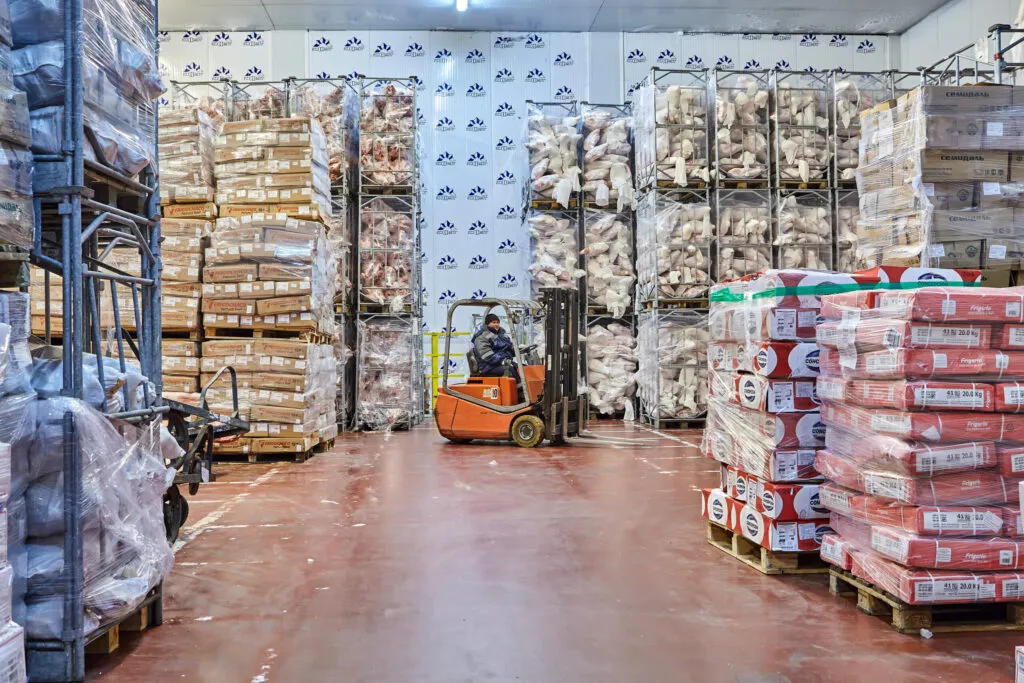
- Door opening frequency. Every time the door opens, warm ambient air rushes in. A busy distribution cold room with forklift traffic every few minutes can see moisture entry of 40+ kg per day from door openings alone.
- Product moisture load. Fresh produce, meat on hooks and palletised goods all release moisture. The type and volume of stored product changes the total humidity load significantly.
Moisture Cure Commercial includes expert sizing advice with every enquiry. The team calculates the moisture load based on your specific room dimensions, temperature, door traffic pattern and stored product type. There is no guesswork involved.
Where to Install a Dehumidifier in a Cold Room
Placement affects performance as much as sizing. A correctly sized unit in the wrong position will underperform because it processes air that is already dry while leaving the wet zone untreated.
- Intake position. Place the air intake at least 4 metres from the main doorway. Air closest to the door is the wettest, and the unit needs to pull that air through the treatment zone.
- Discharge position. Blow the dried air above the door passage on the cold side. This creates a dry air curtain that reduces moisture entry when the door opens.
- Regeneration exhaust. The hot reactivation air from a desiccant unit must be ducted outside the cold room. Venting it inside the cold room defeats the purpose by adding heat.
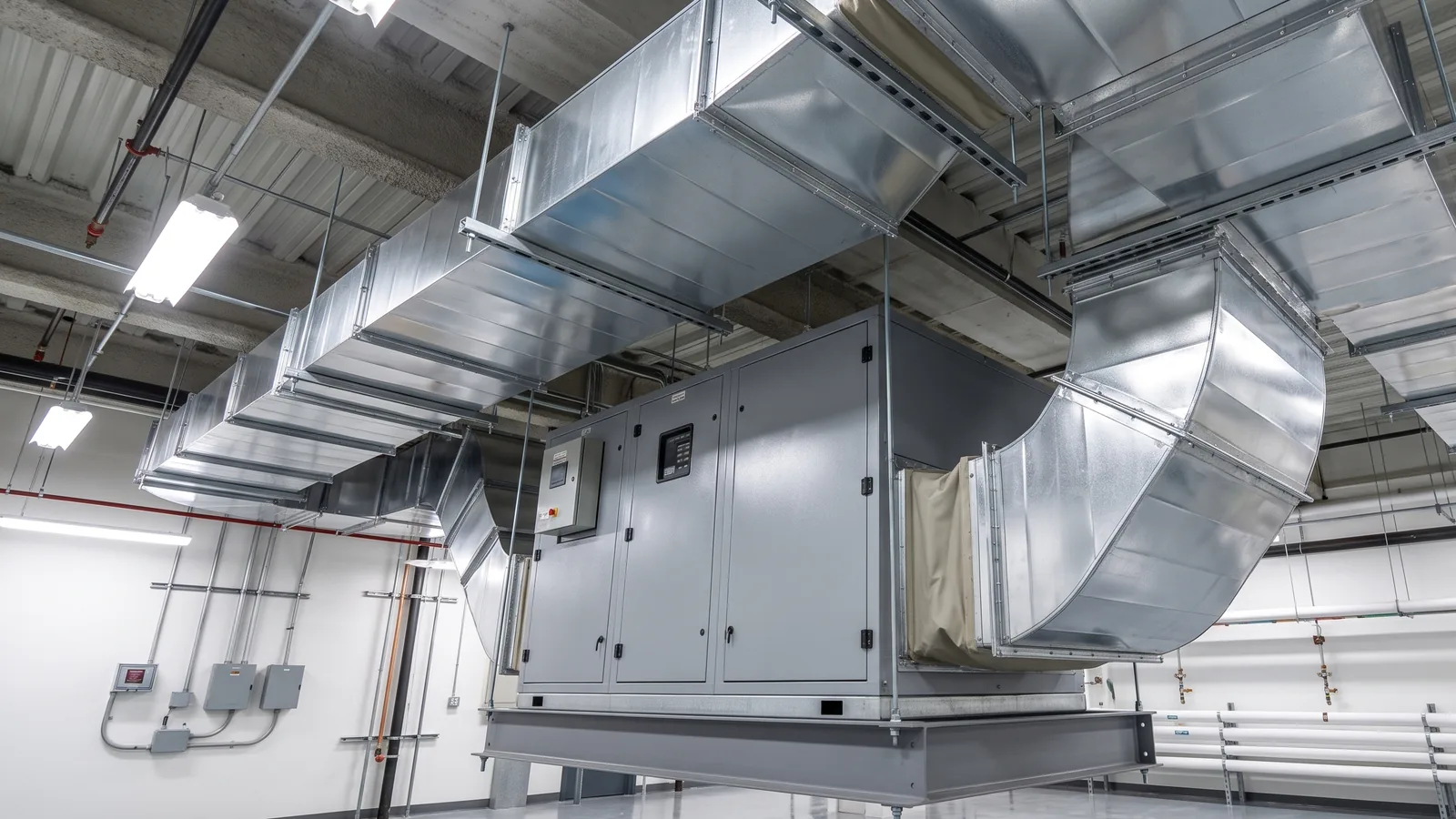
- Ducted option. For cold rooms with limited floor space, ducted dehumidifiers sit outside the cold room with insulated supply and return ducts running through the wall.
Getting this wrong is expensive. A unit pulling dry air from the far wall while condensation forms at the door does nothing to fix the problem.
Cold Room Humidity Problems You Cannot Ignore
Excess humidity in a cold room creates operational problems that compound over time. The longer the issue persists, the more expensive it becomes.
- Floor icing. Condensation freezes on the floor, creating a slip hazard for staff and forklifts. This is a workplace safety issue that can lead to serious injury claims.
- Evaporator frost build-up. The cold room’s refrigeration coils work harder to maintain temperature when coated in frost. Energy consumption increases and compressor lifespan decreases.
- Packaging damage. Cardboard cartons absorb moisture, soften and collapse. Product stored in damp packaging arrives damaged, triggering returns and customer complaints.
- Food safety compliance. Food Standards Australia New Zealand requires temperature-controlled storage to maintain specific conditions. Excess humidity contributes to bacterial growth and mould.
- Pharmaceutical storage. TGA-regulated cold rooms must maintain documented temperature and humidity ranges. Condensation on product packaging is a compliance failure.
A properly sized desiccant dehumidifier eliminates all of these issues. The cost of the unit is a fraction of the combined cost of product damage, energy waste and compliance risk.
What to Ask Before Buying a Cold Room Dehumidifier
Spec sheets for commercial dehumidifiers are measured under ideal conditions that bear no resemblance to a cold room. The numbers that matter are the ones at your actual operating temperature.
Before committing to a unit, ask these questions:
- What is the moisture extraction rate at my cold room’s operating temperature, not at 30°C and 80% RH?
- Is the unit rated for continuous 24/7 duty cycles, or does it need rest periods?
- How is regeneration heat managed? The exhaust must be ducted outside the cold room.
- What is the expected energy consumption at my operating conditions?
- Does the supplier provide site-specific sizing calculations, or are they quoting from a generic table?
- What warranty applies, and does it cover the desiccant rotor as well as the motor and housing?
A supplier who cannot answer these questions at your specific temperature and humidity conditions is selling a box, not a solution.
Choosing a cold room dehumidifier in Australia comes down to matching the technology to the temperature. Below 15°C, desiccant is the only option that delivers reliable, continuous moisture removal.
Moisture Cure Commercial has over 20 years of experience sizing humidity control systems for cold rooms, cool rooms and freezer stores across Australia. YAKE desiccant units operate from -20°C to +50°C, and every enquiry includes expert sizing advice based on your specific facility.
Contact the team for a consultation or site assessment.