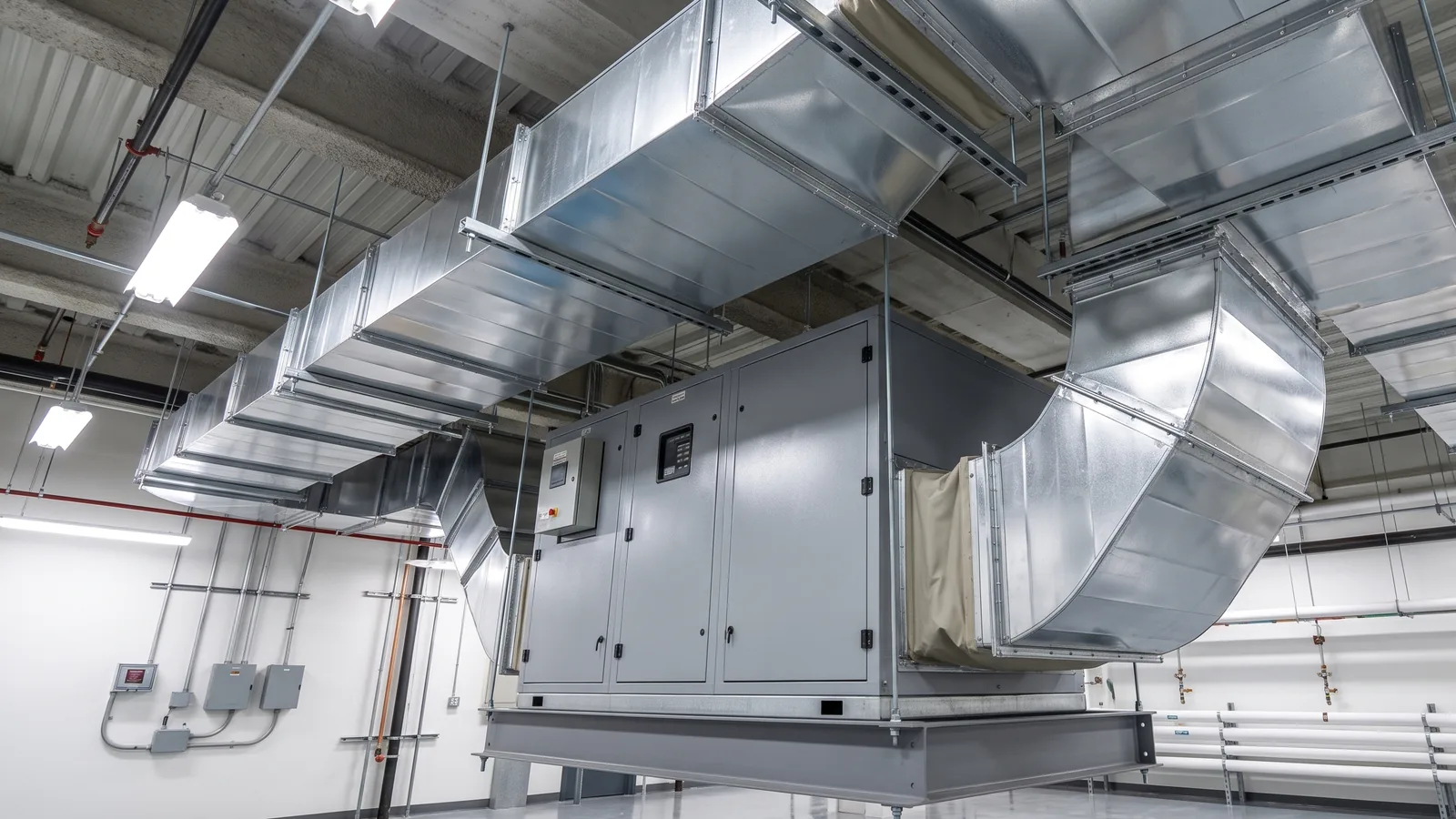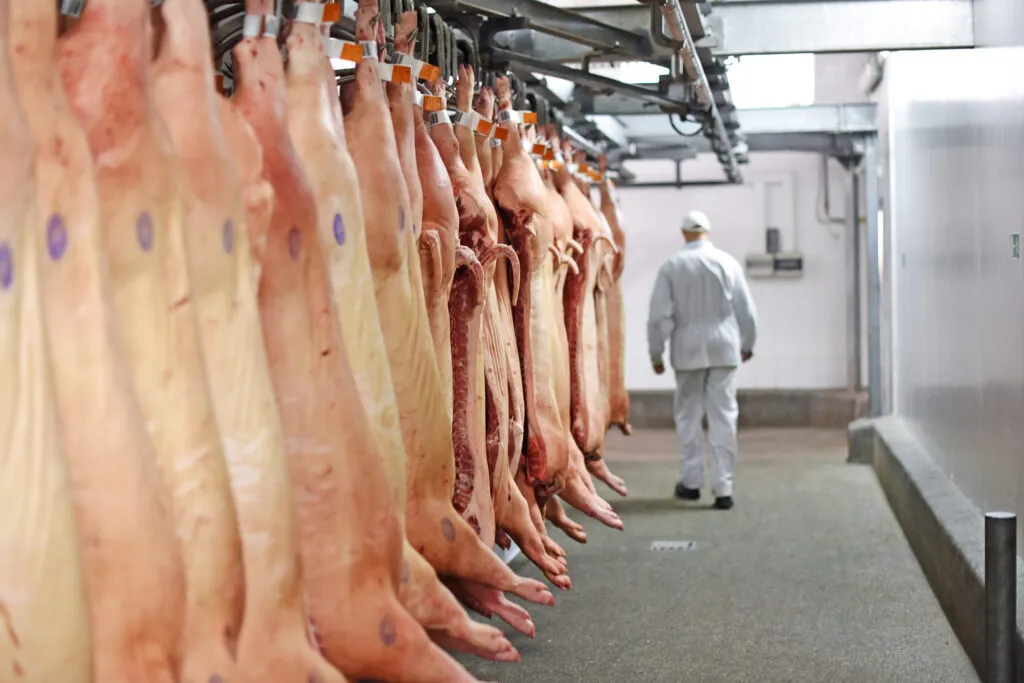
Food processing humidity control means managing moisture by production zone, with enough control to protect exposed food, packaging and cold surfaces.
Condensation above a conveyor needs a different response from dough drying in a proving room. Start with the product requirements, room temperature and source of moisture before choosing equipment.
This article covers product-specific humidity targets, cold-room equipment, washdown drying, Australian requirements and facility monitoring.
Moisture Cure Commercial can help assess the moisture load and select commercial dehumidifiers for food processing facilities.
What Food Processing Humidity Control Involves
Humidity control in food processing means maintaining conditions suited to each production zone. Relative humidity (RH), air temperature and dew point all matter, and the target varies by room function and product.
A bakery proving room has different requirements from a frozen meat packaging line. Some processes need moisture added, while others need it removed.
A useful assessment measures the moisture load of each zone and identifies where it enters:
- Product moisture released during cooking, cooling or handling
- Room volume, layout and cold surfaces above exposed food
- Ventilation rates, replacement air and door traffic
- Washdown schedule, water temperature and residual surface water
- Outdoor conditions and air leakage through the building
Room volume helps describe the space, but it cannot establish the required extraction capacity on its own.
Where Humidity Causes the Most Damage
Condensation on ceilings, walls and pipework is often the most visible symptom. Moisture can drip onto exposed product or packaging, so tracing the source matters as much as drying the room.
Typical investigation points include:
- Cold rooms and freezers, particularly door openings and uninsulated pipework
- Packaging lines where containers arrive cold from storage
- Post-washdown zones with standing water or wet equipment
- Loading docks connecting humid outside air to chilled spaces
- Ingredient stores where opened powders show caking or loss of flow
In cold rooms with recurring condensation, check both the air moisture level and the temperature of the affected surface. Lowering the room temperature alone may leave the condensation problem unresolved.
For steam-producing areas, managing moisture in commercial kitchens also involves checking extraction at the source. FSANZ’s Safe Food Australia guidance explains that ventilation must remove steam and vapours effectively, with layout and maintenance affecting performance.
Humidity Targets by Product
Food facilities need different RH targets for different zones. Use the product specification and validated process requirements to establish each zone’s operating band, then check that cold surfaces remain protected.
| Processing zone | Control priority | What to confirm before setting RH |
|---|---|---|
| Dry goods and powders | Limit moisture uptake and caking | Ingredient supplier’s storage conditions, packaging and exposure time |
| Bakery proving | Maintain the required dough surface condition | Recipe, proving temperature and validated proving cycle |
| Chilled meat processing | Manage surface drying and condensation separately | Product temperature requirements, coldest surfaces and exposure time |
| Frozen food packaging | Limit condensation and frost during transfer | Product surface temperature, room dew point and door traffic |
| Confectionery | Maintain coating, texture and handling quality | Formulation-specific moisture sensitivity and packaging conditions |
| Fresh produce storage | Balance moisture loss against surface wetting | Commodity-specific storage temperature and humidity requirements |
| Cheese maturation | Maintain the humidity required by the cheese style | Maturation stage, rind condition and airflow around racks |
Room RH and food water activity are different measurements. The FDA’s explanation of water activity describes its relationship to equilibrium humidity in a closed sample, not an ordinary room reading.
Use appropriate product testing alongside environmental monitoring to assess shelf stability.
For produce requiring added moisture, humidification for cold-stored produce addresses a different need from drying a chilled packaging room. Avoid applying one target to both spaces.
Moisture Cure’s humidification project for Milawa Cheese maturation rooms reports operation near 90% RH for that application. That target belongs to this maturation application.
Consider ultrasonic humidifiers for controlled moisture addition where the process needs higher humidity without steam heating. Water treatment, cleaning access and mist absorption must suit the food environment.
Why Refrigerant Performance Changes in Cold Rooms
Refrigerant dehumidifiers remove moisture by cooling air below its dew point. Oklahoma State University’s food facility guidance explains how cooling and moisture removal interact, and why air leaving a cooling coil can still have high RH.
There is no universal temperature at which every refrigerant unit stops working. Assess its published capacity at your actual temperature and RH, including any defrost operation.
- Refrigerant equipment can suit warmer ingredient stores and production spaces when its operating data confirms enough moisture removal.
- Desiccant equipment is worth evaluating for cold rooms or applications needing a lower dew point.
- Combined cooling and dehumidification may suit mixed loads, but requires a coordinated design.
Refrigerant dehumidifiers for warmer processing areas can suit rooms where their operating data confirms adequate moisture removal. Do not use a warm-condition catalogue rating as evidence of cold-room performance.
Desiccant Dehumidifiers for Cold Processing Zones
A desiccant dehumidifier removes moisture using a sorbent material, often in a rotating wheel. A separate regeneration airstream releases the collected moisture so the process can continue.
Consider desiccant dehumidifiers for cold processing zones when the required dew point is difficult to achieve with cooling-based extraction.
- Specify moisture removal at the intended inlet temperature and humidity.
- Allow for heat added to the process air and any cooling needed afterwards.
- Check regeneration energy, exhaust routing and replacement air requirements.
- Provide filter access and maintenance space outside exposed-food areas where practical.
- Assess casing, ductwork and controls against the site’s hygiene and cleaning procedures.
Ducted dehumidifiers for distributing dry air can serve selected production zones where local placement is impractical. The design needs suitable filtration, cleaning access and air distribution, and must avoid transferring contamination between zones.
Post-Washdown Drying and Faster Turnaround
Washdown can create a short, heavy moisture load that differs from normal production. The required drying time depends on residual water, surface temperature, airflow and available extraction capacity.
Measure drying time and energy use at your facility before estimating savings.
- Record cleaning completion and the time to production release.
- Remove standing water through the established drainage and cleaning procedure.
- Trend room conditions and inspect the surfaces that take longest to dry.
- Trial the drying arrangement during a representative washdown cycle.
- Compare release time, energy use and QA findings before estimating annual savings.
For equipment sizing, separate the peak washdown load from the normal operating load. matching industrial extraction capacity to operating conditions helps explain why nameplate capacity alone is insufficient.
Dry air does not replace cleaning, sanitising or the site’s release checks. Resume production only when the established food safety and QA criteria have been met.
FSANZ Compliance and Humidity Documentation
Food Standards Code Standard 3.2.3 requires sufficient ventilation to remove fumes, smoke, steam and vapours from food premises.
The standard does not prescribe a universal RH percentage for food processing rooms.
Document the environmental controls relevant to your products and operations. The need for continuous humidity logging or a particular alarm threshold should follow the site’s risk assessment, process requirements and applicable audit requirements.
- Identify condensation hazards above exposed food and food-contact surfaces.
- Record justified operating targets for zones where humidity affects the process.
- Define who responds to an alarm and how affected product is assessed.
- Keep relevant calibration, inspection and maintenance records.
- Review the controls after changes to production, ventilation or cleaning.
Have the food safety team confirm the monitoring and corrective actions needed for compliance.
Humidity Management in Food Facilities
Humidity management in food facilities involves monitoring each relevant zone, investigating readings outside the operating range and checking that corrective action works. Assign responsibility for responding to rising humidity.
Include the following in the monitoring plan:
- Temperature and RH sensors at representative product locations, away from direct spray and supply-air jets
- Surface temperature checks where condensation has occurred
- Trend records that identify door openings, washdown and production changes
- Sensor checks and calibration at intervals suited to the instrument and process
- Alarm settings linked to documented investigation and product-hold procedures
When condensation persists, compare the room dew point with the affected surface temperature. Oklahoma State University’s condensation control guidance identifies air leakage, moisture sources and cold surfaces as investigation points.
Check seals, insulation and required ventilation before specifying more extraction capacity.
Frequently Asked Questions
- Set humidity by product and process, then verify performance under actual operating conditions.
- Keep environmental control, product testing and sanitation as distinct parts of the food safety plan.
What humidity should a food processing facility maintain?
Use validated product and process specifications to set targets for each zone.
Check conditions during production and cleaning, including cold surfaces.
Does FSANZ require a specific humidity percentage?
The food premises standard sets ventilation requirements, not one RH percentage. Establish humidity limits from product requirements and the site’s food safety assessment.
Why can condensation occur when the room RH looks acceptable?
A cold surface can be below the air’s dew point despite an acceptable room reading. Check local conditions, insulation and air entering through doors.
Can refrigeration alone control humidity?
Refrigeration removes moisture when air cools below its dew point, but capacity may not meet the load. Test performance during washdown and door traffic.
When should a food plant consider desiccant dehumidification?
Evaluate desiccant equipment where low temperatures or a low required dew point make cooling-based moisture removal difficult. Compare capacity, regeneration energy and heat added to the space.
How should post-washdown drying time be assessed?
Trial drying under representative cleaning conditions and record the time to release. Follow the site’s QA criteria before restarting production.
Do some food processes need humidification?
Some proving, produce storage and cheese maturation processes need added moisture. Control these separately from dry stores and check for surface wetting.
Is room RH the same as food water activity?
Room RH measures air, while water activity concerns moisture availability in food. Product testing requires equilibrium conditions around a sample, as the FDA explains above.
What information is needed to size a food facility dehumidifier?
Provide room temperatures, intended humidity conditions, ventilation data, door traffic and production and cleaning schedules. Identify where condensation or quality problems occur.
Getting the Right System for Your Facility
Outdoor humidity, building construction and ventilation contribute to the moisture load alongside production and washdown.
Agree operating conditions and commissioning tests during the site assessment:
- Map each zone and its product and temperature requirements.
- Measure or calculate moisture from production, washdown, ventilation and door traffic.
- Compare equipment performance at the actual design conditions.
- Check peak loads, airflow distribution, hygiene access and maintenance needs.
- Agree commissioning tests, monitoring locations and response procedures with QA.
Contact Moisture Cure Commercial for a consultation or site assessment of your food processing humidity control requirements. Bring your temperature records, cleaning schedule and examples of condensation or product issues so the team can assess the application.