Commercial kitchens generate more airborne moisture per square metre than almost any other indoor environment.
Steam from ovens, boiling pots, dishwashers, and washdown cycles pushes relative humidity to levels that standard exhaust ventilation cannot fully address. Without active dehumidification, that moisture settles on cold surfaces, accumulates in ceiling cavities, and creates conditions that threaten food safety, staff welfare, and the longevity of your equipment.
A purpose-built commercial kitchen dehumidifier removes moisture at the source, maintaining a controlled environment regardless of production load or ambient conditions. This guide explains why kitchen humidity is a compliance and operational issue, how different dehumidifier technologies perform in kitchen environments, and how to integrate dehumidification with your existing exhaust and HVAC systems.
Explore our range: Browse the full commercial dehumidifiers range, or go directly to desiccant dehumidifiers and refrigerant dehumidifiers to compare technologies for your application.
Why Commercial Kitchen Humidity Is a Serious Problem
A single commercial combi oven running a full dinner service can release several litres of water vapour per hour. Add bratt pans, steamers, pot washers, and regular washdown routines, and the cumulative moisture load in a busy kitchen is substantial.
When that vapour meets cooler surfaces, such as stainless steel benches, cool-room doors, and tiled walls, it condenses. Condensation on food contact surfaces is a direct contamination pathway.
- Mould and bacteria – moisture above 70% RH accelerates microbial growth on surfaces, in grout lines, and inside extraction canopy ductwork
- Condensation drip – water droplets falling from ceiling fixtures onto food preparation areas are a documented food safety hazard under FSANZ Standard 3.2.3
- Slip hazards – condensation on floor surfaces increases the risk of slips and falls, a leading cause of injuries in commercial kitchens
- Equipment corrosion – stainless steel is resistant but not immune; prolonged high-humidity exposure accelerates corrosion at welds, fasteners, and control panels
- Cool-room door icing – warm moist air entering cool rooms causes ice formation on door seals, floor tracks, and evaporator coils, reducing efficiency and increasing energy costs
These are not theoretical risks. They are the reason food safety regulators require positive control of condensation in food handling areas, not merely adequate ventilation.
Food Safety Regulations and Humidity Control in Commercial Kitchens
Under Food Standards Australia New Zealand (FSANZ) Standard 3.2.3, food businesses must ensure food handling areas are designed, constructed, and maintained to prevent the accumulation of dirt, food waste, and condensation. The standard specifically addresses the structural condition of food premises and equipment.
Standard 3.2.2 requires that food contact surfaces are kept free of contamination, including water droplets from condensation. Active humidity management is required, not cleaning schedules alone.
- FSANZ Standard 3.2.3 – premises design must prevent condensation accumulation on food contact surfaces and in food handling areas
- FSANZ Standard 3.2.2 – food contact surfaces must be free of contamination including airborne moisture and drip hazards
- State food safety regulations – each state adopts FSANZ standards into local law; non-compliance can result in improvement notices, prohibition orders, or prosecution
- WHS obligations – under model Work Health and Safety laws, employers must manage slip hazards caused by wet floors, which includes condensation management
WHS reference: Safe Work Australia publishes guidance on managing slip, trip, and fall hazards in workplaces, including wet floor management in commercial kitchen environments. Dehumidification is a recognised engineering control.
Why Standard Ventilation Does Not Control Commercial Kitchen Humidity
Exhaust canopies and make-up air systems are designed to remove heat, smoke, and grease-laden vapour from the immediate cooking zone. They move large volumes of air, but air movement and humidity control are not the same thing.
When make-up air is drawn from outside on a humid day, or from adjacent areas in a hotel or food production facility, the incoming air can carry as much moisture as the air being exhausted. The canopy does nothing to reduce the absolute moisture content of the air it replaces.
- Make-up air humidity – outdoor air in coastal Australian cities can exceed 80% RH; replacing hot moist air with cool moist air provides no net benefit to surface condensation
- Dead zones – exhaust canopies have limited capture zones; prep areas, dishwash rooms, and bakery proofing sections are typically outside effective extraction range
- Washdown recovery – after a full kitchen washdown, humidity spikes sharply; ventilation takes hours to recover to operating conditions, a dehumidifier recovers the space in minutes
- Cold weather operation – in winter, ventilation increases heating loads without addressing the humidity differential between the kitchen and adjacent cool storage areas
A commercial kitchen dehumidifier operates independently of the ventilation system. It draws air through a desiccant or refrigerant-based moisture removal process and returns dry air to the space, reducing absolute humidity regardless of what the extraction system is doing.
Desiccant vs Refrigerant Dehumidifiers for Commercial Kitchens
The two main dehumidifier technologies perform differently in kitchen environments. Choosing the wrong type reduces effectiveness and increases operating costs.
| Factor | Desiccant Dehumidifier | Refrigerant Dehumidifier |
|---|---|---|
| Operating temperature | Effective from 0°C to 40°C+ | Most effective above 15°C; performance drops in cooler air |
| Steam environment performance | Excels; not affected by high ambient temperature | Less effective when ambient temperature is elevated by steam |
| Washdown recovery | Fast; recovers high humidity spikes quickly | Slower in very high-humidity conditions |
| Cool-room entrance / cold zones | Recommended; handles cold air without condensing on coils | Not recommended; refrigerant coils ice up in cold air |
| Warm processing areas | Suitable | Well-suited; high efficiency at elevated temperatures |
| Energy profile | Higher energy draw; heat regeneration required | Lower energy draw in warm, moderately humid conditions |
| Typical application | Bakeries, cool-room corridors, high-steam kitchens | Warm food processing areas, beverage production |
In most commercial kitchen environments, particularly those with significant steam loads from cooking equipment or regular washdowns, a desiccant unit is the more reliable choice. Browse the full range of desiccant dehumidifiers or compare with refrigerant dehumidifiers for mixed-use facilities.
Facilities with both hot cooking areas and adjacent cool storage often benefit from a split approach: a desiccant unit serving the kitchen and cool-room corridor, and a refrigerant unit handling the warmer processing or storage zones.
Integrating a Commercial Kitchen Dehumidifier with Existing Systems
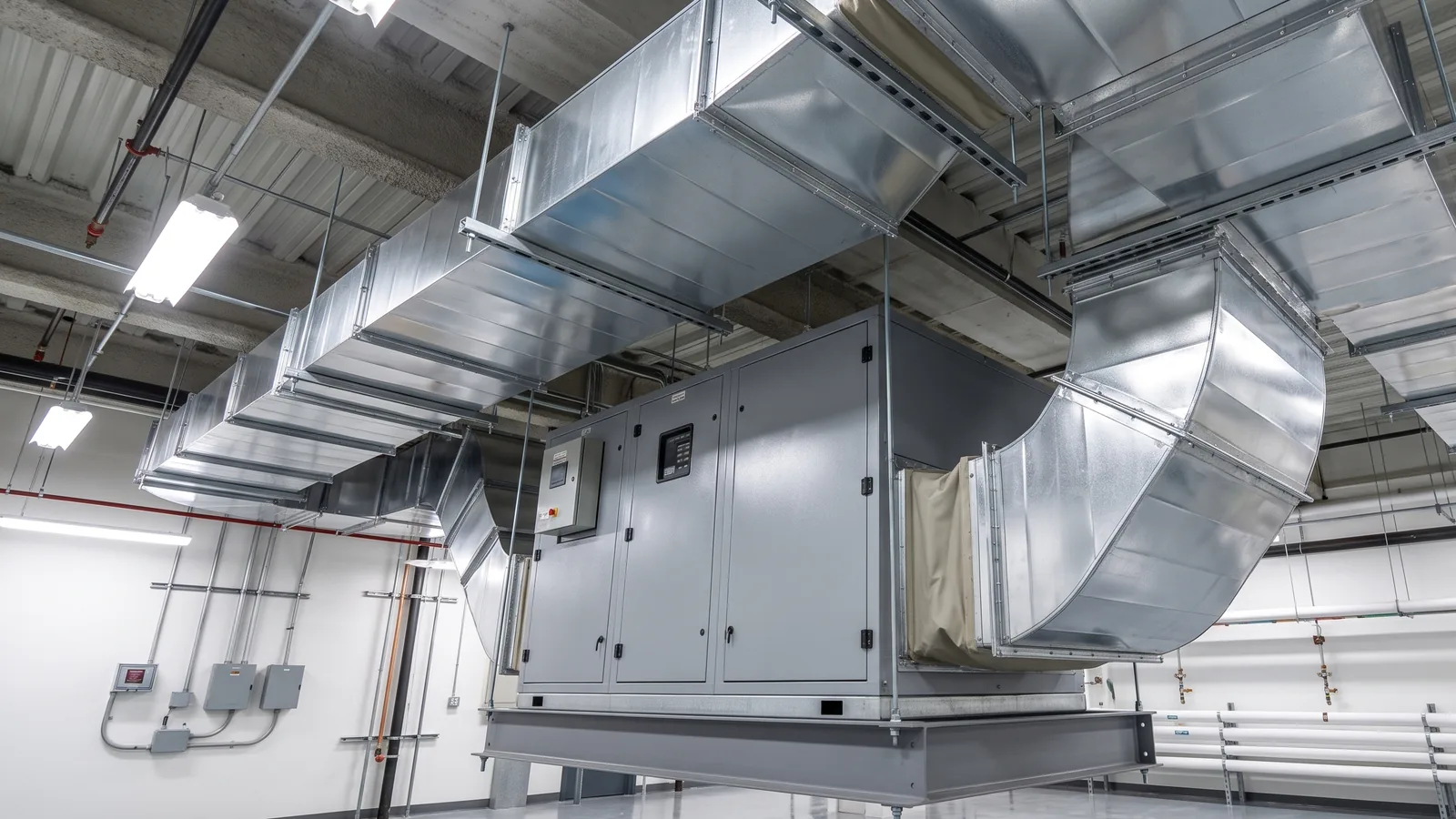
A standalone portable dehumidifier is effective in smaller or single-zone kitchens. For larger facilities, hotel kitchens, or food production environments with multiple zones, a ducted system provides more consistent coverage and cleaner installation.
Ducted dehumidifiers connect to the building’s air distribution network, allowing a single unit to serve multiple areas. They can be zoned independently of the main HVAC, so humidity control continues even when heating or cooling is not running.
- Positioning – units should be positioned to treat supply air before it enters the kitchen, or to recirculate kitchen air through a dedicated dehumidification loop
- Drainage – high-output units require either a gravity drain to a floor waste or a condensate pump; plan drainage routes before installation
- Exhaust separation – the dehumidifier’s treated air supply should not conflict with exhaust canopy negative pressure; consult a mechanical engineer for large installations
- BMS integration – units with 0–10V or Modbus outputs can connect to building management systems for humidity-triggered operation and energy monitoring
- Maintenance access – desiccant rotors and refrigerant coils require periodic cleaning; ensure the installation allows for filter access and servicing
For high-volume food production facilities, a mechanical engineer or specialist dehumidification consultant should review the full psychrometric load before specifying equipment. Getting the capacity right the first time avoids expensive retrofits.
High-Humidity Kitchen Environments That Need Dedicated Dehumidification
Not every commercial kitchen has the same humidity profile. The following environments consistently generate moisture loads that exceed what exhaust ventilation can manage alone.
- Hotel and restaurant kitchens – multiple cooking stations running simultaneously produce continuous steam loads; cool-room door cycling adds to the condensation problem
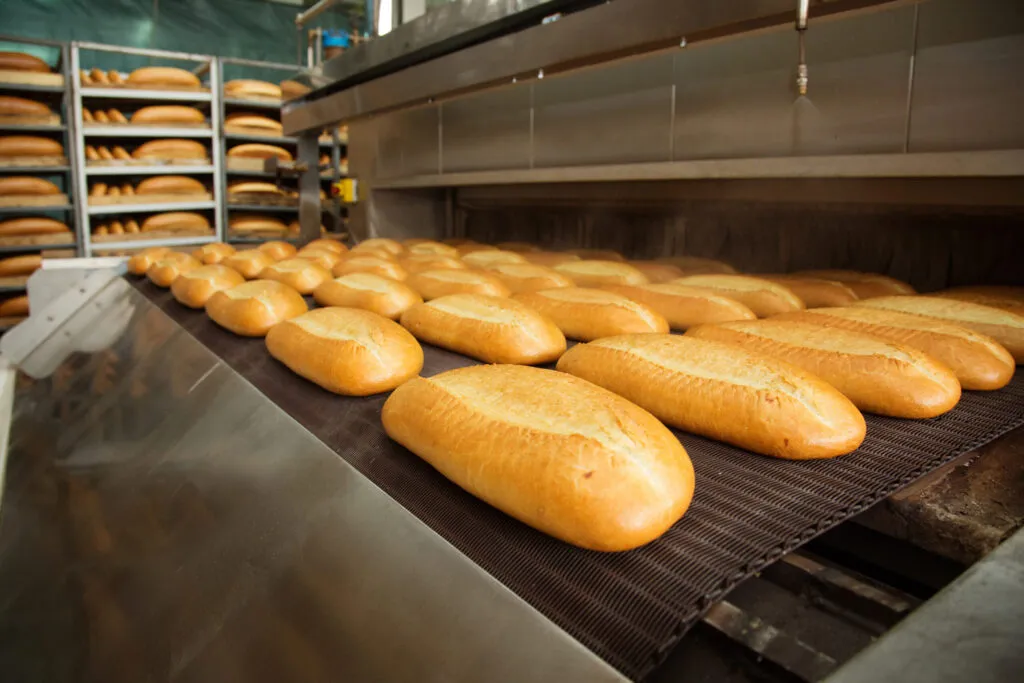
- Commercial bakeries – dough proofers, deck ovens, and steam injection produce sustained high-humidity conditions across the entire production floor
- Food production facilities – wet processing lines, blanching, and pasteurisation generate heavy steam loads in temperature-controlled environments
- Aged care and hospital kitchen facilities – regulatory compliance requirements are strict; condensation on any food contact surface constitutes a documentation-worthy hazard
- School and institutional canteens – high throughput in confined spaces concentrates humidity quickly, particularly during peak service periods
Each of these environments has different space constraints, drainage options, and operating hours. The right unit selection depends on peak moisture load, ambient temperature range, and integration requirements with existing mechanical services.
How to Specify a Commercial Kitchen Dehumidifier
Capacity is measured in litres of water removed per day under stated test conditions. Kitchen environments require units rated under realistic operating conditions, not under favourable laboratory conditions (typically 30°C / 80% RH for desiccant units, 27°C / 60% RH for refrigerant units).
- Calculate the moisture load – account for cooking equipment, dishwashers, washdown frequency, staff, and infiltration from adjacent areas
- Identify the coldest surfaces – these determine where condensation will form first and set the target dew point for the treated air
- Choose the technology – desiccant for high-steam or cold zones, refrigerant for warm processing areas with moderate humidity
- Confirm drainage and power – high-output units require 3-phase power and planned drainage; verify site conditions before ordering
- Plan for redundancy – in critical food production environments, a backup unit or a modular multi-unit installation prevents downtime during servicing
If you are unsure about load calculations, the product specialists at Moisture Cure Commercial can assist with application sizing. The full commercial dehumidifier range covers capacities from compact portable units through to high-output industrial systems.
Control Humidity. Protect Your Kitchen.
Commercial kitchens are one of the most demanding humidity environments in any building type. Steam loads from cooking equipment, regular washdowns, and the proximity of cool storage areas create conditions that standard exhaust ventilation cannot fully manage.
A correctly specified dehumidifier addresses condensation at the source, keeps surfaces dry between cleaning cycles, supports compliance with FSANZ food safety standards, and protects equipment from premature corrosion. The technology choice between desiccant and refrigerant depends on your specific temperature and humidity profile, and both are available in ducted configurations for multi-zone facilities.
Contact Moisture Cure Commercial to discuss your application. Provide your kitchen dimensions, equipment list, and operating hours, and the team will recommend the right unit for your load.