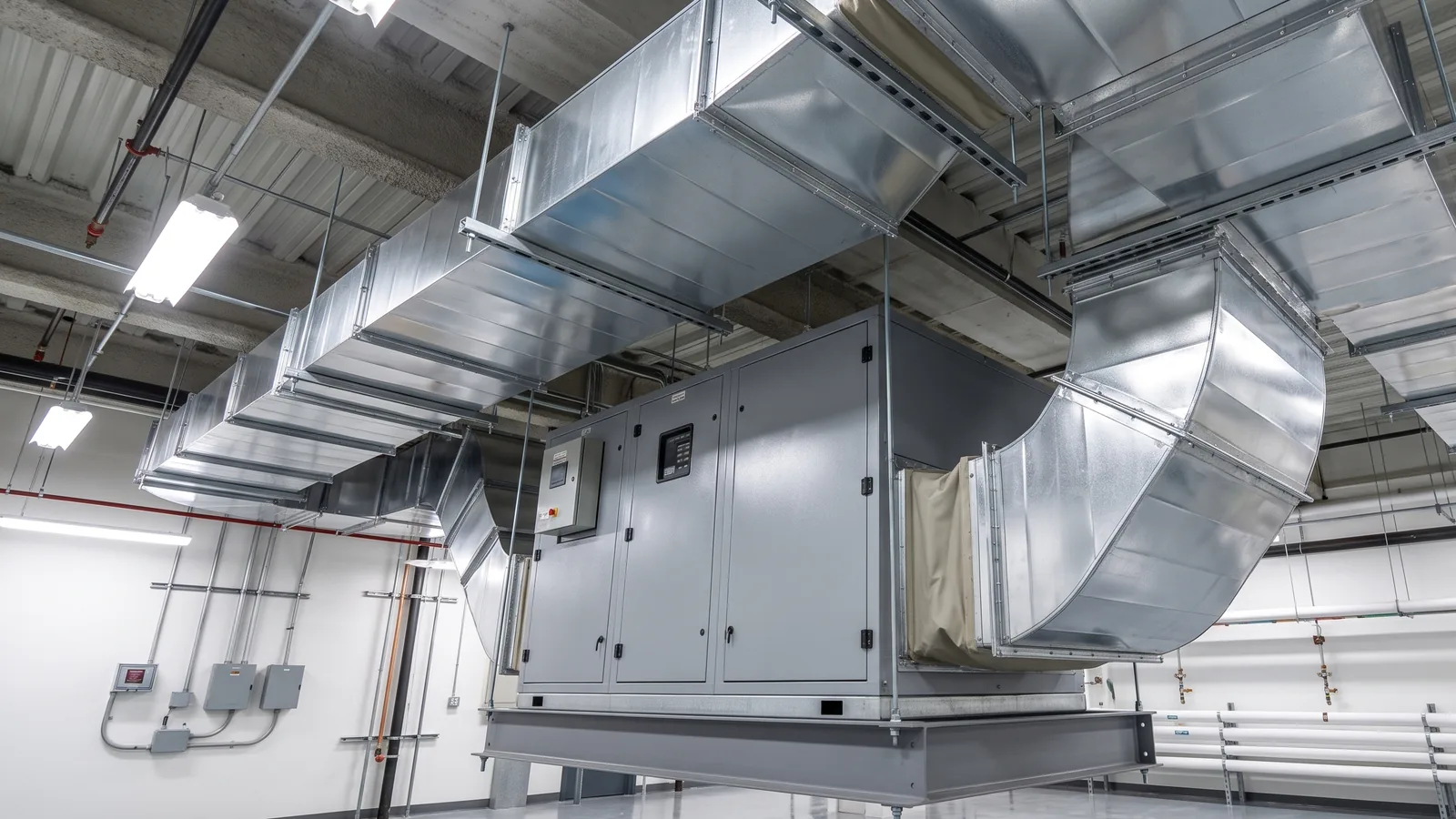
A 10L desiccant dehumidifier can suit a small commercial space if its extraction capacity matches the moisture entering that space. Before choosing one, check the rating conditions, operating limits and installation requirements against your facility’s temperature, ventilation and humidity target.
The daily litre figure alone cannot tell you whether a unit will protect stored materials or keep up with a working production room. This selection process helps you decide whether the proposed capacity is sufficient and what information to request from the supplier.
What does the 10L rating mean?
The 10L figure normally describes rated moisture removal per day, rather than water tank size. ENERGY STAR’s explanation of dehumidifier capacity defines capacity as water removed over 24 hours at specified test conditions.
That definition is useful when reading specifications, although ENERGY STAR’s programme concerns refrigerant equipment and does not establish certification for a desiccant model. Ask for the proposed unit’s performance data at your operating conditions.
- Confirm the temperature and relative humidity used for the extraction rating.
- Separate extraction capacity from tank capacity and process airflow.
- Check output at the required humidity target, not only at the room’s starting humidity.
- Confirm the permitted duty cycle and suitability for the commercial application.
How does desiccant technology compare with refrigerant systems?
Desiccant equipment removes water vapour using a moisture-adsorbing material, which is regenerated for reuse. The operation of a rotating desiccant wheel explains the drying and regeneration stages.
Moisture Cure’s desiccant dehumidifiers for commercial applications are worth assessing for cold spaces or demanding drying duties because this technology does not depend on a cold condensing coil. The practical benefits of desiccant drying help explain that choice.
- Desiccant: assess regeneration energy, discharge heat and wet-air removal arrangements.
- Refrigerant: assess extraction at the actual temperature and humidity, including any defrost operation.
- Either technology: require a performance schedule at the proposed design conditions.
For warmer spaces, refrigerant dehumidifiers for moisture removal may suit the duty because they condense water vapour into liquid for drainage. The industrial dehumidifier selection process covers the wider equipment decision if the initial specification proves unsuitable.
What area does a 10 litre desiccant dehumidifier cover?
There is no universal commercial floor-area allowance for a 10L unit. Room volume, outside-air entry and moisture released by processes can make two spaces with identical floor areas require different capacities.
- Measure floor area and ceiling height to establish room volume.
- Record ventilation airflow, door-opening patterns and leakage paths.
- Identify wet cleaning, exposed water, damp materials and process moisture.
- Record temperature and humidity through normal operating cycles.
- Define the humidity target and acceptable recovery time after a disturbance.
Ask for a moisture-load calculation and an equipment selection at the design conditions. A floor-area recommendation cannot account for a loading door that stays open or a process that continually adds moisture.
Calculating the required capacity
For engineering selection, outside-air load is based on dry-air mass flow multiplied by the difference between incoming and target humidity ratios. Add process and material moisture loads, then allow for initial drying and recovery separately from steady operation.
Moisture Cure’s measured assessment of moisture sources at Urunga Library traced dampness across the floor, subfloor, walls and ceiling before equipment selection.
Can desiccant dehumidifiers work in cold temperatures?
Some industrial desiccant models are designed for sub-zero operation, but their limits should not be transferred to every compact 10L unit. An operating-temperature range also does not guarantee unchanged extraction throughout that range.
- Request extraction data at the lowest expected inlet temperature.
- Check the required outlet dew point where condensation on cold surfaces is the concern.
- Confirm how regeneration air is supplied and discharged.
- Include discharge heat in the room’s cooling assessment.
The Bureau of Meteorology explains dew point as the temperature at which cooling air produces condensation. For cold surfaces, assess moisture control alongside surface temperature and insulation.
The RY-190M is an industrial option to assess for cold duties, with supplier ratings listed below. Its rated capacity differs from a nominal 10L unit, so compare its performance against the original proposal.
How much power does a 10L desiccant dehumidifier use?
Use the selected model’s electrical data rather than a generic power range. Heater operation, fan settings and control cycling affect consumption, while discharge heat can add to a cooled room’s load.
- Check maximum electrical demand against the available supply.
- Request consumption at the proposed operating point.
- Compare energy per amount of moisture removed under matching conditions.
- Include duct fans and any additional cooling in the comparison.
For an energy estimate, multiply input power in kW by operating hours to obtain kWh, using measured or documented average input where available. Maximum nameplate demand is useful for supply sizing, but may overstate consumption when the heater cycles.
What humidity levels can a 10 litre desiccant dehumidifier achieve?
The achievable humidity depends on inlet conditions, moisture load and the equipment’s drying performance. A low selectable humidistat setting is not evidence that a unit can maintain that setting in your facility.
- Use the product or process specification to define the required humidity.
- For archives and collections, agree the acceptable range with the collection manager.
- For electronics or pharmaceutical work, use the site’s documented environmental requirements.
- Measure near vulnerable materials as well as at the controller.
Request a documented design point and acceptance criteria for commissioning. Avoid assigning a single humidity range to an entire industry, since processes and stored materials have different requirements.
How often do you need to empty a 10L desiccant dehumidifier?
Check how the particular unit removes water. Some compact desiccant designs collect liquid in a tank or use a drain hose, while industrial designs can discharge moisture in a separate wet-air stream.
- Tank-equipped unit: verify usable capacity and full-tank shutdown.
- Continuous drain: confirm the permitted hose route, fall and any pump requirements.
- Wet-air exhaust: confirm duct size, permissible resistance and discharge location with the supplier.
- Unattended duty: establish how failures or shutdowns will be detected.
The installation arrangements for a commercial desiccant drying system need checking before procurement. For plant-room placement, ducted dehumidifiers for centralised moisture control can suit distribution to designated zones, provided airflow and duct resistance are included in the design.
Are 10 litre desiccant dehumidifiers suitable for commercial use?
A 10L unit may suit an enclosed archive room, instrument store or small workshop if performance data supports the calculated duty. Higher ventilation loads, wet processes or rapid recovery requirements can require greater capacity even in a small room.
The following supplier ratings put that proposed capacity in context. These are larger industrial options, not interchangeable 10L products or floor-area guarantees.
| Model | Extraction | Process airflow |
|---|---|---|
| YAKE RY-190M capacity specifications | 14.4 L/day at 20°C, 60% RH | 160–190 m³/h |
| YAKE RY-400M capacity specifications | 60 L/day at 20°C, 60% RH | 420 m³/h |
| YAKE RY-600M capacity specifications | 72 L/day at 20°C, 60% RH | 580 m³/h |
The RY-190M can be assessed for modest industrial loads, while the RY-400M and RY-600M are options for assessed duties exceeding the smaller unit’s capacity. Their larger airflow and extraction ratings must still be checked against the facility’s design conditions.
Where the assessment calls for a larger installation, the existing range also includes the YAKE RY-800M industrial model, YAKE RY-1000M industrial model and YAKE RY-1500M industrial model. Assess these against the required duty rather than selecting by model number.
What maintenance is required for a 10L desiccant dehumidifier?
Follow the selected model’s manual and service schedule. Avoid universal wheel-replacement intervals or lifespan promises, since contamination and operating conditions affect servicing needs.
- Inspect and clean filters using the manufacturer’s procedure.
- Check drain or wet-air exhaust routes for obstruction.
- Verify sensor readings and control operation.
- Arrange servicing of heaters and internal components by an appropriately qualified technician.
Frequently asked questions
The supplier’s manual and application-specific performance data govern the installation.
Is a 10L dehumidifier enough?
It is enough only if its output at the design conditions meets the calculated moisture load and recovery requirement. Floor area alone cannot establish that.
What are the disadvantages of a desiccant dehumidifier?
Regeneration requires energy and can introduce heat or require wet-air ducting, depending on the design. Assess those requirements alongside its drying performance.
Does a 10L rating mean a 10 litre tank?
No, extraction per day and tank capacity are separate specifications. Some industrial designs discharge moist air instead of collecting liquid.
Can a desiccant dehumidifier run unattended?
Only where the model and installation support that duty, with appropriate water removal and fault monitoring. Moisture Cure’s guidance on running an industrial dehumidifier for extended periods covers the operating considerations.
Will it maintain the lowest humidistat setting?
A selectable setting is not a performance guarantee. Request capacity data at the required humidity and commission the system against measured results.
What information should I send for sizing?
Send room dimensions, temperature and humidity records, ventilation details, moisture sources and the target conditions. Include drainage or exhaust constraints and the required operating schedule.
Professional specification for Australian facilities
Before ordering, ask the supplier to document the selection and installation assumptions. Ask for:
- Calculated moisture load and selected duty point.
- Extraction, airflow and electrical requirements.
- Drainage or exhaust layout and service access.
- Commissioning criteria, monitoring and maintenance requirements.
Moisture Cure’s range of commercial and industrial dehumidifiers allows the equipment choice to follow the assessed duty when a 10L proposal is insufficient. Contact Moisture Cure Commercial for a consultation or site assessment to confirm the capacity and installation your facility requires.