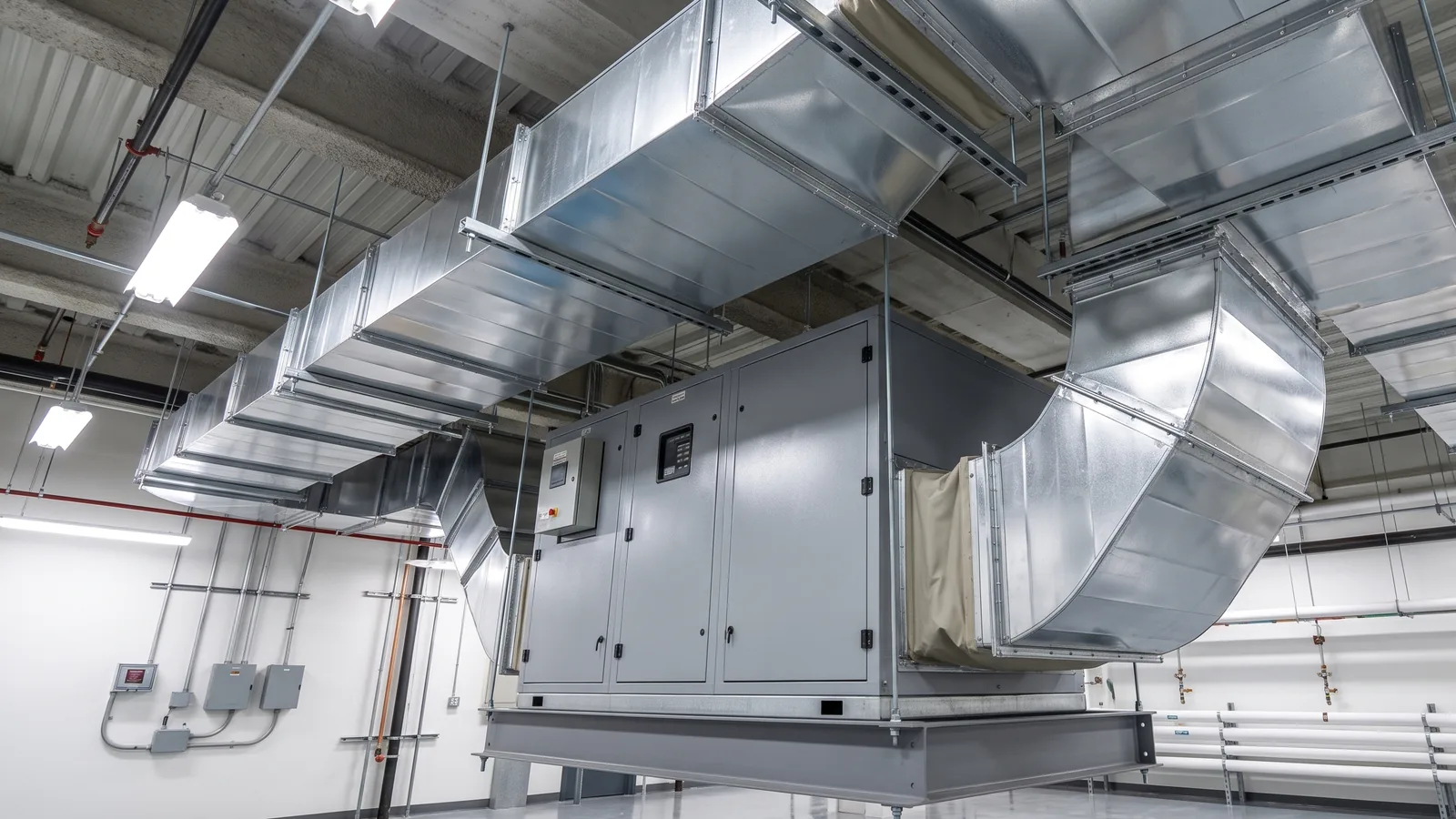
Desiccant dehumidifiers suit pharmaceutical manufacturing processes that need dry air beyond the capability of the existing cooling system. Select the system for the formulation’s humidity limits and operating temperature.
Moisture-sensitive materials need controlled exposure during handling, production and packing. This article covers desiccant selection, process-specific humidity limits and the information engineers need to size a system.
Start with the product’s approved environmental limits, then select the equipment. Moisture Cure Commercial’s desiccant dehumidifier range for demanding moisture control is relevant where low humidity or cold operating conditions make condensation-based equipment less suitable.
Why pharmaceutical manufacturing uses desiccant dehumidifiers
Many pharmaceutical powders are hygroscopic, meaning they take up moisture from surrounding air. Whether that changes flow, stability or processing behaviour depends on the material and its exposure conditions.
The US Department of Energy’s technical characterisation of desiccant systems identifies low humidity pharmaceutical processes as an application for this technology. The commercial desiccant drying process removes water vapour without needing a cold coil to condense it.
Assess desiccant equipment when:
- Exposed powders need a lower humidity than the existing air handling unit can maintain.
- The supply air needs a low dew point while room temperature remains controlled.
- Cold operating conditions limit the moisture removal available from a refrigerant unit.
- Production requires separate control of temperature and moisture removal.
Understanding when desiccant dehumidification is appropriate helps narrow the options before requesting a performance selection. Ask for the selected model’s output at your design conditions, rather than assuming all desiccant units deliver the same dryness.
GMP humidity requirements for pharmaceutical facilities
GMP does not prescribe one humidity range for every pharmaceutical process. For non-sterile products, WHO HVAC guidance, section 8 calls for temperature and humidity limits appropriate to the materials and products, with monitoring and recording where required.
In Australia, the TGA’s manufacturing principles adopt the PIC/S Guide to GMP. Buying a dehumidifier does not establish compliance; the facility must demonstrate that its system meets the applicable requirements.
| Process | Information needed to set humidity limits | Specification focus |
|---|---|---|
| Tablet compression | Formulation and process development data | Powder handling and the approved operating window |
| Film coating | Coating recipe and inlet air requirements | Drying conditions at the coater |
| Capsule filling | Shell supplier’s handling conditions | Both upper and lower humidity limits |
| Effervescent products | Moisture sensitivity and validated exposure time | Dry air where ingredients are exposed |
| Raw material storage | Supplier storage instructions and container protection | Storage and dispensing conditions |
| Primary packaging | Product exposure and packaging validation data | Conditions before closure |
Have quality assurance approve the operating window, alert limits and action limits before procurement. An excursion requires investigation under the site’s procedures, rather than an automatic assumption that the batch is acceptable or rejected.
Desiccant vs refrigerant dehumidifiers for pharma
Refrigerant equipment removes water by cooling air below its dew point. Desiccant equipment adsorbs water vapour and uses heat to regenerate the drying material.
The refrigerant dehumidifier range for warmer operating conditions may suit areas with moderate humidity targets, provided the performance selection meets the required duty. A low humidity production zone can need desiccant treatment alongside conventional cooling.
| Selection factor | Desiccant | Refrigerant |
|---|---|---|
| Moisture removal | Adsorption with regeneration | Condensation on a cooling coil |
| Low humidity duty | Often suitable; verify supply dew point | Assess coil temperature and available capacity |
| Cold conditions | Check model operating limits and capacity | Check defrost provisions and low temperature output |
| Heat balance | Account for warm dry air and any post-cooling | Account for cooling and any reheat |
| Continuous duty | Confirm rating and maintenance access | Confirm rating and maintenance access |
Ventilation and temperature management also affect humidity control across pharmaceutical production areas. Specify each zone from its duty rather than selecting one technology for every room.
How desiccant dehumidifiers work in a pharma setting
A commercial desiccant system passes process air through a wheel coated with desiccant material. A separate heated airstream removes the collected moisture as the wheel rotates through its regeneration section.
The desiccant wheel’s adsorption and regeneration cycle explains the two air paths. The system needs a planned route for moisture-laden exhaust and may need cooling after drying.
The installation specification should address:
- Pre-filtration, supply filtration and access for cleaning.
- Supply airflow, duct pressure losses and room pressure relationships.
- Separation of process air and regeneration exhaust.
- Temperature control after the drying stage.
- Humidity sensors, alarms and building management system interfaces.
ducted dehumidification options for controlled air distribution are relevant when dry air must reach defined production zones. Confirm that the proposed unit uses the required drying technology, because ducted describes the installation arrangement.
WHO’s non-sterile HVAC interpretation guidance treats filtration, pressure relationships and containment as related design considerations. Sterile manufacture and API production require their own applicable guidance, so this non-sterile document should not be used as their design standard.
Sizing a desiccant dehumidifier for pharmaceutical production
Room volume alone cannot establish moisture removal capacity. The engineer needs the incoming moisture load and the dry air conditions required to balance it.
Prepare these sizing inputs:
- Room dimensions and the required temperature and humidity window.
- Outdoor design conditions and the actual outside air supply rate.
- Recirculation, exhaust and transfer air quantities.
- Process moisture released during production and cleaning.
- Occupancy, door traffic and exposure to adjacent areas.
- Start-up drying requirements and recovery after planned interruptions.
Separate total supply airflow from outside air: recirculated air does not introduce the same moisture load as untreated outdoor air. Ask the designer to calculate the ventilation moisture load using dry air mass flow and the difference in humidity ratio, then add the process and infiltration loads.
Request moisture removal in kg/h at the specified inlet conditions and required outlet dew point. A catalogue rating at different conditions does not show whether the unit will meet your requirements.
Ask suppliers to include regeneration heat, fan power and any cooling or reheat in the energy assessment. The factors behind running costs for ducted dehumidification systems help procurement compare complete installations rather than heater ratings alone.
Common pharma areas that need desiccant dehumidification
Prioritise areas where moisture-sensitive material is exposed or where existing conditioning cannot meet the approved humidity window. A dedicated dryer may serve a local process rather than the whole suite.
- Weighing and dispensing areas handling moisture-sensitive powders.
- Tablet compression or capsule filling rooms with documented humidity requirements.
- Coating and drying processes with specified inlet air conditions.
- Primary packaging lines before the product is sealed.
- Laboratories with instrument or method-specific environmental requirements.
- Cold rooms where moisture ingress creates a condensation or frost problem.
Cold-room refrigeration does remove some moisture at the evaporator, but may not manage the load entering through doors. Assess door seals, traffic and airlocks before treating dehumidification as the only remedy.
Commissioning and monitoring the installation
Plan acceptance testing before installation. WHO’s non-sterile HVAC qualification guidance, section 12 calls for risk-based qualification and defined operating ranges and response procedures.
- Verify sensor calibration and representative monitoring locations.
- Test humidity recovery under agreed production and door-opening conditions.
- Check alarms, fan failures and loss of regeneration heat.
- Record the tested airflow, temperature and humidity conditions.
- Define maintenance access and responsibilities for reviewing trends.
Keep the selection data and test records with the facility’s engineering documentation. Review changes to airflow, layout or production through the site’s change control process.
Frequently asked questions
Does GMP require the same relative humidity throughout a factory?
No universal room humidity band covers every product and process. Quality assurance should approve limits using the relevant material, product and process requirements.
Is desiccant always better than refrigerant for pharmaceuticals?
No. Compare the required moisture removal, operating temperature and humidity target with each system’s rated performance.
Why specify dew point as well as relative humidity?
How dehumidifiers control relative humidity depends on both moisture removal and air temperature. Dew point helps engineers describe the supply air’s moisture condition independently of the room RH reading.
Should capsule filling rooms be made as dry as possible?
Use the capsule supplier’s handling limits and the approved process conditions. Excessively dry conditions can be unsuitable, so the specification needs a lower limit as well as an upper one.
Can a desiccant unit connect to an existing air handling system?
It can be designed into a compatible system. Check available fan pressure, cooling capacity, filtration, room pressure effects and the regeneration exhaust route before committing.
What determines the size of the unit?
The total moisture load and required supply air dryness determine the duty. Include outdoor and transfer air, process emissions, occupancy and door traffic in the calculation.
Does the desiccant unit also cool the room?
Drying can warm the process air. Include the required cooling duty in the system design so the humidity target does not come at the expense of temperature control.
What happens if humidity exceeds the approved limit?
Follow the site’s excursion procedure and assess the exposed material with quality assurance. Record the duration and conditions, investigate the cause and document recovery.
Does installing desiccant equipment make a cleanroom compliant?
Equipment selection is only part of the work. The facility also needs the applicable contamination controls, qualification evidence, operating procedures and ongoing monitoring.
Get sizing advice for your pharmaceutical facility
Moisture Cure Commercial can help assess commercial and industrial dehumidification options against your required duty.
- Provide room dimensions and approved humidity limits.
- Share ventilation data and production moisture sources.
- Identify installation constraints and monitoring requirements.
Contact Moisture Cure Commercial for a consultation or site assessment to discuss a desiccant system suited to your pharmaceutical manufacturing process.