Energy efficiency in wine cellar climate control systems depends on a well-sealed enclosure, equipment sized for the cooling and moisture loads, and controls proven against measured data.
The Australian Wine Research Institute’s storage guidance says excessive temperatures accelerate deterioration and large temperature cycles should be avoided. Prolonged storage above 25°C, or short exposure above 40°C, can affect wine quality, so setpoints should suit the wine, closure type, planned storage period and operating requirements.
Understanding wine cellar climate requirements
A commercial cellar needs a written performance brief before equipment is specified. A single thermostat setpoint is not enough because the system must also manage humidity, air movement, door openings, lighting, occupants and heat transfer through the enclosure.
| Design input | Why it matters | What to verify |
|---|---|---|
| Storage temperature | Defines the main cooling duty and the acceptable operating band | Setpoint, alarm limits and maximum excursion duration |
| Relative humidity and dew point | Affects corks, labels, surfaces and latent load | Seasonal moisture load, sensor location and condensation risk |
| Cellar envelope | Controls heat gain and infiltration | Insulation continuity, vapour control, penetrations and door seals |
| Internal and access loads | Lighting, people and door openings change demand | Operating schedule, access frequency and lighting load |
| Distribution | Poor airflow creates local hot or humid zones | Supply pattern, return-air path and rack layout |
Reduce the load before selecting equipment
Reduce avoidable heat and moisture ingress before sizing the plant. The Australian Government’s commercial HVAC guidance recommends demand-reduction measures such as insulation before plant optimisation or replacement.
- Insulate continuously: Treat walls, ceiling, floor junctions and service penetrations as one thermal envelope rather than separate construction details.
- Control water vapour: Position and detail the vapour-control layer for the local climate and adjacent spaces, with special attention to penetrations and joints.
- Seal access points: Use suitable doors, full-perimeter seals and procedures that limit warm, moist air from entering the cellar.
- Limit internal heat: Use efficient lighting, switch it off when the cellar is unoccupied and keep unrelated heat-producing equipment outside the controlled space.
Refrigerant, desiccant and hybrid systems
Assess system efficiency at the expected temperature, moisture load and part-load conditions. Refrigerant equipment removes moisture by cooling air below its dew point, while a desiccant unit adsorbs water vapour and can separate moisture removal from the cooling duty.
| Approach | Best fit | Efficiency question |
|---|---|---|
| Refrigerant cooling and dehumidification | Cellars with a consistent cooling load and suitable operating temperature | How does efficiency change at part load and at the cellar setpoint? |
| Desiccant dehumidification | Low-temperature or low-dew-point duties where moisture removal is the main requirement | Can regeneration energy be controlled or recovered for the site? |
| Humidification | Dry conditions that put closures or storage materials at risk | Can output modulate closely enough to avoid overshoot? |
| Hybrid control | Sites with large seasonal changes in sensible and latent load | Does the sequence prevent systems heating, cooling, humidifying and dehumidifying against each other? |
| Ducted distribution | Larger or compartmentalised storage areas | Have fan energy, leakage, pressure drop and zoning been included? |
The available options include commercial refrigerant dehumidifiers for cooling-based moisture removal and desiccant dehumidifiers for low-temperature humidity control. Selection depends on the required temperature, dew point, airflow and available energy sources.
If a dry cellar needs moisture addition, commercial humidifiers for controlled storage conditions can be assessed against the required RH band. Ultrasonic humidifiers for even moisture distribution may suit larger spaces where output can be modulated and water quality is managed.
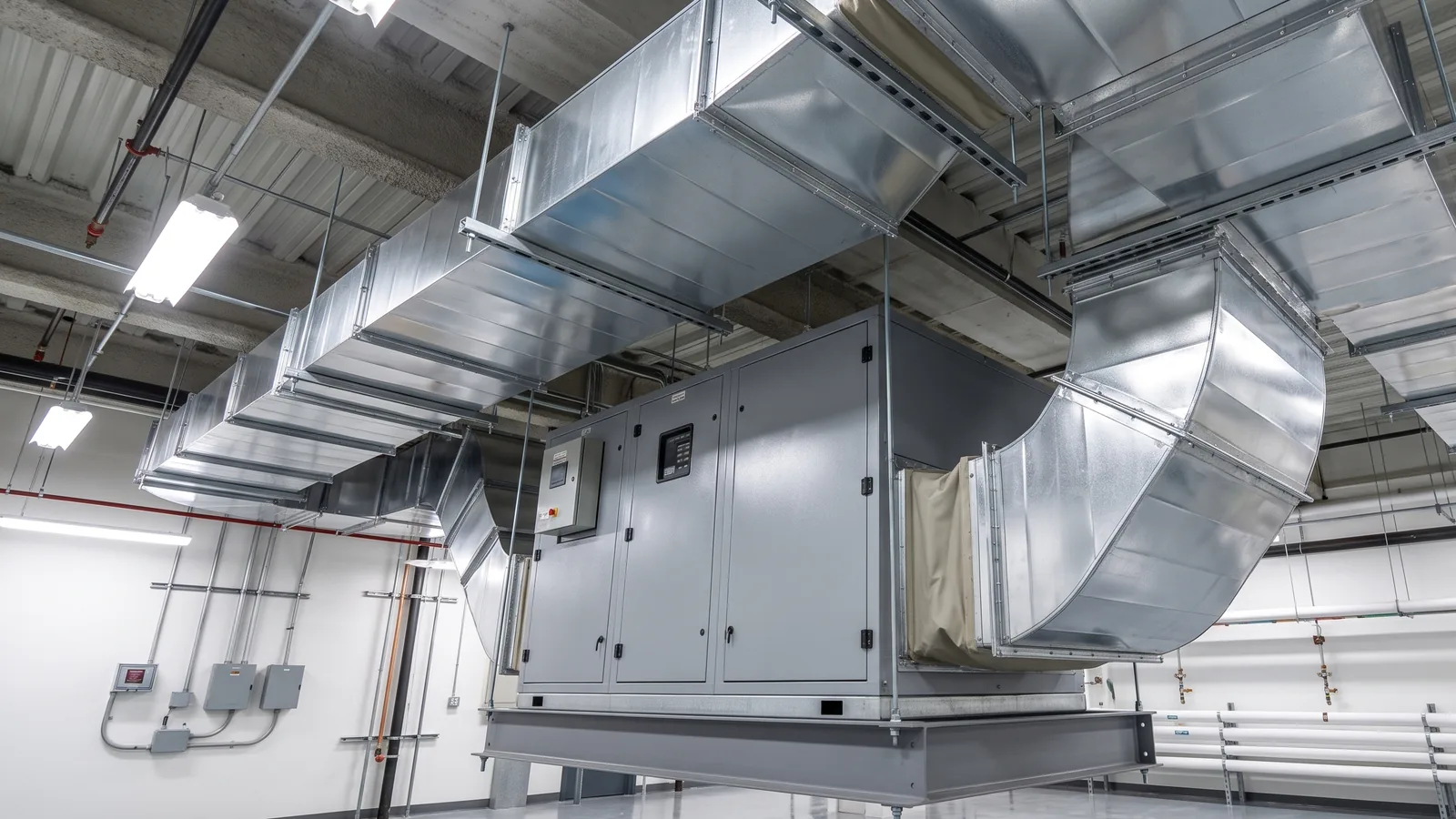
Larger cellars may suit ducted dehumidifiers with centralised air distribution, which keep service access outside the storage area and deliver treated air to each zone.
Wine cellar temperature control
Wine cellar temperature control should hold the agreed storage band with minimal cycling and no persistent warm zones. Check stability, alarm response and conditions at the racks rather than relying on the controller display.
- Place representative sensors away from supply air, doors, lights and external walls.
- Trend temperature at more than one height where racking or ceiling height may cause stratification.
- Use control deadbands that avoid rapid compressor cycling while staying within the storage brief.
- Test recovery after a normal delivery or access event instead of judging the system only with the door closed.
The same AWRI research summary covers temperature, humidity and light exposure during wine storage, which gives project teams a basis for defining alarm limits.
Humidity control without overcooling
Cooling removes moisture only when the coil is below the air’s dew point. If humidity control repeatedly drives the cellar below its temperature setpoint and then calls for reheating, the system is using energy to make one control loop correct another.
Control note: Trend dew point as well as relative humidity. Relative humidity changes when temperature changes, even if the amount of moisture in the air has not changed.
- Use separate temperature and humidity sensors that can be checked against a reference instrument.
- Define which device has priority when temperature and humidity calls conflict.
- Apply sensible deadbands and minimum run times to reduce hunting.
- Review whether dedicated dehumidification or humidification would reduce unnecessary cooling and reheating.
When an RH trend moves unexpectedly, comparing dew point with relative humidity in controlled spaces helps show whether moisture content changed or only the air temperature moved.
Controls, commissioning and building management systems
A technically capable system can still waste energy if sensors are misplaced, setpoints conflict or control sequences are never tested. The Australian Government’s commissioning and building-tuning guidance covers commissioning, recommissioning and ongoing tuning.
| Control function | Commissioning test | Evidence to retain |
|---|---|---|
| Temperature staging or modulation | Apply a controlled load change and confirm stable response | Trend log, setpoints and controller output |
| Humidity sequence | Simulate high and low humidity calls without conflicting outputs | Sequence description and alarm record |
| Sensor accuracy | Compare each sensor with a calibrated reference | Calibration result and corrective action |
| Building management system integration | Confirm points, units, trends, alarms and loss-of-communication behaviour | Point list and functional test sheet |
The Australian Government’s building management systems factsheet recommends specifications that cover commissioning, fine tuning, operation and maintenance. Useful cellar points include temperature, RH, dew point, equipment status, alarms, runtime and electricity sub-meter data.
Maintenance for sustained efficiency
Maintenance intervals should follow the equipment manufacturer and site conditions rather than a generic monthly or quarterly rule. Dust, coastal exposure, cellar access and operating hours can all change the appropriate frequency.
- Inspect filters and record pressure drop where the system provides that measurement.
- Keep evaporator and condenser coils clean and confirm that fins are not blocked or damaged.
- Check condensate drains, traps and pumps for reliable removal without air leakage.
- Inspect door gaskets, duct joints, insulation and vapour-control details for deterioration.
- Verify refrigerant condition, fan operation, sensors, setpoints and alarms during scheduled service.
The Australian Government’s guidance on keeping condenser and evaporator coils clean is written for building owners and facilities managers. Dirty heat-transfer surfaces can increase runtime even when the rest of the unit remains serviceable.
Monitoring and performance verification
Measure a baseline before retrofitting. The Australian Government’s refrigeration guide recommends performance testing, electricity sub-metering, temperature logging and refrigerant tracking.
| Metric | What it reveals | How to use it |
|---|---|---|
| Electricity consumption | Total system demand over time | Compare equivalent weeks after allowing for weather, stock and access patterns |
| Compressor, fan and dehumidifier runtime | Whether a component is cycling or running continuously | Investigate changes from the established baseline |
| Temperature and humidity excursions | Magnitude and duration outside the target band | Record location and likely cause |
| Maintenance and alarm history | Recurring faults or gradual degradation | Prioritise corrective work and verify the result |
Retrofitting an existing wine cellar
Start with evidence from trends, maintenance records and a condition survey. Replacing equipment before fixing the enclosure or control sequence can leave the new unit with the same avoidable load.
- Confirm setpoints, tolerances, alarm limits and access patterns.
- Repair leakage, damaged insulation, door seals and vapour-control defects.
- Calibrate sensors, remove conflicting schedules and test the sequence.
- Clean coils and filters, then balance the distribution system.
- Recalculate the load after enclosure repairs and verify the result against the baseline.
Australian climate and site conditions
Use local weather data and the cellar’s immediate surroundings for Australian projects. A humid coastal loading dock and an inland warehouse can impose very different latent and sensible loads.
- Warm, humid air increases infiltration load and condensation risk.
- Large daily temperature swings put more emphasis on envelope continuity and part-load control.
- Coastal or dusty sites need suitable materials, filtration and service access.
- A cellar inside another conditioned zone needs a clear pressure and moisture-control strategy at the boundary.
Frequently asked questions
Quick answer: Cellar efficiency depends on the enclosure, actual load, equipment behaviour at the chosen setpoint and verified control performance.
What temperature should a commercial wine cellar maintain?
Set a stable band for the wine, closure, storage period and operating plan. The specification should define normal limits, alarm limits and permitted excursion duration.
Which wine cellar system is the most energy efficient?
There is no universally most-efficient type. Match the equipment to the sensible and latent loads, then compare performance at the intended setpoint and part-load conditions.
Can a passive commercial cellar work in Australia?
It may work where measured year-round conditions meet the storage brief, but construction below ground does not prove that outcome. Log conditions through seasonal extremes first.
How does humidity control affect energy use?
Energy use rises when a system overcools to remove moisture, reheats the air, or runs humidification and dehumidification together. Dew-point-aware sequencing helps prevent that conflict.
Can an existing cellar be made more efficient without replacing the unit?
Often, yes. Air sealing, coil cleaning, sensor correction and control tuning can reduce avoidable load before replacement is considered.
How should efficiency improvements be verified?
Record electricity, runtime, cellar conditions, access and weather, then compare equivalent periods after the work. Track excursions too, so lower consumption is not achieved at the expense of storage performance.
Talk to Moisture Cure Commercial
A useful site assessment combines the storage brief, enclosure condition, equipment data, control trends and access pattern. Moisture Cure Commercial can assess these factors and recommend a control approach for a new cellar or retrofit.
Prepare for the assessment: Bring the storage specification, available trend logs, equipment details and any maintenance or alarm history.
Call (02) 6584 2511 to arrange a consultation or site assessment, including help sizing ducted dehumidification for your facility.