Uncontrolled humidity in a gymnasium warps timber floors, corrodes steel structures and degrades indoor air quality for athletes.
Timber sports floors need relative humidity between 35% and 50% year-round. In coastal and subtropical parts of Australia, ambient humidity regularly exceeds 70% during summer, putting every unprotected gym floor at risk of cupping, crowning and structural failure.
This article covers why gymnasiums need dedicated dehumidification, which unit types suit sports hall conditions, and how to size a system correctly for your facility.
Moisture Cure Commercial supplies dehumidification systems for gymnasiums, sports halls and indoor training facilities across Australia. Contact the team for a site assessment and sizing recommendation.
Why Gymnasiums Need Dedicated Humidity Control
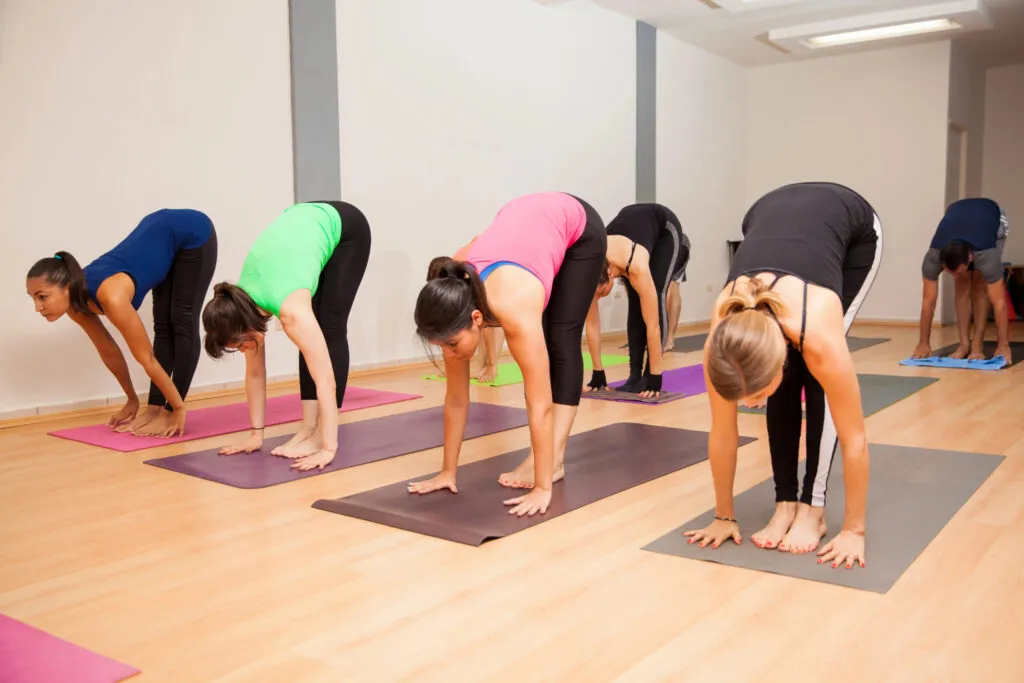
A standard gymnasium has three characteristics that make humidity control difficult: large open volume, high occupancy during peak hours, and a timber floor that reacts to every humidity shift.
Wood is hygroscopic. It absorbs moisture from the air when humidity rises and releases it when humidity drops. Each absorption-release cycle causes the boards to expand and contract, and repeated cycling leads to permanent damage.
- Cupping: Boards curl upward at the edges when the underside absorbs more moisture than the top surface
- Crowning: The centre of each board swells higher than the edges when surface humidity stays too high for too long
- Buckling: Extreme expansion forces boards to lift completely off the subfloor, requiring full replacement
- Gap formation: Over-drying causes boards to shrink and separate, creating trip hazards and allowing moisture to reach the subfloor
Beyond the floor, high humidity in a sports hall creates condensation on steel roof trusses, promotes mould growth on walls and ceiling panels, and leaves athletes training in stale, heavy air. A dedicated dehumidifier addresses all of these problems at the source.
The Target Humidity Range for Sports Halls
Timber floor manufacturers and the ASHRAE handbook both recommend maintaining 35% to 50% relative humidity for hardwood sports surfaces. This range keeps board movement within tolerance and prevents both swelling damage and over-drying.
| Humidity level | Effect on timber floor | Effect on athletes |
|---|---|---|
| Below 30% RH | Boards shrink, gaps form, finish cracks | Dry air irritates airways during high-intensity exercise |
| 35% to 50% RH | Optimal: minimal board movement, stable finish | Comfortable breathing, good grip on surfaces |
| 50% to 60% RH | Boards begin absorbing moisture, minor swelling | Slight discomfort, surfaces become slippery |
| Above 65% RH | Cupping and crowning begin, mould risk increases | Heavy air, reduced performance, slippery conditions |
The challenge in Australian gymnasiums is that outdoor humidity frequently sits above 65% for months at a time in coastal regions. Without active dehumidification, the HVAC system alone cannot maintain the 35% to 50% window.
Which Dehumidifier Type Suits a Gymnasium
Two dehumidifier types are used in commercial sports facilities: refrigerant and desiccant. For most Australian gymnasiums operating above 15°C, a refrigerant dehumidifier is the better fit.
Refrigerant Dehumidifiers for Heated Sports Halls
Refrigerant units pull warm, humid air across a cold coil. Moisture condenses on the coil and drains away, and the dried air returns to the space. They are energy-efficient in heated environments above 15°C.
- Most efficient when room temperature stays above 15°C, which covers almost every Australian gymnasium
- Lower running costs than desiccant units in warm conditions
- Available in ducted configurations for integration with existing HVAC
- High extraction rates suit the large air volumes found in sports halls
When Desiccant Dehumidifiers Are the Better Choice
Desiccant dehumidifiers use a chemical drying wheel instead of a cold coil. They perform equally well at any temperature, which makes them the only viable option for unheated facilities.
- Required for cold gymnasiums, unheated warehouses converted to sports use, or facilities in alpine regions
- Can achieve lower humidity targets (below 30% RH) than refrigerant units
- Higher energy consumption than refrigerant units in warm environments
- YAKE desiccant units from Moisture Cure operate from -20°C to +50°C for extreme-condition facilities
Not sure which unit type suits your facility? Moisture Cure Commercial provides free sizing consultations. The team will assess your gymnasium dimensions, ventilation setup and local climate to recommend the right system.
How to Size a Gymnasium Dehumidifier Correctly
Under-sizing is the most common mistake in gymnasium dehumidification. A unit that handles the steady-state moisture load will fail during peak occupancy or after a rainfall event when moisture ingress spikes.
Four factors determine the correct unit size:
- Room volume: Length x width x ceiling height gives the total air volume. Sports halls with 8 m to 12 m ceilings have significantly larger volumes than standard commercial spaces.
- Ventilation rate: Fresh air introduced by the HVAC system carries outdoor humidity into the space. Higher ventilation rates increase the moisture load the dehumidifier must handle.
- Occupancy: Each person in a gymnasium releases 50 to 100 grams of moisture per hour during exercise. A basketball game with 30 players and 200 spectators adds a measurable humidity spike.
- Building envelope: Older facilities with poor vapour barriers allow moisture to migrate through walls and floors. The dehumidifier must compensate for this infiltration.
A facility manager who sizes a unit based only on room volume will under-specify by 30% to 50% once ventilation and occupancy loads are factored in. Always get a professional assessment that accounts for all four variables.
Ducted vs Standalone Units for Sports Facilities
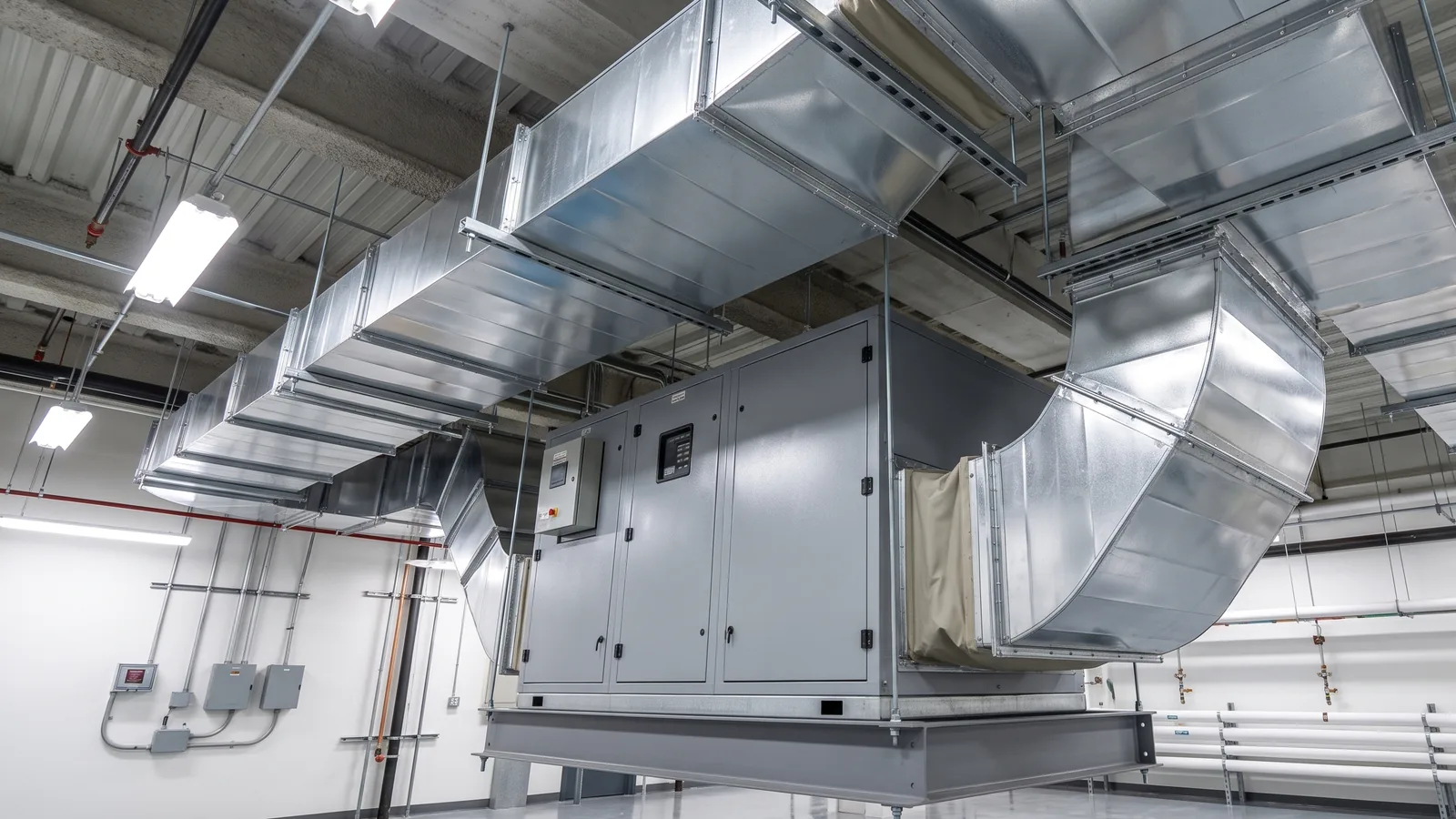
Ducted dehumidifiers integrate into the existing HVAC ductwork. They treat the air supply before it enters the gymnasium, so the dehumidification happens invisibly within the mechanical system.
| Factor | Ducted unit | Standalone unit |
|---|---|---|
| Installation | Integrated into existing HVAC | Floor-standing, no ductwork needed |
| Noise | Mechanical noise contained in plant room | Operates at floor level, audible in the space |
| Aesthetics | Hidden from view | Visible in the gymnasium |
| Maintenance | Accessed through plant room | Serviced on the gym floor |
| Best for | New builds, major HVAC upgrades | Retrofit, temporary installations, budget-constrained projects |
For new gymnasium builds, ducted is the standard recommendation. For existing facilities that need humidity control added without a full HVAC upgrade, a standalone unit gets the job done immediately.
Maintaining Your Gymnasium Dehumidifier
A dehumidifier in a sports hall runs harder than one in an office or warehouse. The combination of high occupancy, heavy ventilation and large air volume means the unit operates at or near capacity for extended periods.
- Clean or replace filters monthly during peak season to maintain airflow and extraction efficiency
- Inspect the condensate drain line quarterly for blockages that cause water overflow
- Schedule a professional service annually to check refrigerant levels, coil condition and electrical connections
- Monitor relative humidity with a standalone hygrometer to verify the unit is maintaining the 35% to 50% target
- Log humidity readings weekly to catch drift before floor damage occurs
A well-maintained unit lasts 10 to 15 years in commercial service. Skipping filter changes reduces extraction capacity by up to 25% within three months.
Moisture Cure Commercial provides expert sizing advice and supply for gymnasium dehumidification systems across Australia. Contact the team for a consultation, site assessment, or to discuss the right unit for your sports facility.