Desiccant dehumidifiers achieve the low relative humidity levels that food drying requires, where refrigerant units cannot.
Commercial food drying operations need air at 15% to 30% relative humidity to remove moisture from product quickly and consistently. Standard refrigerant dehumidifiers bottom out at around 40% to 50% RH, which is too high for effective drying.
This article covers why desiccant dehumidifiers are the standard for food drying, how they integrate with drying chambers, and what to look for when specifying equipment.
Moisture Cure Commercial supplies desiccant dehumidification systems for food production and processing facilities across Australia and New Zealand. Contact us for a site assessment.
Why Food Drying Requires Desiccant Dehumidification
Food drying works by exposing product to warm, dry air that pulls moisture out through evaporation. The drier the air, the faster and more even the moisture removal.
Refrigerant dehumidifiers cool air below its dew point to condense moisture out. This method hits a physical limit at around 40% to 50% RH because the cooling coils ice up at lower temperatures.
Desiccant dehumidifiers use a rotating silica gel wheel to adsorb moisture directly from the air stream. They can bring air down to 10% to 15% RH regardless of the inlet conditions, which is why they are the standard for food drying.
Applications where desiccant units are essential:
- Fruit and vegetable dehydration (mangoes, tomatoes, mushrooms, herbs)
- Meat jerky and biltong production
- Spice and herb drying operations
- Pasta and noodle drying lines
- Pet food and animal feed manufacturing
- Freeze-dried food production pre-conditioning
In each case, the target RH is well below what a refrigerant unit can deliver. Attempting food drying with inadequate dehumidification leads to uneven drying, longer cycle times and microbial growth risk.
How Desiccant Dehumidifiers Work in a Drying System
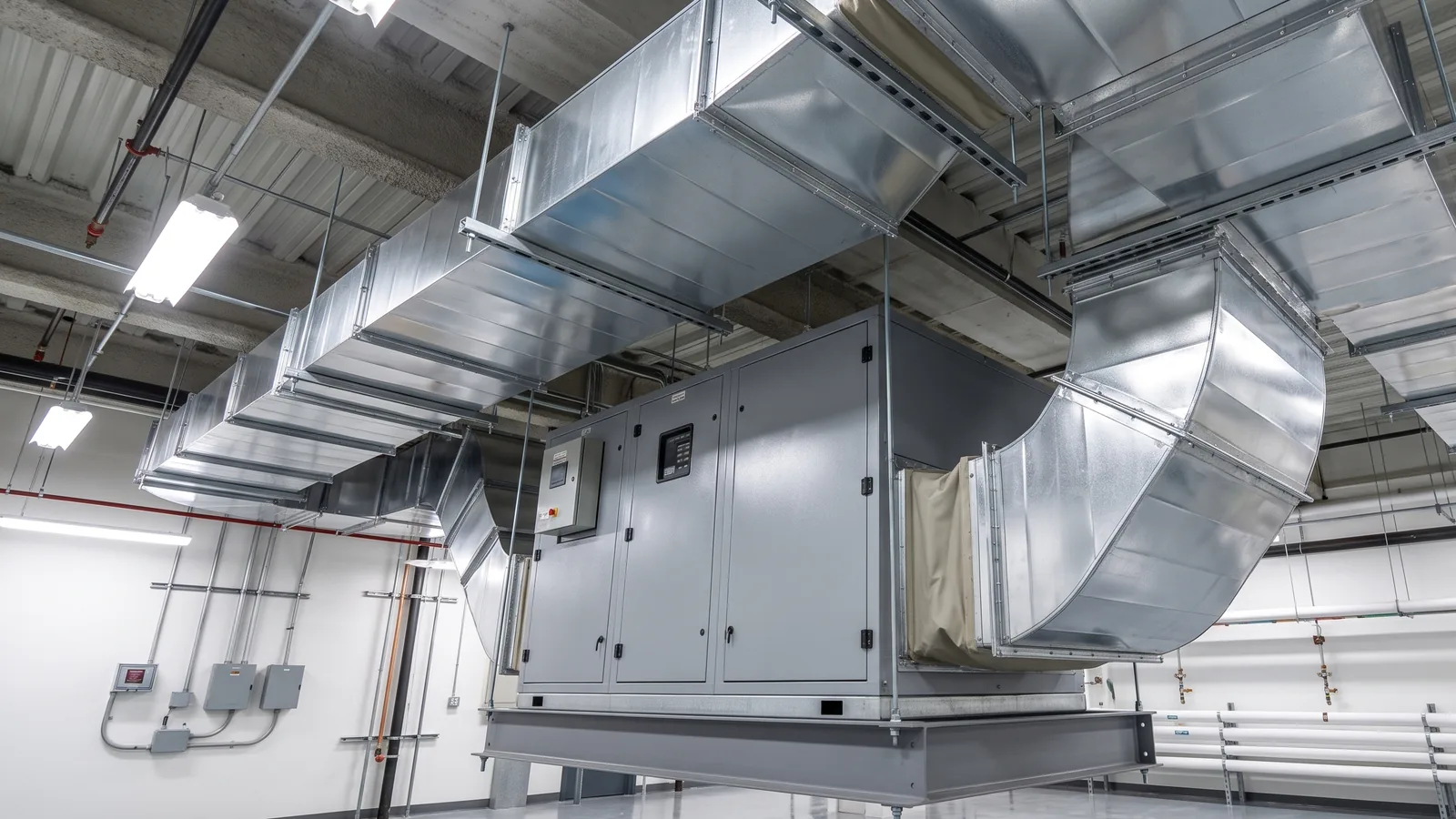
A desiccant dehumidifier sits in the air handling circuit that feeds the drying chamber. It strips moisture from the supply air before the air enters the chamber, maintaining consistent conditions throughout the drying cycle.
A typical food drying air circuit includes:
- Process air drawn from the drying chamber (warm, moisture-laden)
- Desiccant wheel adsorbs moisture from the process air stream
- Dry air is reheated to the target temperature
- Heated dry air re-enters the chamber and passes over the product
- Regeneration air stream heats a separate section of the desiccant wheel to drive off collected moisture
- Moisture-laden regeneration exhaust is vented outside the building
The desiccant wheel rotates continuously between the process and regeneration zones. This gives you an uninterrupted supply of dry air without the stop-start cycling of a refrigerant system.
Desiccant dehumidifiers can be ducted directly into existing drying chamber air handling systems. Retrofitting a desiccant unit into an underperforming refrigerant-based drying setup is one of the most common upgrades we see.
Desiccant vs Refrigerant Dehumidifiers for Food Drying
The two technologies serve different operating ranges. Choosing the wrong one means either inadequate drying capacity or wasted energy.
| Factor | Desiccant dehumidifier | Refrigerant dehumidifier |
|---|---|---|
| Achievable RH | 10% to 30% | 40% to 60% |
| Operating temperature | -20°C to +50°C | +5°C to +35°C |
| Coil icing risk | None | High below 15°C |
| Energy source | Heat for regeneration (gas or electric) | Compressor electricity |
| Best for | Low-humidity drying, cold rooms, freeze-dry prep | General climate control, warehousing |
| Moisture removal rate | Consistent regardless of temperature | Drops significantly in cool conditions |
For food drying specifically, the desiccant unit wins on performance and consistency. Refrigerant units still have a role in broader facility climate control, but not in the drying chamber itself.
Sizing a Desiccant Dehumidifier for Food Drying
Undersizing the dehumidifier is the most common mistake in food drying installations. The unit needs to handle the peak moisture load, not just the average.
Key variables that determine unit sizing:
- Product moisture content: how much water needs to be removed per batch (measured in kg/h)
- Target RH: the air conditions required for your specific product
- Chamber volume: total air volume the dehumidifier needs to process
- Air change rate: how many times per hour the chamber air turns over
- Ambient conditions: external humidity that the system needs to overcome, especially in coastal locations
- Temperature range: some products dry at 30°C, others at 70°C, and this affects the dehumidifier operating point
A site assessment identifies these variables and matches them to the right unit capacity. Getting this wrong means either slow drying cycles (undersized) or wasted energy (oversized).
Food Safety and Compliance Considerations
Commercial food drying operations in Australia must comply with FSANZ standards and state food safety regulations. Humidity control is directly tied to food safety because inadequate drying creates conditions where bacteria, yeast and mould survive.
- Water activity (aw) must be reduced below 0.6 for shelf-stable dried products
- Drying temperatures and times must be validated for pathogen reduction
- Air handling equipment in contact with food-zone air must be constructed from food-grade materials
- HACCP plans need to include humidity monitoring as a critical control point
- Desiccant units with stainless steel casings and food-safe rotor media meet hygiene requirements
A properly specified desiccant dehumidifier gives you the control to meet these requirements consistently, batch after batch. Inconsistent humidity means inconsistent water activity, which means product that fails quality checks or poses a safety risk.
Talk to Moisture Cure About Your Drying Application
Moisture Cure Commercial has been supplying humidity control equipment to Australian food producers for 28 years. We carry commercial and industrial dehumidification systems from YAKE, Antair and FRAL, covering everything from small batch herb dryers to large-scale continuous production lines.
- Free site assessment and airflow modelling
- Units rated for Australian conditions (-20°C to +50°C operating range)
- Ducted configurations for retrofit into existing drying chambers
- Ongoing service and maintenance support nationally
Contact Moisture Cure Commercial for a consultation on your food drying dehumidification requirements.