Hotels and aged care facilities share a problem that most building managers underestimate: persistent indoor moisture. Guest bathrooms running back to back, commercial laundries cycling all day, kitchen extraction pulling humid air through corridors.
In aged care, the challenge compounds further. Residents spend most of their time indoors, ventilation in climate-controlled wings is limited, and the Aged Care Quality Standards impose strict air quality obligations.
Standard HVAC systems handle temperature well enough. Humidity is another matter.
Air conditioning reduces moisture as a byproduct of cooling, but it cannot maintain a target relative humidity (RH) independently of temperature. That gap is where ducted dehumidification systems earn their place in the mechanical services specification.
Why Hotels and Aged Care Facilities Are Vulnerable to Excess Moisture
Both building types generate abnormally high internal moisture loads relative to their floor area. A 100-room hotel can produce over 400 litres of moisture per day from showers alone, before accounting for pools, spas, laundry and food preparation areas.
Aged care facilities face similar loads from bathing, cleaning protocols and industrial laundry. Limited opportunities to ventilate naturally make the problem worse.
- Guest bathrooms and ensuites produce concentrated moisture bursts multiple times per day
- Commercial kitchens and laundries generate sustained high-humidity airstreams
- Corridors and common areas act as moisture highways, transporting humid air between zones
- Aged care wings with restricted window opening accumulate moisture faster than mechanically ventilated air can remove it
- Pool and spa areas in hotels introduce massive evaporative loads that migrate through the building envelope
When indoor RH consistently exceeds 60%, the consequences are predictable: mould colonisation behind wall linings, corrosion of mechanical and electrical services, accelerated degradation of soft furnishings, and a measurable decline in indoor air quality (IAQ). For aged care, that IAQ decline directly affects residents with compromised respiratory systems.
What a Ducted Dehumidifier Actually Does in a Commercial Building
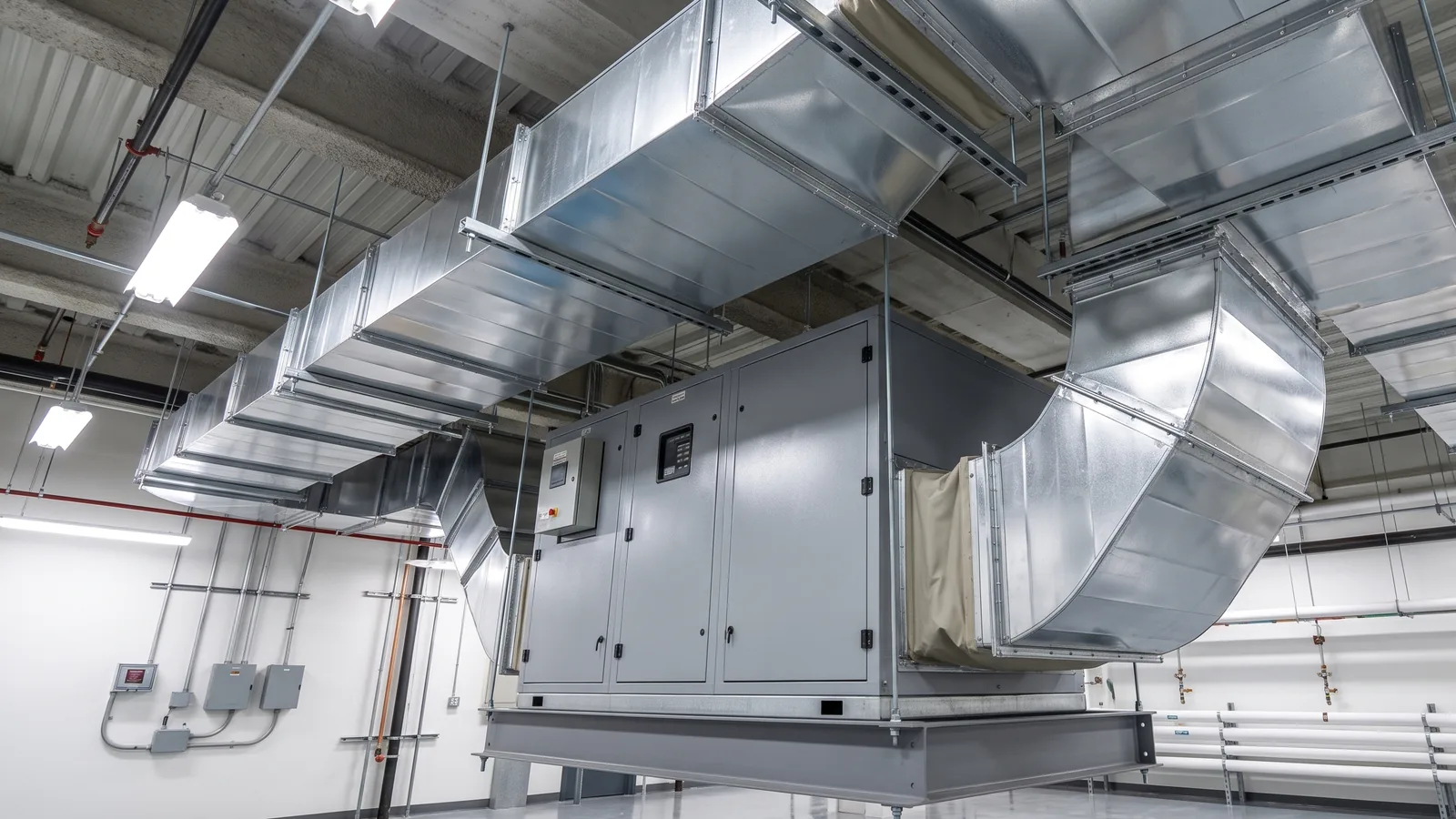
A ducted dehumidification system installs within the building’s ductwork, either inline with the existing HVAC supply and return or as a dedicated loop serving specific zones. The unit draws air from the return duct, removes moisture through either refrigerant or desiccant technology, and delivers drier air back through the supply duct.
The result is independent humidity control that operates regardless of the cooling or heating load. The air conditioning handles temperature, the dehumidifier handles moisture, and neither compromises the other.
- Concealed installation within ceiling voids or plant rooms, with no visible equipment in guest or resident areas
- Ducted connection to the existing air distribution system, reducing installation complexity
- Programmable RH setpoints, typically 45% to 55% for hotels and 40% to 50% for aged care
- Condensate drain connection for continuous unattended operation
- Optional BMS integration for centralised monitoring and alarm reporting
Refrigerant vs Desiccant: Which Technology Suits Each Facility
The choice between refrigerant-based dehumidifiers and desiccant units depends on the operating temperature range and the target humidity level. Hotels and aged care facilities often need both technologies deployed across different zones.
| Factor | Refrigerant | Desiccant |
|---|---|---|
| Best operating range | 15°C to 35°C | -20°C to 50°C |
| Target RH achievable | 45% to 55% | Below 35% if needed |
| Energy consumption | Lower at moderate temps | Higher, but consistent across temps |
| Typical hotel zones | Guest floors, corridors, lobbies | Pool halls, cold stores, plant rooms |
| Typical aged care zones | Resident wings, dining rooms | Laundry, storage, below-grade areas |
| Noise profile | Compressor hum (locate in plant room) | Fan noise only (quieter in-ceiling) |
For most hotel guest floors and aged care resident wings, a refrigerant ducted unit operating at moderate room temperatures provides the best balance of moisture removal and energy efficiency. Pool halls, cool rooms and basement storage areas suit desiccant technology because refrigerant coils lose effectiveness below about 15°C.
Sizing a Ducted Dehumidifier for Hotels
Under-sizing is the most common specification error in hospitality projects. A facility manager who bases the dehumidifier capacity on average occupancy will find the system overwhelmed during peak periods, which are precisely the times when guest complaints about musty rooms and condensation on windows are most damaging to reviews.
- Calculate moisture load based on peak occupancy, not average. A 100-room hotel at 95% occupancy produces roughly double the moisture of the same hotel at 50%
- Account for all moisture sources per zone: showers, cooking, laundry, pool evaporation, and fresh air ventilation loads
- Factor in the building envelope. Older hotels with poor vapour barriers admit more external moisture, particularly in tropical and subtropical Australian climates
- Allow for future expansion. Adding a day spa or converting a conference room to a pool area changes the moisture profile significantly
Moisture Cure Commercial provides sizing calculations as part of every enquiry. Rather than guessing capacity from catalogue data, request a site-specific assessment that accounts for your building’s actual moisture loads, climate zone and mechanical services layout.
Sizing for Aged Care Facilities
Aged care projects carry additional constraints that hotels do not. Residents are more sensitive to air quality changes, and infection control protocols demand specific ventilation rates under AS 1668.2.
The facility must maintain comfortable conditions around the clock, every day of the year. There is no off-season.
- Ventilation requirements under AS 1668.2 introduce large volumes of unconditioned outdoor air, which in humid Australian climates carries a substantial moisture load
- Bathing and personal care routines for residents with limited mobility generate prolonged moisture exposure in bathroom zones
- Infection control cleaning with water-based disinfectants adds moisture that manual ventilation cannot clear quickly enough
- Laundry facilities processing bedding and clothing continuously throughout the day are a major internal moisture source
Target relative humidity for aged care resident areas should sit between 40% and 50%. This range inhibits mould growth (which accelerates above 60% RH) and reduces dust mite populations.
For residents with COPD, asthma or other chronic conditions, that humidity band also supports respiratory comfort. The WHO guidelines on indoor air quality and dampness reinforce that persistent humidity above 60% RH creates conditions favourable to microbial growth.
Integration with Existing HVAC Systems
A ducted dehumidifier works with the mechanical services already in place. Retrofitting standalone portable units into a 200-bed aged care facility or a multi-storey hotel creates maintenance headaches, condensate management problems and aesthetic issues.
A ducted system avoids all of that.
- Install inline with the existing AHU (air handling unit) return air duct for whole-of-floor treatment
- Use a dedicated dehumidification loop for high-moisture zones like pool halls, kitchens and laundries
- Connect to the BMS via Modbus, BACnet or dry contact relays for centralised monitoring and alarm management
- Pipe condensate to existing drainage infrastructure to avoid bucket emptying and overflow risk
- Schedule operation based on zone occupancy and time-of-day moisture profiles to reduce energy consumption
For new builds, specifying the dehumidification system at the design stage allows the mechanical engineer to right-size ductwork and allocate plant room space. For retrofits, the commercial dehumidifier range includes compact ducted units that fit within existing ceiling voids without requiring structural modifications.
Compliance and Regulatory Considerations
Hotels and aged care facilities operate under different regulatory frameworks, but both require demonstrable control of indoor environmental quality. Failing to manage humidity exposes operators to complaints, remediation costs and, in aged care, regulatory sanctions.
- The National Construction Code (NCC) sets minimum ventilation rates that influence the volume of humid outdoor air introduced into the building
- AS 1668.2 governs mechanical ventilation requirements, including minimum outdoor air quantities for healthcare and residential care occupancies
- AS/NZS 3666 covers air-handling and water systems, requiring microbial control measures that humidity management directly supports
- The Aged Care Quality Standards (Standard 5, Living Environment) require providers to maintain a safe, comfortable and well-maintained environment
- Work Health and Safety legislation requires employers to manage risks to health from poor indoor air quality, including mould exposure
Ducted dehumidification does not replace ventilation. It supplements the HVAC system by removing moisture that ventilation alone cannot control, particularly in humid coastal and tropical climates across Australia.
Proper system design considers both ventilation rates and dehumidification capacity together.
Reducing Long-term Operating Costs
The upfront cost of a ducted dehumidification system is a fraction of the remediation costs that uncontrolled humidity generates over time. Hotels spend heavily on mould removal, replacement of water-damaged ceiling tiles, and guest compensation for rooms pulled from inventory during repairs.
Aged care operators face similar costs plus the reputational and regulatory consequences of poor environmental conditions.
- Reduced mould remediation frequency. Maintaining RH below 55% prevents the conditions mould needs to establish
- Extended lifespan of finishes, furnishings and mechanical equipment. Corrosion and moisture damage are the primary degradation mechanisms in humid environments
- Lower energy bills when the dehumidifier handles the latent load independently, allowing the air conditioning system to operate more efficiently on sensible cooling only
- Fewer guest complaints and negative reviews related to musty odours, damp carpets and condensation
- Documented compliance with environmental quality standards, reducing audit risk for aged care providers
Facilities that install purpose-built ducted dehumidification as part of their mechanical services specification avoid the cycle of reactive maintenance that portable or undersized units create. The system runs continuously in the background, maintaining target conditions without staff intervention beyond routine filter changes.
If you manage a hotel, motel, resort or aged care facility dealing with mould, odour or moisture-related maintenance problems, contact Moisture Cure Commercial for a consultation. The team has 28 years of experience sizing and supplying commercial dehumidification systems for Australian conditions and can recommend the right technology and capacity for your building.