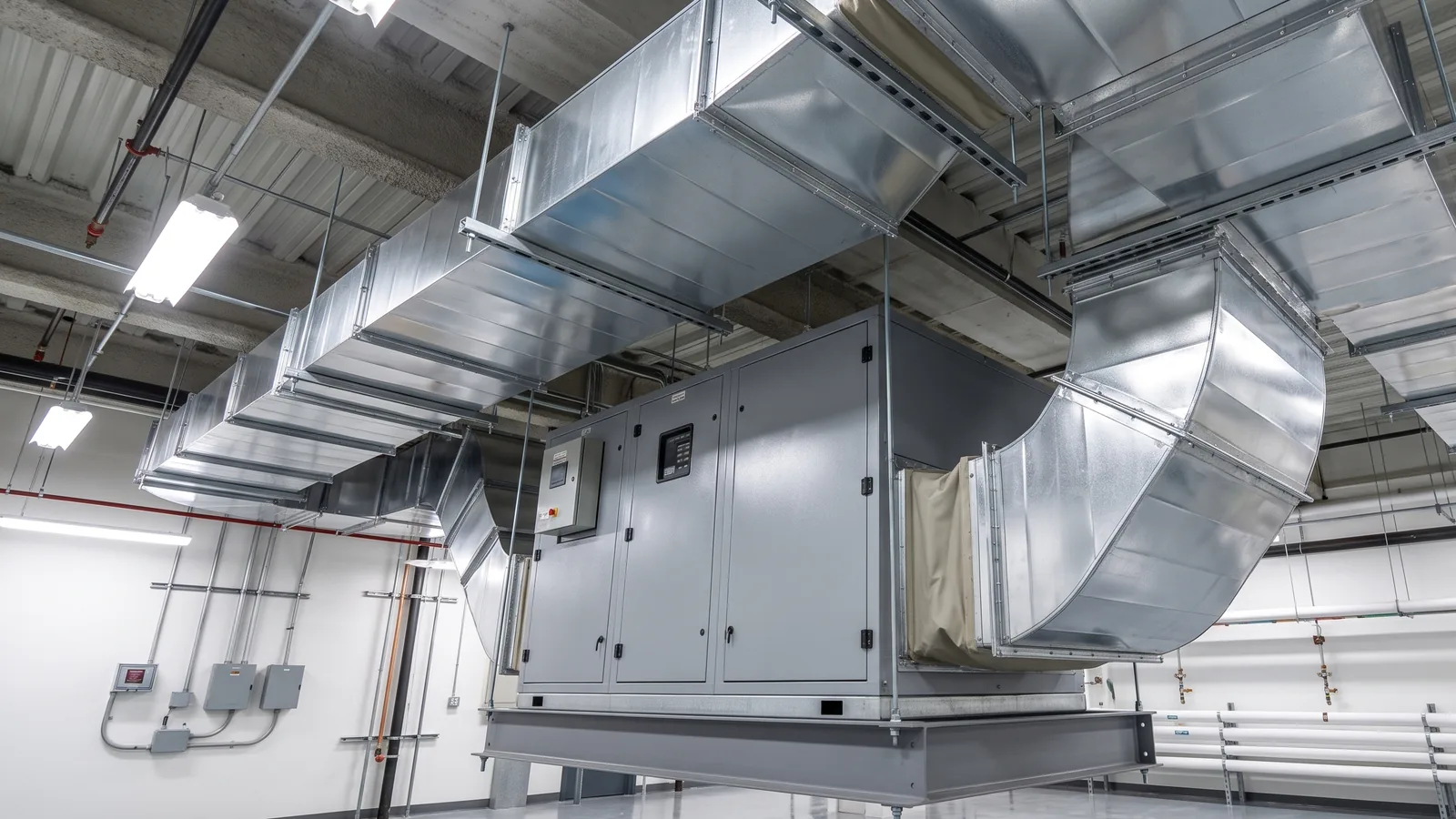
Energy efficiency in commercial dehumidification depends on how much moisture a system removes at your facility’s actual temperature and humidity. Equipment selection, controls and maintenance all affect consumption, but a low power rating alone does not establish efficiency.
Moisture Cure Commercial’s range of commercial dehumidifiers for facility humidity control provides a starting point for matching equipment to the moisture load. Compare shortlisted units at the conditions they will operate in, including quieter production periods.
Why energy consumption matters in commercial dehumidification
A system can hold the required humidity while using more energy than necessary. Before replacing it, establish where the energy goes and whether the humidity target is justified by the process or stored materials.
- Record electricity use and operating hours alongside room temperature and relative humidity (RH).
- Include fans, regeneration heaters, pumps and any extra cooling needed to remove discharged heat.
- Separate energy consumption in kWh from electrical demand in kW.
- Keep product protection and required environmental limits as acceptance criteria.
Compare moisture removal per unit of energy
ENERGY STAR explains the litres-per-kilowatt-hour efficiency metric: a higher value means more water removed per unit of energy under the test conditions. Its certification claims should not be treated as industrial-system savings guarantees.
For a refrigerant unit, divide measured condensate in litres by electricity consumed over the same period to calculate an operating L/kWh figure. Compare results at similar inlet temperature, RH and load; a site measurement is not a certified integrated energy factor.
How different dehumidifier technologies compare for efficiency
Refrigerant and desiccant describe moisture-removal methods; ducted describes air distribution. A ducted system therefore needs the same technology and energy assessment as a standalone unit.
| System | Where to consider it | What to compare |
|---|---|---|
| Refrigerant | Warm, humid commercial spaces | Extraction and input power at design conditions, including defrost behaviour in cooler periods |
| Desiccant | Cold spaces or processes requiring low moisture levels | Moisture removal, regeneration heat, fan electricity and dry-air discharge temperature |
| Ducted arrangement | Several rooms or spaces needing distributed dry air | Selected drying technology, duct pressure losses, leakage and zone controls |
Consider refrigerant dehumidifiers for warm, humid facilities where cooling air to condense moisture suits the operating conditions. Request performance data at your design temperature rather than relying on the largest advertised litres-per-day capacity.
Desiccant dehumidifiers for cold or low-humidity environments suit applications where condensing moisture becomes difficult. The US Department of Energy’s desiccant technology report explains thermal regeneration, so include that heat input when comparing systems.
Humidity controls and variable output
Precision humidity monitoring
Place control sensors where they represent the protected space, away from dry-air outlets and local moisture sources. Check readings against a suitable reference before changing setpoints to solve an apparent control problem.
Variable capacity operation
The Australian Government’s HVAC guidance identifies control tuning, accurate measurement and variable output among efficiency measures. Ask how the controls respond as the moisture load rises and falls.
- Stage multiple units so all units do not cycle together unnecessarily.
- Ask for part-load performance where inverter control is offered.
- Use a suitable control differential and minimum run times to limit rapid cycling.
- Do not equate a lower starting electrical draw with proven annual kWh savings.
Heat recovery and reclaim systems
Recovered heat is useful when a compatible heating demand exists at the same time. The Australian Government’s refrigeration efficiency guidance describes using recovered heat to offset other heating duties.
- Check the temperature and quantity of heat available.
- Match it to a real demand, such as process water preheating or space heating.
- Include extra pumps, fans and heat exchanger losses in the assessment.
- Provide a way to reject heat when the facility does not need it.
Desiccant regeneration using available process heat needs a specific engineering assessment. Heat that is too cool, intermittent or costly to transfer may not displace the normal heater duty.
Optimising performance through proper sizing
Floor area alone cannot determine the required capacity. Calculate moisture entering and generated within the space, then select equipment that can meet the load at the specified operating conditions.
| Load factor | Information to collect |
|---|---|
| Building envelope | Leaks, door openings and adjoining wet areas |
| Process moisture | Washdown, exposed water, wet products and drying schedules |
| Ventilation | Required outdoor airflow and outdoor moisture conditions |
| Occupancy | People and working patterns |
| Operating target | Required RH or dew point, room temperature and recovery time after a disturbance |
Separate the initial drying load from normal holding duty. An oversized fixed-output system may cycle frequently at light load, while an undersized system may run continuously without reaching the required conditions.
Integration with building management systems
Decide who will review BMS alarms and energy trends before commissioning. Agree on the control sequence with the commissioning team.
- Trend humidity, temperature, run status and energy use together.
- Alarm on sustained humidity excursions and sensor faults.
- Coordinate dehumidification with ventilation and cooling controls.
- Check that reduced operating hours still protect stored goods.
- Apply demand response only within the facility’s environmental limits.
Maintenance practices that preserve efficiency
Use the manufacturer’s service requirements and site conditions to set maintenance intervals. A dusty production area needs a different inspection routine from a clean archive.
| Task | What to check | Reason |
|---|---|---|
| Filters and air paths | Loading, obstructions and pressure drop where monitored | Restricted airflow can reduce delivered capacity |
| Heat exchangers | Fouling and damage | Impaired heat transfer can extend operating time |
| Condensate drains | Drainage and pump operation | Blockages can interrupt drying |
| Refrigerant circuit | Qualified technician assessment where performance indicates a fault | Incorrect charge or leaks can impair operation |
| Desiccant assembly | Rotor, seals and regeneration airflow as specified | Faults can compromise moisture removal |
| Controls | Sensor accuracy and operating sequence | Incorrect readings can cause unnecessary drying |
Selecting systems for Australian conditions
Use site measurements and design weather conditions, including seasonal variation. A coastal warehouse, a chilled processing room and a dusty inland factory impose different demands.
- Confirm the permitted inlet temperature range and performance at its extremes.
- Specify appropriate protection where salt or process contaminants are present.
- Allow access for filters, servicing and reliable drainage.
- Check support arrangements and spare parts for remote facilities.
Balancing humidification and dehumidification needs
Facilities with both systems need coordinated setpoints so they do not add and remove moisture simultaneously in the same zone. This matters in archives, electronics production and other processes with an approved humidity band.
- Define separate humidification and dehumidification thresholds.
- Allow a suitable neutral band between them.
- Check that both controllers use representative, calibrated measurements.
Evaluating total cost of ownership
Procurement comparisons should use the same duty, environmental limits and assessment period. Ask suppliers to state assumptions rather than promising a universal saving.
- Equipment, installation and controls integration
- Electricity and any separately supplied regeneration heat
- Servicing, consumables and access requirements
- Additional heating or cooling effects
- Downtime exposure and replacement planning
Review the commercial and industrial dehumidifier options against this duty specification. Shortlist units that meet the specified moisture load and operating conditions.
Checking energy performance claims before procurement
Ask the supplier to identify which test method supports each capacity and efficiency figure. A general reference to an energy standard does not show that two units were tested under comparable conditions.
- Request inlet temperature, RH, airflow and energy inputs for the quoted rating.
- Check whether auxiliary loads are included.
- Have the project designer confirm applicable building and equipment requirements.
Energy saving industrial dehumidification
Start by reducing avoidable moisture entry, then tune controls and verify the result under comparable conditions. The Australian Government’s guidance on optimising existing HVAC systems supports reviewing schedules, setpoints, maintenance and minor repairs before replacement.
- Establish a baseline covering representative production and non-production periods.
- Repair avoidable leaks and manage door openings while retaining required ventilation.
- Trial one control change at a time within approved humidity limits.
- Compare energy use alongside weather, throughput and humidity compliance.
- Retain a change only when it reduces consumption without compromising the operating requirement.
For temperature-sensitive storage, energy efficiency in wine cellar climate control is a related application where heating, cooling and humidity settings need to work together.
Frequently asked questions
A lower electricity reading is useful only if the system still meets the required humidity limits.
Are commercial dehumidifiers energy efficient?
They can be when their technology, capacity and controls suit the load. Compare moisture removed per unit of energy while maintaining the required environmental conditions.
How do I calculate electricity consumption?
For steady input, multiply average power in kW by operating hours to obtain kWh. Use a meter for cycling or variable-output equipment, and include auxiliary electricity in the total.
Is refrigerant or desiccant dehumidification more efficient?
The answer depends on temperature, required moisture level and available regeneration heat. Compare both options at the same design duty, including any additional cooling required.
Does ducting automatically save energy?
No, distribution can improve coverage but also adds fan resistance and potential leakage. Assess duct layout and zone requirements when sizing a ducted dehumidifier system for your facility.
What humidity setpoint uses the least energy?
Use the least demanding target that still meets the process or material requirement. There is no single appropriate RH setting for every commercial application.
Should the system run overnight?
Keep humidity control available when stored materials or ongoing processes need it. Test any reduced-hours schedule with monitoring, including recovery before production resumes.
Will an inverter guarantee lower consumption?
No, variable output needs suitable controls and efficient operation at the loads encountered. Ask for part-load data and confirm performance after installation.
Can recovered heat reduce total energy use?
Yes, when usable heat replaces another heating input. Check that the demand coincides with dehumidifier operation and account for transfer energy and losses.
How can a facility prove an improvement worked?
Compare metered consumption before and after the change alongside operating conditions and humidity excursions. Lower consumption during lower production or drier weather is not sufficient evidence by itself.
Talk to Moisture Cure Commercial
Contact Moisture Cure Commercial on (02) 6584 2511 for a consultation or site assessment. Bring the information below so the discussion can focus on equipment sizing and energy use.
- Room dimensions, temperature and humidity records
- Process schedules and known moisture sources
- Existing equipment details and energy records
- Required environmental limits and any planned production changes