Commercial dehumidifiers can pull hundreds of litres of water from the air every day, and that water has to go somewhere.
The condensate drainage system is what makes the difference between a dehumidifier that runs unattended for weeks and one that shuts off every morning with a full tank alarm. Getting the drainage right matters more than most people think when they order the unit.
This guide covers the four main approaches to condensate drainage for a commercial dehumidifier, how to size the drain line, what fall and trap arrangements suit each method, and where Australian plumbing compliance sits.
Specifying a dehumidifier for a new project? Browse the full commercial dehumidifier range or see specific options across desiccant units and refrigerant units.
How Much Water a Commercial Dehumidifier Actually Produces
Water output is the starting point for any drainage decision. A small portable unit might produce 20 to 40 litres per day. A large warehouse dehumidifier pulls 100 to 500 litres. Industrial desiccant wheels for pharmaceutical cleanrooms can move thousands of litres daily.
The drainage system has to handle the unit’s peak output, not its average. Peak output happens when the air is warm and highly humid, which in Australia usually means January and February across most of the east coast. Sizing the drainage for an average February day is the right benchmark.
| Dehumidifier type | Typical daily output | Drainage approach |
|---|---|---|
| Small portable refrigerant | 20 – 50 L/day | Tank or short gravity drain |
| Mid-size refrigerant | 50 – 150 L/day | Gravity drain or condensate pump |
| Large commercial refrigerant | 150 – 500 L/day | Hard-piped to drain, pump if needed |
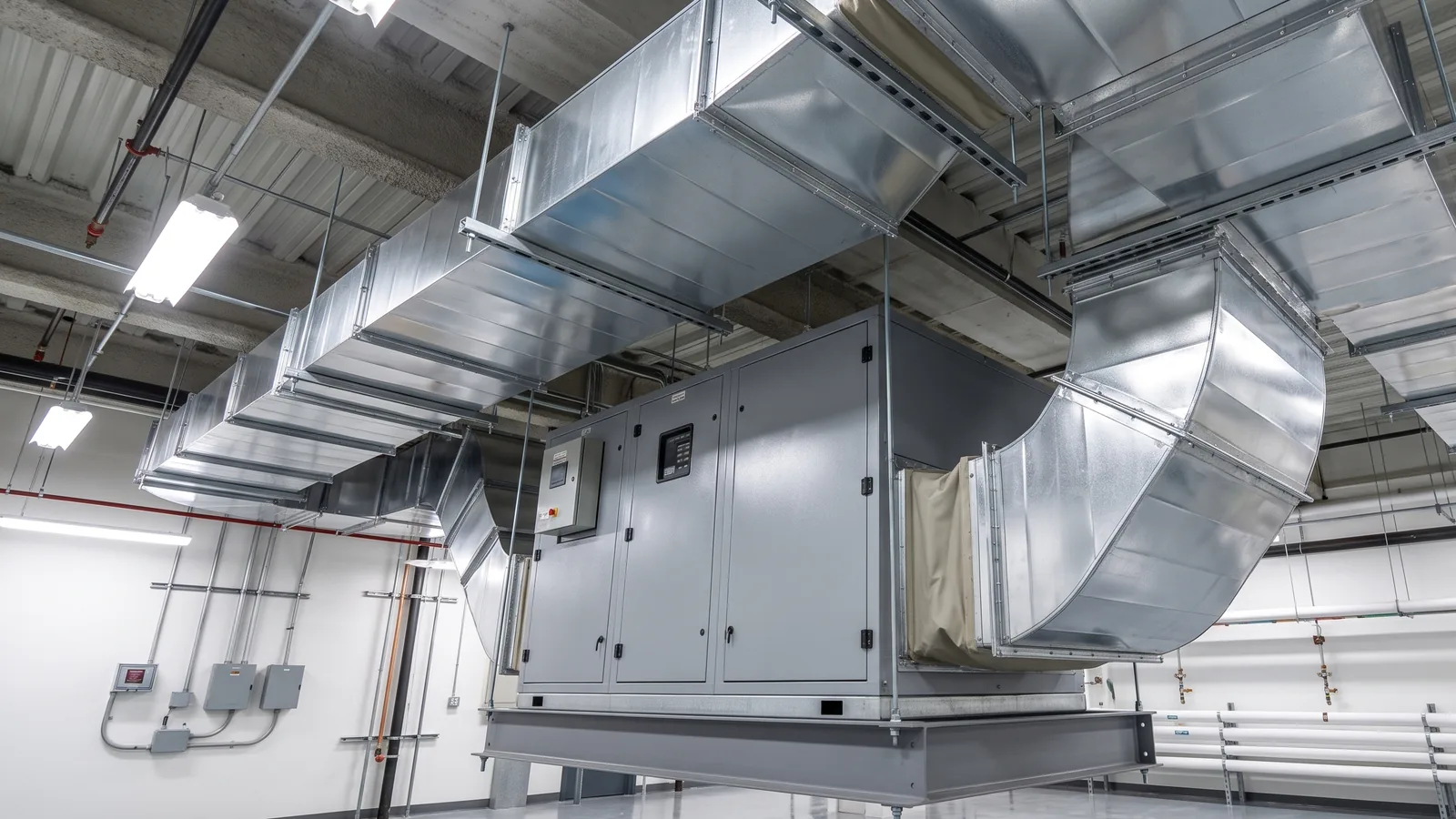
| Ducted building systems | 200 L – 2,000+ L/day | Dedicated waste line, trap, air gap |
| Industrial desiccant | Up to 10,000 L/day | Engineered condensate system |
The Four Drainage Methods and When Each Fits
There are four common approaches to handling condensate from a commercial dehumidifier. The right choice depends on how much water the unit produces, where it is installed relative to the nearest drain, and whether the facility has 24/7 occupancy or is run unattended overnight.
1. Internal tank with float switch
The water collects in the unit’s own tank and the float switch stops the unit when full. Common on small portables. Only suitable where someone can empty the tank every day or two. Not a commercial solution for anything beyond emergency drying use.
2. Gravity drain to a floor waste or sink
A hose or pipe runs from the unit’s drain outlet to a floor waste, tundish or sink. The unit must sit above the drain point with consistent fall along the line. Works on most refrigerant dehumidifiers where a drain is within a few metres and the unit can sit on blocks or a raised platform.
3. Condensate pump
A small pump kicks in when the reservoir fills and lifts condensate to a drain that sits higher than the unit. Essential in basements, pits, or anywhere a gravity drain would need to run uphill. Pumps are a wear item and need annual inspection.
4. Hard-piped direct to waste
A fixed pipe runs from the dehumidifier’s drain outlet, through a trap and air gap, to the building waste system. The right choice for permanently installed commercial units and ducted building systems. Requires a licensed plumber in most Australian jurisdictions.
Rule of thumb: If the unit will be left running unattended for more than 24 hours at a time, it needs either gravity drain, pump, or hard-pipe. Tank-only is not a commercial solution.
Sizing the Drain Line and Setting the Fall
Drain line sizing for a commercial dehumidifier is straightforward, but getting it wrong creates slow drainage, biofilm build-up, and backflow into the unit. Two things matter: pipe diameter and fall.
- Minimum diameter: 20mm internal for small units (under 100 L/day). 25mm to 32mm for mid-size. 40mm+ for large commercial and ducted systems.
- Fall: Minimum 1:100 (10mm per metre). For long runs or high-output units, 1:50 is safer.
- Maximum run on gravity: Around 10 to 15 metres before the line should be inspectable or increased in diameter.
- Trap: Every drain line to a waste system needs a water-sealed trap to stop sewer gas travelling back up the line.
- Air gap: The discharge point should have a visible air gap above the waste fitting to prevent backflow.
On a ducted system pulling 500 litres a day, a 25mm pipe with 1:100 fall is plenty. On industrial desiccant running into the thousands of litres daily, the drainage becomes a full plumbing design exercise with dedicated traps, overflow sensors, and sometimes a holding tank before the main waste.
When a Condensate Pump Is the Right Answer
Condensate pumps are used when the nearest drain sits higher than the dehumidifier, or where a gravity run would be impractically long. They are small, quiet, and fit inside or near the unit.
The tradeoff is that pumps introduce a moving part that can fail. A blocked non-return valve, a burnt-out motor, or a seized float all cause the same outcome: water overflows the unit or the safety cut-off shuts it down. On a site that needs 24/7 humidity control, the pump needs regular inspection and a backup plan.
- Lift capacity: Most small pumps lift 3 to 5 metres. Specialist pumps go higher.
- Flow rate: Must exceed the dehumidifier’s peak hourly output by a margin of 2x or more.
- Non-return valve: Essential on any lift to stop backflow into the unit between pump cycles.
- Overflow sensor: Wires to the dehumidifier’s safety shutoff so a pump failure stops the compressor before the unit floods.
- Access: Install with enough clearance to open and clean the pump twice a year.
Where Condensate Drainage Gets Complicated
On simple sites, drainage is a length of 25mm PVC to the nearest floor waste. On complex sites, drainage becomes part of the building services design. A few situations make it harder than expected.
Basements and below-grade plantrooms
The drain is almost always above the unit, so a pump is required. On critical systems, a dual-pump setup with automatic changeover is the safe specification.
Cleanrooms and pharma
Condensate from cleanroom dehumidifiers can carry contaminants and is sometimes classed as trade waste. Discharge routing depends on the facility’s waste permit and may need treatment before going to sewer.
Cold stores and chillers
Condensate will freeze in unheated lines. Trace heating or routing the pipe through a heated zone is needed. This is common on refrigerated warehouses running refrigerant or desiccant units near the dock doors.
Ducted building systems
A ducted dehumidifier serving an entire floor or building produces enough condensate to justify a dedicated waste line. The design usually includes a primary trap, an overflow switch, and in some cases an overflow pan to catch any leak before it damages ceilings below.
For ducted and building-integrated applications, see the ducted dehumidifier range. These units are specified and installed alongside the building services, and Moisture Cure can assist with condensate routing during quote stage.
Plumbing Compliance in Australia
In Australia, any fixed connection to the building’s waste system is plumbing work under AS/NZS 3500 and the relevant state plumbing regulations. That covers hard-piped dehumidifier drains running to a sewer or stormwater connection. It does not cover a flexible hose from a portable unit to a floor waste or sink.
- Portable unit to floor waste: No licensed plumber required in most states. The hose simply discharges to an existing fixture.
- Fixed pipe to waste: Licensed plumber required. Must comply with AS/NZS 3500.
- Trade waste discharge: Some facilities (food, pharma, automotive) need a trade waste permit from the local water authority, regardless of volume.
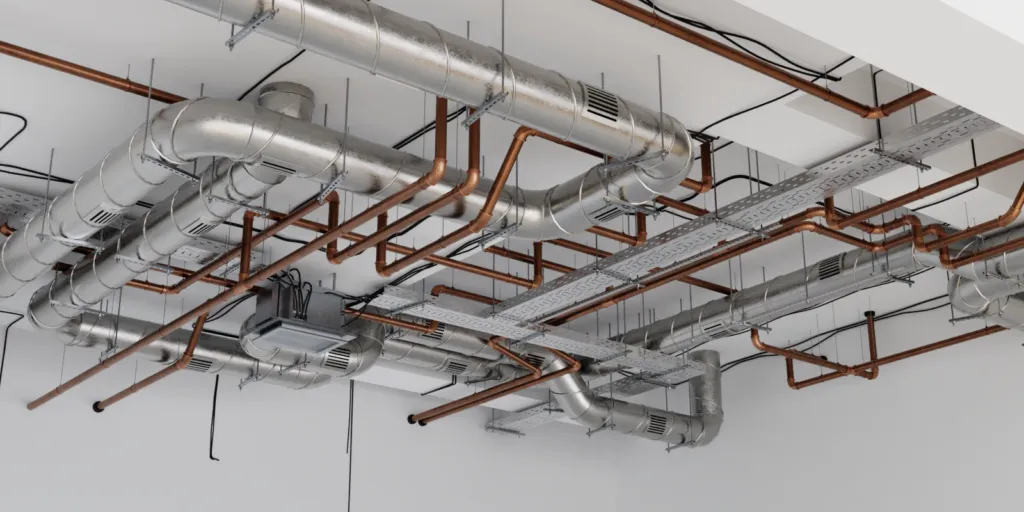
- Ceiling-space pipes: Must be insulated to avoid condensation on the outside of the pipe dripping onto ceiling tiles.
Getting the plumbing signed off is often the longest lead-time item on a commercial dehumidifier install. Raising it during the design stage saves weeks of commissioning delay.
Maintenance Points That Keep Drainage Working
Condensate drainage is low-drama until it is not. When it fails, the usual outcome is water on the floor or a shutdown of the humidity control system. A short annual maintenance list prevents most issues.
- Flush drain lines with a dilute bleach or enzyme solution twice a year to break up biofilm
- Inspect traps for debris build-up, especially on units near dusty environments like warehouses or workshops
- Test the overflow sensor and safety shutoff by manually tripping the float switch
- Check pump performance by timing one cycle against the expected flow rate
- Insulate any exposed pipe in unconditioned spaces to prevent external condensation
- Confirm the air gap at discharge is still free of splashback deposits
Getting Condensate Drainage Right from the Start
The cheapest time to get condensate drainage right is before the dehumidifier is specified. Sorting drainage during the quote stage avoids site revisits, failed commissioning, and unexpected plumbing bills.
For help specifying a commercial dehumidifier with the right drainage approach for the facility, browse the Moisture Cure range or contact the team for a site assessment. The engineering team can advise on gravity vs pump, pipe sizing, and compliance for Australian installations.