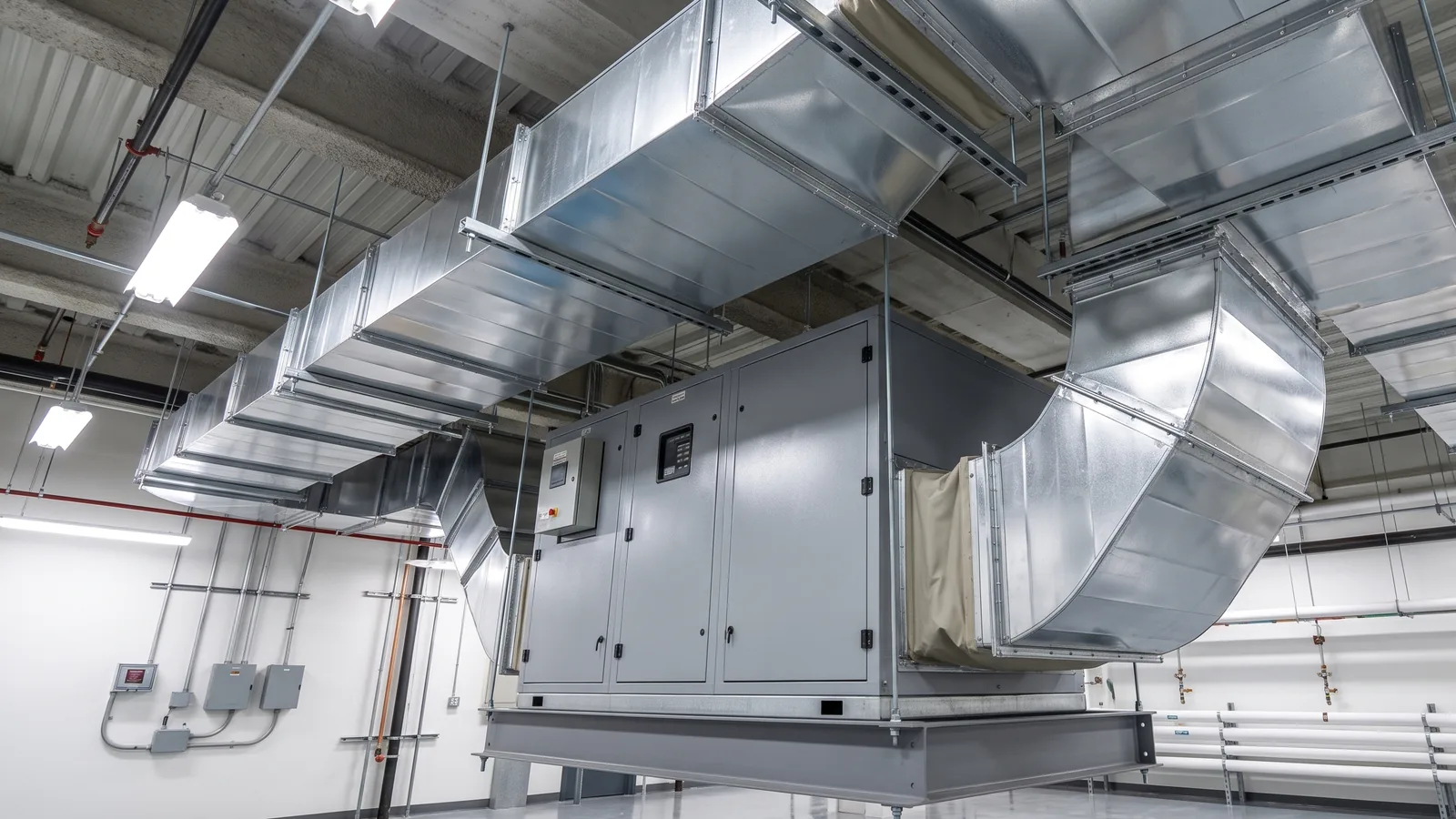
Ultrasonic cool mist humidifiers use high-frequency vibration to atomise water into microscopic droplets that disperse as a visible mist.
In commercial and industrial environments across Australia, selecting the right humidification technology determines whether your facility maintains precise humidity control or battles ongoing condensation, equipment damage, and process failures. Most facility managers inherit residential-grade thinking about humidifiers, leading to undersized units that run continuously on duty cycles they were never designed to handle.
This article examines ultrasonic humidification technology from a commercial perspective, covering capacity calculations, maintenance protocols, water quality requirements, and the critical temperature performance thresholds that separate functional installations from costly mistakes. Having supplied humidity control solutions across Australian commercial facilities for over 20 years, Moisture Cure Commercial has documented the specific failure modes that occur when ultrasonic systems are misapplied in industrial environments.
What is an Ultrasonic Cool Mist Humidifier?
An ultrasonic cool mist humidifier generates water droplets through piezoelectric transducers vibrating at frequencies above human hearing range, typically 1.65 to 2.4 MHz. These vibrations create standing waves on the water surface that eject droplets measuring 1 to 5 microns in diameter.
The term “cool mist” distinguishes this technology from steam-based systems that boil water. Ultrasonic units require no heating element, consuming significantly less electricity while producing a room-temperature vapour that won’t elevate ambient temperatures.
- Droplet size: 1–5 microns (smaller than evaporative systems at 8–15 microns)
- Operating frequency: 1.65–2.4 MHz depending on commercial or industrial-grade transducers
- Power consumption: 30–80W for commercial units versus 300–1500W for equivalent steam generators
- Output temperature: Ambient (no thermal load contribution)
- Humidity addition rate: 300mL/h to 15L/h depending on transducer count and commercial capacity
In commercial environments, ultrasonic systems excel where adding moisture without elevating temperature matters: pharmaceutical storage, electronics manufacturing, textile facilities, and print operations. The microscopic droplet size allows rapid evaporation into the air stream without visible settling or surface wetting when properly sized.
How Does an Ultrasonic Humidifier Work?
The operational principle relies on cavitation at the liquid-air interface. When ultrasonic waves propagate through water, they create alternating compression and rarefaction cycles that tear apart the liquid surface.
A piezoelectric ceramic disc converts electrical energy into mechanical vibration. This disc sits submerged beneath a water reservoir, generating ultrasonic waves that travel upward through the liquid.
The Atomisation Process
- High-frequency electrical current energises the piezoelectric transducer
- The transducer vibrates at 1.65–2.4 MHz, creating ultrasonic waves in the water
- These waves generate localised pressure fluctuations exceeding the water’s cohesive strength
- Microscopic water droplets eject from the surface in a visible fountain-like plume
- An internal fan directs this mist into the surrounding air or ductwork
- Droplets evaporate rapidly due to their microscopic size, increasing relative humidity
Commercial installations require transducers rated for continuous duty cycles. Residential-grade piezoelectric discs fail within months under 24/7 operation, a costly lesson learned by facility managers who specify equipment based on output capacity alone without examining the duty cycle rating.
Critical Specification Error: A residential ultrasonic humidifier rated at 500mL/h appears to match a small commercial space requirement. However, residential units are engineered for 8-hour intermittent cycles, not 24-hour continuous operation. The transducer overheats and fails within 60–90 days under commercial duty. Always verify the manufacturer’s specified duty cycle before procurement.
Are Ultrasonic Humidifiers Better Than Evaporative Humidifiers?
Neither technology is universally superior. The optimal choice depends on your facility’s temperature profile, air velocity requirements, maintenance capacity, and water quality constraints.
Ultrasonic systems excel in temperature-controlled environments where adding heat is undesirable. Evaporative systems perform better in high-velocity air streams and tolerate poor water quality with less consequence.
| Factor | Ultrasonic | Evaporative |
|---|---|---|
| Power consumption | 30–80W per litre/hour output | 150–300W per litre/hour output |
| Droplet size | 1–5 microns (invisible after evaporation) | 8–15 microns (may settle on surfaces) |
| Mineral dispersion | All dissolved solids become airborne as white dust | Minerals remain on evaporative media |
| Maintenance frequency | Daily water quality checks, weekly transducer cleaning | Monthly media replacement |
| Noise level | 35–45 dB (fan only) | 45–60 dB (higher air velocity) |
| Temperature sensitivity | Operates efficiently at any temperature above freezing | Effectiveness drops below 15°C |
| Installation footprint | Compact (no large media chambers) | Larger cabinet for evaporative media |
In pharmaceutical manufacturing and electronics assembly where particulate contamination is unacceptable, the mineral dispersion characteristic of ultrasonic systems becomes a disqualifying factor unless reverse osmosis water treatment is installed. Conversely, in textile facilities and print operations where air handling units already filter particulates, ultrasonic systems deliver superior energy efficiency.
Moisture Cure Commercial encounters facility managers who select humidification technology based solely on upfront cost. This approach ignores operating expenses over the unit’s 5–10 year service life, where electricity consumption and maintenance labour costs typically exceed the initial purchase price by 3:1 or higher.
Do Ultrasonic Humidifiers Cause White Dust?
Yes. Any mineral content in the source water becomes airborne as fine particulate matter that settles as white dust on surfaces throughout the space.
Ultrasonic atomisation does not discriminate between water molecules and dissolved minerals. Calcium, magnesium, sodium, and other dissolved solids present in the water become microscopic particles suspended in the mist.
Dissolved Solids Thresholds
- Below 50 ppm TDS: Negligible visible dust accumulation in most commercial spaces
- 50–150 ppm TDS: Light dust film appears on surfaces within 7–14 days
- 150–300 ppm TDS: Noticeable dust accumulation within 48–72 hours, requiring increased cleaning frequency
- Above 300 ppm TDS: Heavy white deposits, potential equipment damage, unacceptable for most commercial applications
Australian municipal water typically measures 80–250 ppm TDS depending on the region. Perth and Adelaide frequently exceed 150 ppm, while Melbourne typically stays below 100 ppm. According to Bureau of Meteorology water quality data, seasonal variation can shift these values by 30–50 ppm as water authorities adjust source allocations.
Commercial installations require either demineralised water, reverse osmosis treatment, or distilled water supplies. Facilities attempting to operate ultrasonic humidifiers on untreated tap water face escalating cleaning costs, HVAC filter loading, and particulate contamination complaints within the first operating month.
Water Treatment Economics: A reverse osmosis system for a 3L/h ultrasonic humidifier costs approximately $2,800–$4,500 installed. Over 5 years of operation, the alternative (using distilled water at $4–$6 per 20L) costs $21,900–$32,850 in consumables alone. The RO system pays for itself within 3–4 months.
How Often Should You Clean an Ultrasonic Humidifier?
Commercial ultrasonic humidifiers require transducer cleaning every 7 days under continuous operation with treated water, or every 48–72 hours with untreated water. Neglecting this schedule reduces output capacity by 40–60% within two weeks.
Mineral deposits form a crystalline layer on the transducer surface that dampens vibration efficiency. Even with reverse osmosis water containing residual 5–10 ppm TDS, deposits accumulate gradually.
Commercial Cleaning Protocol
- Shut down and disconnect power (lockout/tagout procedures for industrial installations)
- Drain the reservoir completely and dispose of standing water (never re-use)
- Remove transducer assembly according to manufacturer specifications
- Inspect ceramic disc surface for scale buildup (appears as white or brown crusty deposits)
- Soak transducer in white vinegar solution (5% acetic acid) for 20–30 minutes
- Use a soft brush (not abrasive pads) to remove loosened deposits
- Rinse thoroughly with demineralised water
- Clean reservoir walls and base with hydrogen peroxide solution (3–6%)
- Reassemble and test output capacity before returning to service
Facilities operating multiple ultrasonic units should implement a rotating maintenance schedule rather than cleaning all units simultaneously. This prevents complete loss of humidification during maintenance windows.
While dehumidification requirements often dominate Australian commercial facilities (Moisture Cure Commercial supplies desiccant systems for most humidity control projects), humidification needs arise in printing operations, electronics manufacturing, and healthcare environments. In these applications, the maintenance discipline required for ultrasonic systems often surprises operations teams accustomed to lower-touch HVAC equipment.
What Size Ultrasonic Humidifier Do I Need for My Space?
Commercial humidifier sizing requires calculating the moisture addition rate needed to offset air change losses, material absorption, and process extraction. Residential “square metre” guidelines fail completely in commercial environments.
The correct sizing formula accounts for ventilation rates, desired humidity setpoint, outdoor air conditions, and process loads. Undersizing by even 20% results in units running continuously at maximum output, never achieving target humidity levels.
Basic Sizing Calculation
Required moisture addition (L/h) = (Air changes per hour × Room volume × Humidity deficit) ÷ 1000
Where humidity deficit = (Target RH% – Incoming air RH%) × Moisture holding capacity at operating temperature
- Office space, 250m³, 2 air changes/hour, 20°C: Target 50% RH from incoming 30% RH requires approximately 1.2L/h capacity (assuming 8.7g/m³ moisture holding capacity at 20°C)
- Warehouse, 2,000m³, 4 air changes/hour, 15°C: Target 45% RH from incoming 25% RH requires approximately 10.2L/h capacity (moisture holding capacity drops to 6.4g/m³ at 15°C)
- Clean room, 150m³, 15 air changes/hour, 22°C: Target 40% RH from incoming 20% RH requires approximately 4.8L/h capacity (high air change rate dominates the calculation)
These calculations assume no process moisture loads (such as packaging operations that introduce additional dry air) and stable outdoor conditions. Australian facilities often face 40–60% swings in outdoor RH between morning and afternoon, requiring variable-output systems or staged capacity.
Moisture Cure Commercial provides sizing calculations as part of project quotations, drawing on two decades of Australian commercial installations. The most common specification error is applying residential humidifier marketing claims (coverage area in square metres) to commercial spaces where ceiling height, ventilation rates, and process loads invalidate those simplified metrics.
Oversizing Consideration: Unlike heating and cooling systems where oversizing creates short-cycling problems, humidifiers benefit from 20–30% excess capacity. This headroom accommodates peak demand periods, compensates for transducer efficiency degradation between cleanings, and allows part-load operation that extends component life. Specify capacity based on peak winter conditions when incoming outdoor air carries minimal moisture.
Can Ultrasonic Humidifiers Spread Bacteria?
Yes, if water remains stagnant in the reservoir or if biofilm develops on internal surfaces. Unlike steam humidifiers that boil water and kill microorganisms, ultrasonic systems atomise whatever is present in the water supply.
Research published in Indoor Air journal documented bacterial concentrations in ultrasonic humidifier mist samples ranging from 10² to 10⁵ CFU/m³ depending on water source and stagnation time. Commercial healthcare and food processing facilities cannot tolerate this microbiological risk.
Contamination Prevention Measures
- Daily water changes (never top up existing water in the reservoir)
- Antimicrobial reservoir materials (silver-ion treated plastics or stainless steel)
- UV-C sterilisation lamps integrated into the water reservoir (commercial-grade systems only)
- Hydrogen peroxide dosing systems for continuous disinfection
- Complete drain-down during non-operating periods (weekends, shutdowns)
- Quarterly deep cleaning with approved disinfectants
Facilities with immunocompromised occupants (hospitals, aged care) or products susceptible to microbial contamination (food packaging, pharmaceutical) should specify ultrasonic systems with integrated UV sterilisation. This adds $800–$2,200 to the equipment cost but eliminates the biological amplification risk that makes untreated ultrasonic systems unacceptable in these applications.
The commercial humidity control projects Moisture Cure Commercial typically handles involve moisture removal rather than addition, with applications ranging from cold storage facilities to construction drying. When humidification is required, we specify equipment with disinfection systems appropriate to the facility’s contamination risk profile.
How Much Electricity Do Ultrasonic Humidifiers Use?
Commercial ultrasonic humidifiers consume 30–80W per litre/hour of output capacity. A 5L/h commercial unit operating continuously draws 150–400W, or 3.6–9.6 kWh per day.
This represents 85–92% lower energy consumption than electrode steam generators producing equivalent moisture output. However, ultrasonic systems require water treatment infrastructure that consumes additional energy.
Total System Energy Analysis
- 5L/h ultrasonic humidifier: 350W (transducers + fan)
- Reverse osmosis system: 85W continuous operation
- Booster pump (if required): 120W
- Total system power: 555W or 13.3 kWh/day
- Annual electricity cost: 4,854 kWh @ $0.28/kWh = $1,359
Compare this to a 5kg/h electrode steam generator drawing 3,750W (90 kWh/day, $9,198 annually at the same electricity rate). Over a 5-year operating period, the ultrasonic system saves $39,195 in electricity costs despite the $3,500–$4,800 upfront investment in water treatment.
Australian commercial electricity rates vary significantly by state, time-of-use, and demand charges. Facilities on time-of-use tariffs should review when humidification loads occur. Running humidifiers during peak demand periods (typically 15:00–21:00 in most Australian markets) can trigger demand charges that dwarf the energy consumption costs.
What Water Should I Use in an Ultrasonic Humidifier?
Commercial ultrasonic humidifiers require water with total dissolved solids below 50 ppm to prevent white dust dispersion and maintain output efficiency. This necessitates reverse osmosis treatment, demineralisation, or distilled water.
Untreated municipal water is unacceptable in virtually all commercial applications. The mineral content disperses as fine particulate that settles on products, equipment, and surfaces throughout the facility.
Water Treatment Options for Commercial Installations
- Reverse osmosis: Reduces TDS to 5–15 ppm, requires membrane replacement every 18–36 months, generates 2–4 litres of reject water per litre of product water
- Deionisation: Reduces TDS to below 5 ppm, requires resin replacement or regeneration every 500–2,000 litres depending on feed water quality
- Distillation: Produces near-zero TDS water, energy intensive (2–3 kWh per litre), used only where RO reject water disposal is problematic
- Bottled distilled water: Only viable for very small installations (under 1L/h), prohibitively expensive at scale
Facilities already operating industrial dehumidification systems sometimes attempt to use condensate water collected from refrigerant dehumidifiers for ultrasonic humidifier supply. This water typically measures 30–80 ppm TDS (acceptable) but may contain trace oils, biological contamination, and pH outside acceptable ranges. Condensate reuse requires additional filtration and UV treatment before use in ultrasonic systems.
The reverse osmosis systems specified for commercial humidifier installations differ substantially from point-of-use drinking water filters. Commercial RO requires properly sized pre-filtration (5 micron sediment plus activated carbon), adequate feed pressure (typically 60–80 PSI), and sized storage tanks to buffer demand peaks. Undersized RO systems operate in constant production mode, accelerating membrane fouling and reducing service life by 50–70%.
Selecting Ultrasonic Systems for Australian Commercial Facilities
Ultrasonic cool mist humidifiers suit specific commercial applications where energy efficiency and temperature-neutral moisture addition outweigh the water treatment requirements and maintenance discipline these systems demand. The key decision factors separate into technical capabilities and operational readiness.
Most Australian commercial facilities face dehumidification challenges rather than humidification needs. Moisture Cure Commercial supplies the YAKE RY-190M unit for manufacturing environments requiring 190 litres/day moisture removal capacity, while warehouse operations frequently specify the higher-capacity RY-400M model delivering 400 litres/day across temperature ranges from -20°C to +50°C where refrigerant systems fail.
When Ultrasonic Systems Make Commercial Sense
- Electronics manufacturing where static discharge control requires 35–45% RH
- Printing facilities where paper dimensional stability depends on stable 40–50% RH
- Textile operations where fibre processing requires humidity control
- Museum and archival storage maintaining 45–55% RH for preservation
- Facilities with existing water treatment infrastructure (RO already installed for process use)
- Applications where adding heat through steam generation creates HVAC conflicts
When Alternative Technologies Perform Better
- Healthcare environments where steam sterilisation eliminates microbiological risk concerns
- Food processing facilities requiring HACCP-compliant humidity control
- High air velocity environments (over 4 m/s) where ultrasonic mist disperses poorly
- Facilities without maintenance staff capable of daily water management protocols
- Operations where water treatment infrastructure cannot be cost-justified
Pharmaceutical storage facilities often require both humidity addition and removal depending on seasonal conditions. These installations might combine commercial ultrasonic humidifiers with compact dehumidification units controlled by a centralised humidity management system. The 60L/day capacity suits smaller controlled environments where precise humidity setpoints matter.
For large-scale industrial humidity control across cold storage facilities, construction sites, or process manufacturing where temperatures drop below 15°C, desiccant dehumidification delivers reliable performance. The RY-800M model removes 800 litres/day even in near-freezing conditions where refrigerant systems ice over and fail completely.
Moisture Cure Commercial provides facility-specific sizing and technology selection based on actual operating conditions, duty cycles, and maintenance capabilities rather than generic equipment specifications. Contact our technical team for a consultation on humidity control requirements specific to your Australian commercial or industrial operation. We deliver expert sizing advice drawing on 20+ years supplying systems across manufacturing, food storage, pharmaceutical, data centre, and construction applications where humidity control determines operational success or costly failure.