Desiccant dehumidifier corrosion prevention works by removing water vapour from the air, reducing the moisture available for corrosion on metal surfaces.
For facilities storing bare steel, spare parts or idle machinery, corrosion can mean rejected stock, rework and unreliable equipment. Humidity control is one part of protecting those assets, alongside surface cleaning, coatings and inspection.
This article covers why desiccant technology suits cold storage and low-dew-point preservation, what humidity targets to assess, and how to match a unit to your facility. If you want the broader picture of how dehumidifiers prevent corrosion across different technologies, we have covered that separately.
How Moisture Drives Corrosion
Atmospheric rusting is an electrochemical process involving iron, oxygen and an electrolyte, usually water. The Canadian Conservation Institute explains the corrosion reactions and the role of surface contamination.
The electrolyte can be a thin film of moisture rather than visible standing water. Salts and pollutants on the surface can make that film more corrosive.
- Iron atoms at the metal surface dissolve into the moisture film and release electrons
- Those electrons travel through the metal and react with oxygen and water at a nearby point (the cathode)
- The result is iron hydroxide, which further oxidises into rust (iron oxide)
- Corrosion can continue while the moisture film and necessary reactants remain
Temperature swings add another risk. Condensation can form when metal is cold enough to bring the adjacent air to its dew point.
Unheated warehouses and cold storage facilities are especially vulnerable to this cycle.
Critical Humidity Thresholds by Metal Type
Corrosion risk depends on the alloy, surface condition, pollutants and exposure time. A single critical RH assigned to each metal can give a false sense of protection.
The CCI guidance on storing metals distinguishes stable, uncontaminated objects from actively corroding ones. Its conservation advice is useful evidence, but an industrial setpoint still needs an asset-specific assessment.
| Metal or condition | Evidence and practical implication | What to check before setting RH |
|---|---|---|
| Clean iron and ferrous stock | CCI reports uncontaminated iron can remain stable at 50% RH; this is not a guarantee for all steel inventories. | Surface cleanliness, coatings and cold-surface condensation. |
| Actively corroding iron | CCI recommends storage below 35% RH for unstable objects while the corrosion source is addressed. | Whether cleaning or specialist treatment is needed. |
| Aluminium alloys | Chlorides can cause pitting despite a protective oxide layer. | Salt exposure and cleaning requirements. |
| Copper and brass | Pollutants and residues can drive corrosion as well as moisture. | Process chemicals and storage materials. |
| Zinc, galvanised and stainless steel | No universal safe RH is specified here. | Grade, coating condition, contaminants and supplier guidance. |
| Mixed-material assemblies | The driest setting may conflict with other material or process requirements. | Seals, timber, electronics handling and approved storage conditions. |
A low room RH does not remove salt deposits or repair damaged coatings. Include surface inspection and appropriate cleaning in the preservation plan.
The CCI advice on iron corrosion notes that salt, dust and pollutants can allow corrosion at lower humidity. Coastal and chemical processing facilities need to assess those contaminants as well as the air.
For mixed inventories, agree on a target compatible with the most sensitive assets and their storage instructions. Separate dry enclosures can protect vulnerable parts without imposing the same conditions on the entire building.
Why Desiccant Technology Suits Corrosion Prevention
Refrigerant systems for warm, humid facilities remove moisture by cooling air below its dew point. Temperature, target humidity and moisture load all affect industrial dehumidifier selection.
At colder temperatures or lower dew points, refrigerant extraction capacity can fall and defrost operation may interrupt drying. Check the selected model's performance at the intended conditions rather than applying a blanket temperature cut-off.
A rotating desiccant wheel, commonly using silica gel, adsorbs water vapour from process air. A separate heated regeneration stream releases that moisture, as explained in how desiccant dehumidifiers operate.
- Operating temperature range: The permitted range is model-specific. Select equipment rated for the minimum process-air temperature and required outlet dew point.
- Low-RH capability: Adsorption is useful when the required air dew point is too low for practical refrigerant drying. Confirm the achievable RH under the actual moisture load.
- No condensate drainage: In a vented rotor system, moisture leaves as humid regeneration exhaust. That duct can still develop condensation and needs a suitable route outdoors.
- Recovery after door openings: Recovery after a loading-door opening depends on drying capacity, airflow and the moisture admitted. Specify and test recovery under normal operating conditions.
- Capacity at the storage setpoint: Moisture removal varies with process-air conditions, regeneration heat and airflow. Capacity at a warmer catalogue rating cannot be assumed at a cold storage setpoint.
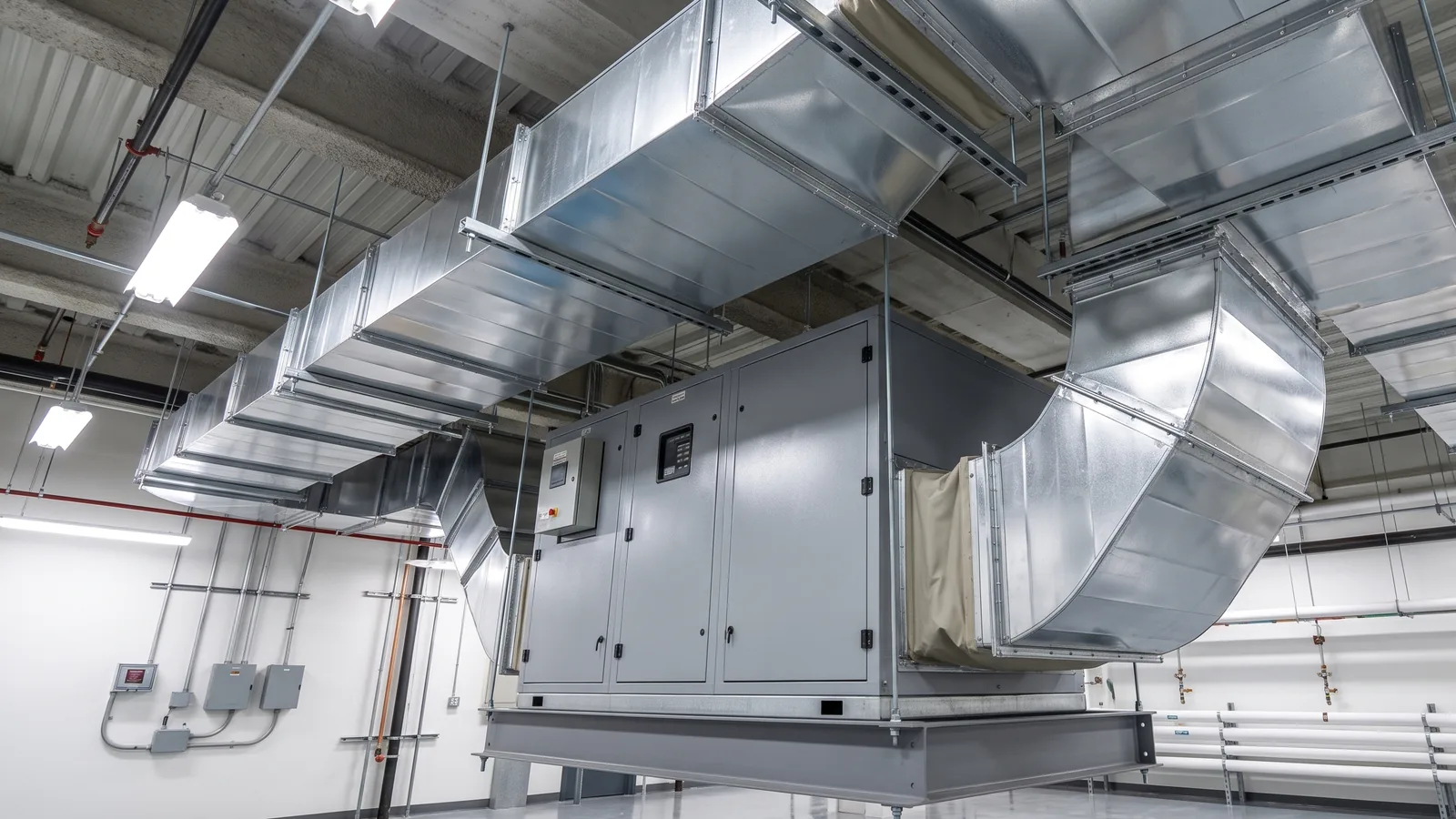
Moisture Cure Commercial supplies desiccant equipment for low-dew-point applications. Ducted configurations for distributed humidity control suit facilities that need conditioned air delivered through ductwork to several areas.
Industries Where This Matters Most
Corrosion is not limited to one sector. Any operation that stores, manufactures, or ships metal components faces it.
Some industries lose more than others when humidity is not managed.
- Steel distribution and warehousing: Coil steel, plate, and structural sections stored in unheated sheds. Surface rust can make stock fail a customer's finish specification even when structural integrity is unaffected. Set storage conditions around the product specification and handling cycle.
- Defence and military storage: Vehicles, weapons systems, and spare parts in long-term layup. Equipment stored across tropical and temperate climates can experience humidity spikes while idle.
- Mining equipment storage: Haul trucks, drill rigs, and crushers mothballed between projects. Assess exposed machined surfaces, bearings and electrical enclosures before equipment goes into storage.
- Automotive manufacturing: Bare metal body panels and stamped parts can develop surface corrosion while waiting for paint. Wetting can cause flash rust that requires rework. Humidity control for automotive manufacturing should account for handling time before coating.
- Electronics and PCB storage: Copper traces on circuit boards can corrode when moisture and corrosive residues are present. Controlling humidity in electronics storage protects both raw components and finished assemblies.
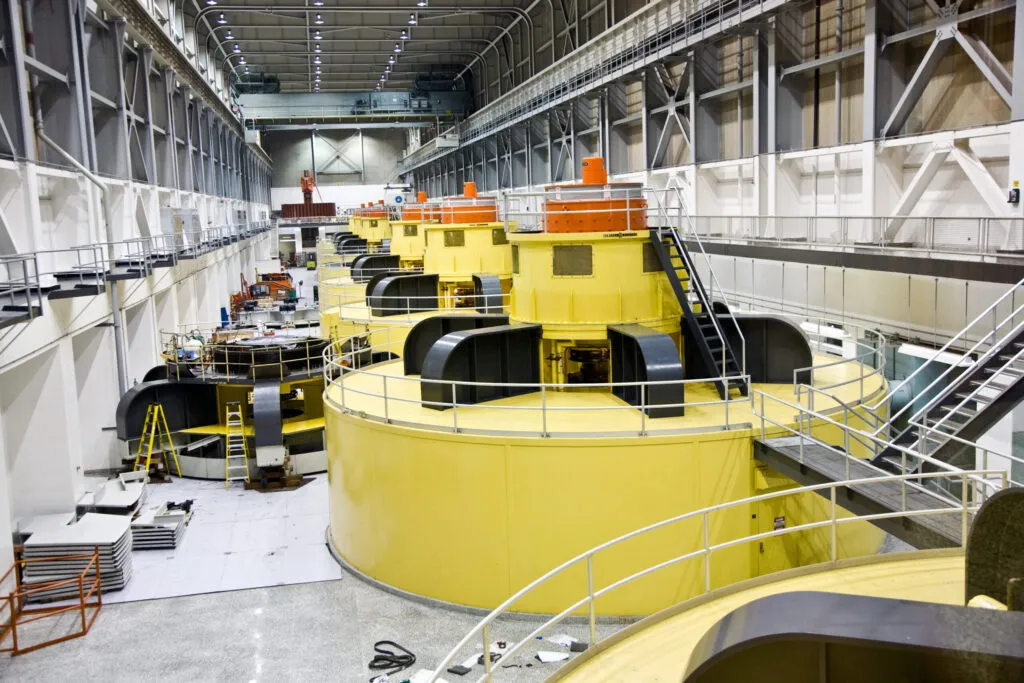
- Power generation: Turbines, generators, and boilers during planned outages. A preservation plan can use dry air in suitable isolated spaces to reduce moisture exposure on precision-machined surfaces.
Moisture Cure's work on humidity control during container-ship lay-up shows how enclosed bridge and control spaces can be protected while vessels are idle.
The documented project demonstrates the preservation application, rather than a desiccant-specific installation. Select the drying technology separately for the required temperature and humidity.
Sizing a Desiccant Unit for Corrosion Control
An undersized system may run continuously without reaching the target RH. Oversizing can increase equipment and operating costs.
- Define the target RH. Agree on an RH and dew-point requirement from asset condition, contamination risk and storage instructions. Record the assumptions rather than adopting a universal ceiling.
- Calculate the building volume. Measure length, width, and height in metres. Record connected rooms and airflow obstructions as well as the enclosure volume.
- Assess infiltration load. Every door opening, ventilation intake, and gap in the building envelope introduces outside air. A warehouse with frequent forklift traffic through open roller doors has a vastly higher infiltration load than a sealed storage room.
- Check ambient conditions. Use local design temperature and moisture conditions, including wet-weather operation. Annual average RH alone is insufficient for sizing an Australian facility.
- Factor in internal moisture sources. Wet concrete, incoming wet materials, washdown and personnel can add moisture. Include initial drying separately from the ongoing preservation load.
Ask Moisture Cure Commercial for a site assessment and sizing recommendation. Check expected door use and ventilation requirements before specifying capacity.
Calculate the moisture load, not just the air volume
For incoming air, a simplified steady moisture load is air volume flow multiplied by dry-air density and the difference between outdoor and target humidity ratios. Add internal moisture sources and any initial drying duty separately.
- Illustrative assumptions: incoming airflow 1,000 m³/h, approximate dry-air density 1.2 kg/m³, and a humidity-ratio difference of 0.004 kg water/kg dry air.
- Incoming-air moisture load = 1,000 × 1.2 × 0.004 = 4.8 kg/h, before internal sources or a design allowance.
- This is a calculation example, not a capacity recommendation; air density and humidity ratio must be evaluated for the design conditions.
- Process airflow in m³/h describes circulation; moisture removal in kg/h describes drying duty. Both ratings matter.
For a large enclosed storage space, the RY-3000M industrial desiccant model is a candidate to assess because it provides high process airflow and rotor-based drying. Its published capacity is rated at 20°C and 60% RH, so ask for performance at your lower preservation setpoint.
For a small isolated enclosure, choosing a 10-litre desiccant unit involves checking conditions and moisture ingress. A nominal daily extraction rating does not establish suitability for an industrial warehouse.
Desiccant Dehumidification vs Other Corrosion Methods
Dehumidification controls atmospheric moisture, one corrosion driver. Coatings, inhibitors and cathodic protection address other parts of the corrosion process and may be needed alongside dry-air storage.
| Method | How It Works | Limitations |
|---|---|---|
| Protective coatings (paint, powder coat) | Physical barrier between metal and moisture | Requires surface preparation and repair of coating damage. Unsuitable where the specification requires an uncoated surface. |
| VCI (volatile corrosion inhibitor) packaging | Chemical vapour forms a protective molecular layer on metal | Requires compatible packaging or an enclosure and a suitable exposure period. Follow product-specific replacement and material-compatibility instructions. |
| Oil and grease films | Moisture barrier applied directly to metal | Must be cleaned off before use. Attracts dust. Labour-intensive for large inventories. |
| Cathodic protection | Sacrificial anode or externally powered system reduces corrosion of the protected metal | Suited to applications with an appropriate electrolyte path, such as immersed or buried structures. Usually unsuitable for dry warehouse inventory. |
| Desiccant dehumidification | Removes moisture from the air across the entire space | Requires sealed or semi-sealed building envelope for best efficiency. Initial equipment investment. |
Dehumidification controls the air in a protected enclosure, provided it reaches the assets. Coatings, VCI wraps, and oil films provide protection at the item or surface level.
For high-value inventory or equipment that must remain ready for use, compare the labour, operating requirements and failure risks of each method over the planned storage period.
Many facilities combine methods. A dehumidified warehouse with VCI packaging for the most sensitive items, for example, provides redundant protection where the cost of failure justifies it.
Installation and Operational Considerations
A desiccant dehumidifier is only as effective as the space it is installed in. Leaks and airflow restrictions can prevent a correctly rated unit from maintaining its target conditions.
- Seal the building. Every gap, crack, and poorly fitting door is a path for humid outside air. Reduce uncontrolled leakage while retaining required safety and process ventilation.
- Position units to cover dead zones. Racking, stacked pallets, and equipment can block airflow. Place supply and return air paths to circulate conditioned air through the full storage volume.
- Monitor continuously. Install humidity sensors at multiple points, including the furthest point from the dehumidifier discharge. A sensor near the dry-air discharge may miss humid areas elsewhere in the space.
- Maintain the desiccant wheel. Service filters, rotor seals, the drive and regeneration components to the manufacturer's instructions. Select from the commercial humidity control equipment range with filtration and maintenance access appropriate to the site.
- Set up alarms. Set warning and high-humidity limits from the agreed preservation conditions, sensor accuracy and recovery time. Investigate leaks, ventilation changes, blocked filters, regeneration faults and sensor errors.
Check Dew Point at the Coldest Metal Surface
A satisfactory room RH reading can coexist with condensation on colder stock or pipework. The National Weather Service defines dew point as the temperature at which cooling air reaches saturation.
- Measure room temperature and RH, then determine the air dew point with a suitable instrument or psychrometric calculation.
- Measure the coldest relevant metal surface, including incoming stock, external-wall racking and idle equipment.
- Keep air dew point below that surface temperature with a design margin agreed for sensor uncertainty and operating changes.
- Remember that avoiding condensation alone does not guarantee corrosion prevention on contaminated surfaces.
Commissioning and recovery checks
Log conditions through normal door openings, overnight cooling and a representative operating cycle. Accept the installation against recorded conditions at the assets, not just the dehumidifier outlet.
- Confirm dry-air distribution behind racking and inside the intended equipment enclosures.
- Check regeneration exhaust cannot return to a process-air intake or the protected space.
- Test alarm delivery, fault reporting and restart behaviour after a power interruption.
- Record humidity recovery after door use and assign an operator to respond to excursions.
Measuring the Return on Corrosion Prevention
Build the corrosion-prevention business case from your own loss records. Separate moisture-related damage from failures that drying cannot address.
- Scrap and rework costs from corroded inventory or components
- Warranty claims and customer returns due to surface rust
- Maintenance hours spent wire-brushing, re-oiling, or re-coating stored items
- Replacement cost of corroded equipment and structural steel
- Insurance claims and downtime from corrosion-related failures
The Australasian Corrosion Association discusses how direct repair, downtime and prevention costs contribute to a corrosion business case. Use measured site losses and quoted operating requirements rather than assuming an industry-wide saving applies to your dehumidifier.
Include regeneration heating, fan operation, filter servicing and monitoring in the operating allowance. Ask for expected energy use at the specified conditions and compare it with measured damage and rework, rather than multiplying rated power by an assumed duty cycle.
Frequently Asked Questions
Use these questions to check the preservation brief before selecting equipment.
- Define the assets and exposure conditions.
- Confirm the target conditions, monitoring and response plan.
Humidity Targets and Surface Condition
What relative humidity prevents corrosion on stored steel?
A universal RH limit cannot guarantee protection for every steel asset. Agree on a setpoint from surface condition, contaminants, temperature and storage instructions, then verify conditions at the stock.
Can metal still corrode below 40% RH?
Yes, low room humidity does not eliminate every corrosion mechanism. The CCI guidance on caring for actively corroding iron explains that contaminated objects may keep corroding even under dry storage conditions.
Why use desiccant drying in an unheated warehouse?
Desiccant drying can suit low-temperature or low-dew-point preservation because it adsorbs vapour rather than relying on a cold coil to condense it. The selected model must still provide the required drying capacity at the warehouse's actual conditions.
Does a desiccant dehumidifier remove existing rust?
No, it controls moisture exposure rather than removing corrosion products or restoring lost metal. Assess affected items for cleaning, treatment or replacement, and address contamination before returning them to storage.
System Design and Operation
Where does the removed water go?
In a vented industrial rotor system, heated regeneration air carries the released moisture to an exhaust outlet. Route that humid air away from the protected enclosure and manage possible condensation within the exhaust duct.
Will heating the warehouse alone prevent corrosion?
Heating can lower RH while leaving the amount of water vapour largely unchanged. Metal that cools to the air dew point can still become wet, so assess both moisture removal and cold-surface temperatures.
Can one unit protect several rooms or equipment enclosures?
One unit can serve several spaces if the distribution design delivers sufficient dry air and provides suitable return paths. Check duct resistance, obstructions and humidity readings at remote assets before accepting the installation.
Should the system run continuously during equipment lay-up?
Preservation conditions need to be maintained throughout the idle period, but heater and fan operation depend on the system's controls and load. Use approved automatic controls, alarms and routine inspections rather than leaving the equipment unmonitored.
What maintenance affects corrosion protection?
Blocked filters, worn rotor seals, a failed drive or inadequate regeneration can reduce drying performance. Follow the selected manufacturer's maintenance schedule and confirm humidity recovery after servicing.
Can the same dry setting protect museum objects and machinery?
Mixed collections require an agreed balance between metal preservation and other material requirements. Humidity control for museums and archives addresses the wider storage context, which may call for separate dry cabinets for vulnerable metal objects.
Contact Moisture Cure Commercial for a consultation or site assessment to define your preservation conditions and moisture load. A desiccant system for low-dew-point corrosion control suits applications that need dry air at cold temperatures or low humidity; confirm the specification for your facility.