Keeping relative humidity below 40% stops metal corrosion before it starts.
Corrosion costs Australian industry billions annually. Warehouses, factories, and storage facilities lose equipment, inventory, and structural integrity to rust and oxidation that proper humidity control would prevent.
This article breaks down how a corrosion prevention dehumidifier works, which technology fits different environments, and how to size a system for your facility. Moisture Cure Commercial has spent 20+ years solving this exact problem for Australian businesses.
Need corrosion prevention equipment? Browse our full range of commercial dehumidifiers or explore desiccant dehumidifiers for cold-environment applications.
Why Humidity Causes Metal Corrosion
Metal corrosion is an electrochemical reaction that requires moisture. When relative humidity rises above a critical threshold, a thin film of water forms on metal surfaces and acts as an electrolyte, allowing iron atoms to oxidise.
Temperature swings make things worse. Warm, humid air contacting cooler metal surfaces creates condensation, which is why unheated warehouses and cold storage facilities are particularly vulnerable.
- Air pollutants like sulphur dioxide and salt spray lower the critical humidity threshold
- Dissimilar metals in contact create galvanic cells that speed up corrosion
- Poor ventilation traps moisture around stored equipment and raw materials
- Seasonal humidity spikes during Australian summers can push RH above 70% within hours
In coastal regions of Australia, salt spray compounds the problem by lowering the humidity level at which corrosion begins. The Bureau of Meteorology records average relative humidity above 60% for much of the year along the eastern seaboard.
The simplest way to break this cycle is removing moisture from the air before it settles on metal. That is exactly what a corrosion prevention dehumidifier does.
Humidity Thresholds for Corrosion Prevention
Different metals corrode at different humidity levels. Understanding these thresholds determines the right target for your dehumidification system.
| Metal Type | Critical RH Threshold | Recommended Storage RH |
|---|---|---|
| Mild steel | 40-45% | Below 40% |
| Cast iron | 40-45% | Below 40% |
| Aluminium | 50-55% | Below 45% |
| Copper and brass | 55-60% | Below 50% |
| Stainless steel | 60-65% | Below 55% |
For mixed-metal storage, target the lowest threshold in your inventory. Most facilities storing steel or iron should maintain RH below 40%.
Above 60% RH, corrosion rates climb sharply. Research from the Association for Materials Protection and Performance (formerly NACE International) estimates oxidation rates can be 100 to 2,000 times higher at elevated humidity compared to conditions below the critical threshold.
The practical takeaway is straightforward. If your facility stores any ferrous metal, keeping RH below 40% eliminates the conditions that allow corrosion to start.
Desiccant vs Refrigerant Dehumidifiers for Corrosion Control
Not all dehumidifiers perform equally in corrosion prevention applications. The choice between desiccant and refrigerant technology depends on your operating conditions.
Desiccant dehumidifiers pass air through a rotating wheel coated with silica gel or lithium chloride, adsorbing moisture directly. They operate from -20°C to +50°C, making them ideal for cold storage, unheated warehouses, and facilities with wide temperature swings.
Refrigerant dehumidifiers cool air below its dew point to condense moisture out. They work well above 20°C but lose effectiveness below 15°C as the evaporator coils ice over.
For corrosion prevention, desiccant units have clear advantages:
- They achieve lower target humidity levels (below 35% RH consistently)
- They operate in cold environments where refrigerant units fail
- They respond faster to humidity spikes
- They produce no condensate requiring drainage infrastructure
Moisture Cure Commercial supplies YAKE desiccant units rated for -20°C to +50°C. That range covers virtually every Australian industrial environment.
For facilities in consistently warm climates, refrigerant dehumidifiers can be more energy-efficient where temperatures stay above 20°C year-round.
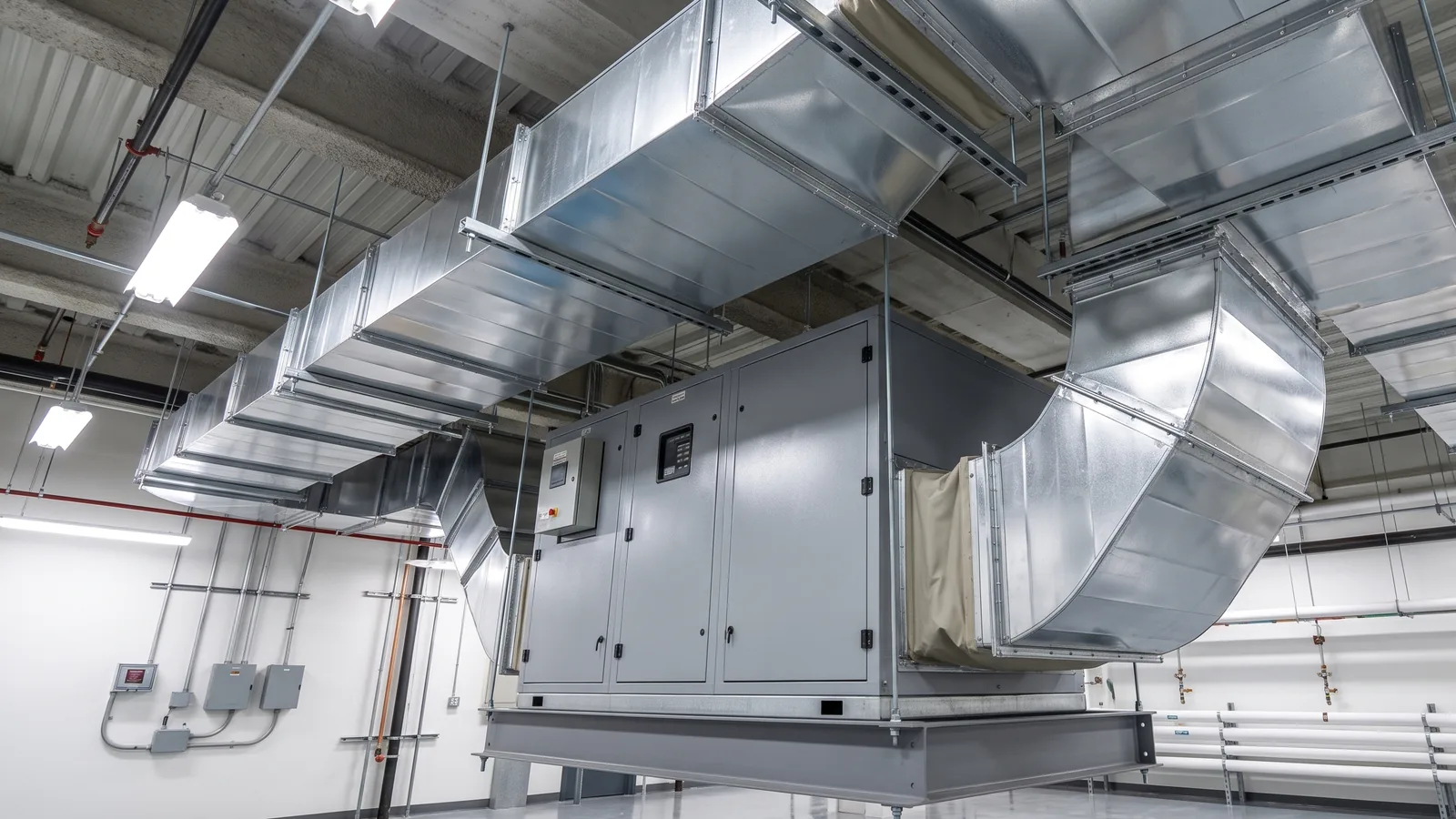
Facilities needing to integrate dehumidification into existing HVAC systems should consider ducted dehumidifier options. These connect directly to ductwork for whole-building moisture control.
Industries That Rely on Dehumidifier Corrosion Prevention
Corrosion prevention through dehumidification goes well beyond steel warehouses. Any facility storing, manufacturing, or handling metal components benefits from controlled humidity.
- Defence and military storage requires RH below 40% for weapons, vehicles, and spare parts in long-term reserve
- Mining operations in tropical Queensland and the Northern Territory see idle machinery rust within weeks without humidity control
- Automotive manufacturing rejects body panels and precision components at high rates when stored in humid conditions
- Electronics production loses yield to corroded solder joints and PCB traces at elevated humidity
- Water treatment plants face accelerated infrastructure corrosion from constant moisture exposure
- Port and marine facilities deal with salt-laden air that drops the critical RH threshold to as low as 35%
Food processing and pharmaceutical manufacturing also rely on humidity control to protect metal equipment and prevent contamination. Stainless steel processing lines still corrode when exposed to chlorides in humid air, particularly in coastal food production facilities.
Coastal operations face the highest risk. Facilities near Sydney, Melbourne, or Brisbane can explore location-specific solutions like desiccant dehumidifiers for Sydney facilities or commercial dehumidifiers for Melbourne operations.
How to Size a Corrosion Prevention Dehumidifier
Under-sizing is the most common mistake in corrosion prevention projects. A unit that cannot maintain target RH during peak humidity provides a false sense of security while corrosion continues.
Key variables for correct sizing:
- Room volume in cubic metres (length × width × height)
- Air changes per hour from doors, vents, loading docks, and building leaks
- Ambient conditions including local average and peak humidity levels
- Target RH (usually 35-40% for steel storage)
- Internal heat loads from equipment, lighting, and solar gain through roofing
The basic calculation multiplies room volume by air changes per hour by the moisture content difference between ambient and target conditions. The result gives litres of moisture removal needed per day.
Most facilities underestimate air changes per hour. A warehouse with two loading docks opened regularly might see 4-6 air changes per hour, each one introducing fresh moisture that the dehumidifier must handle.
Oversizing by 15-20% is standard practice for corrosion-critical applications. The marginal cost of a slightly larger unit is far less than the cost of corrosion damage during a humidity spike your system could not handle.
Getting the sizing wrong costs more than the dehumidifier itself. Moisture Cure Commercial provides free sizing assessments for Australian facilities. Contact us with your room dimensions and storage requirements for a tailored recommendation.
Layered Protection for High-Value Assets
Dehumidification provides the foundation, but high-value or long-term storage benefits from multiple layers of corrosion prevention.
- VCI (Volatile Corrosion Inhibitor) packaging releases protective molecules that adsorb onto metal surfaces, reaching enclosed spaces a dehumidifier cannot
- Protective coatings and oils add a physical barrier against moisture contact on exposed surfaces
- Humidity monitoring sensors with data logging track conditions around the clock and alert when RH drifts above target
- Automated controls link dehumidifiers to sensors so the system responds to changing conditions without manual intervention
The Australasian Corrosion Association recommends combining environmental control with direct protection methods for assets valued above $100,000. This layered approach catches failures in any single system before damage occurs.
For facilities managing inventory worth $500,000 or more, a properly sized industrial dehumidification system typically pays for itself within 12 months through reduced corrosion losses.
Take Action Before the Next Humid Season
Corrosion does not wait for a convenient time. Every week of uncontrolled humidity is cumulative metal damage that cannot be reversed.
A Moisture Cure Commercial site assessment covers:
- Current humidity levels measured on-site
- Corrosion risk factors specific to your stored materials and building type
- Recommended system type and capacity
- Installation requirements and expected energy costs
Contact us to book a free assessment. With 20+ years of experience across Australian commercial and industrial facilities, we get installations right the first time.
Browse our desiccant dehumidifier range or call our team to discuss your corrosion prevention requirements.