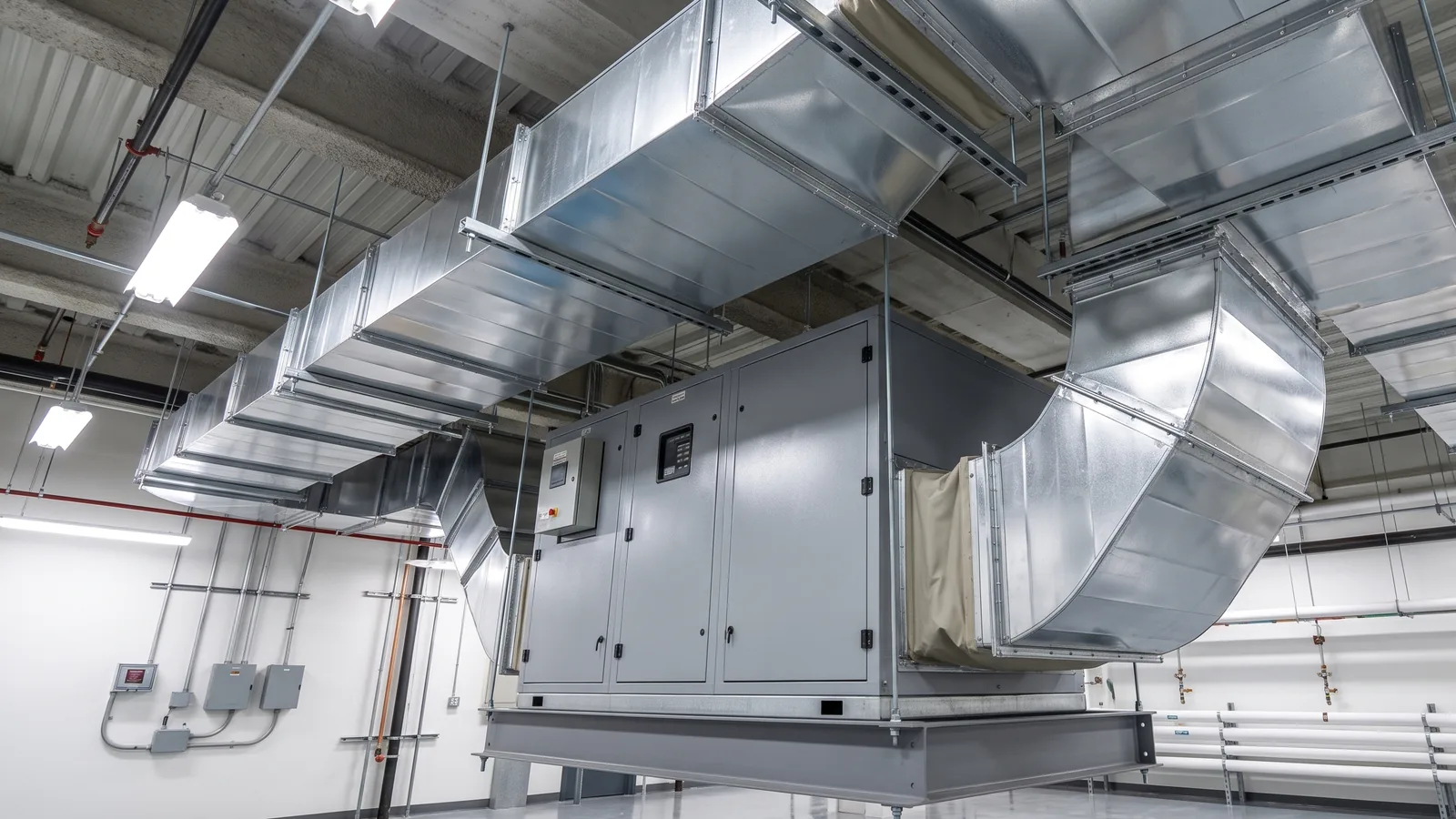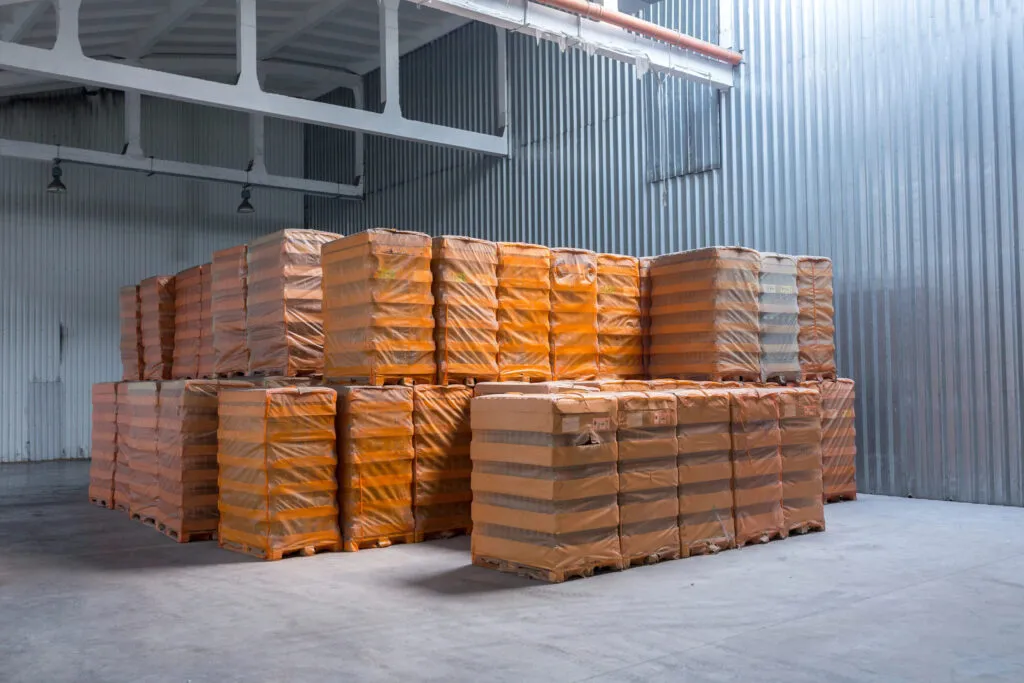
Desiccant dehumidifiers are often considered for cold spaces and processes requiring low humidity.
Across Australian industrial and commercial facilities, moisture control challenges vary with climate zone, building envelope, and operational requirements. Refrigerant performance depends on inlet temperature and humidity, so there is no single temperature or relative humidity cut-off that applies to every model.
This article examines how desiccant technology works, where it outperforms refrigerant systems, and what Australian facility managers and engineers should evaluate when specifying moisture control equipment for commercial applications.
How Desiccant Dehumidification Technology Works
Desiccant systems remove moisture through adsorption rather than condensation. A rotating desiccant wheel, containing a desiccant such as silica gel or zeolite, attracts and holds water vapour as humid air passes through its structure.
The wheel continuously rotates between two airstreams. One airstream delivers moisture-laden air that requires drying, while a smaller heated regeneration airstream removes captured moisture and exhausts it outside the conditioned space.
- Process air passes through the desiccant wheel and loses moisture content to the hygroscopic material
- The dried air exits warmer because adsorption releases heat
- Heated regeneration air strips moisture from the wheel at the temperature specified for that system
- The moisture-laden regeneration air exhausts to atmosphere or connects to a ducted extraction system
Open-cycle industrial desiccant units discharge moisture through a wet-air exhaust rather than collecting it in a tank. Confirm the selected model’s arrangement: removing the need for a condensate drain does not remove the need to manage the wet exhaust air.
Desiccant Rotor Materials for Commercial Equipment
The rotor material determines what temperature, humidity and chemical environment a desiccant dehumidifier can handle. Specifying the wrong material for the process air leads to premature degradation, reduced extraction or both.
- Silica gel rotors suit moderate drying duties across a broad temperature range and tolerate most clean industrial airstreams. They are the most common choice for general commercial and warehouse applications.
- Zeolite (molecular sieve) rotors withstand higher regeneration temperatures and achieve lower outlet dew points than silica gel. Pharmaceutical dry rooms, lithium battery manufacturing and other deep-drying processes often require zeolite rotors to reach their validated moisture limits.
- Composite and polymer-based media are used in some compact commercial units. Performance depends on the specific formulation, so compare datasheet figures at your design conditions rather than assuming a material class is uniformly better or worse.
Ask the supplier which airborne chemicals, solvents or particulates the selected material cannot tolerate. A food packaging line, a pharmaceutical cleanroom and a mining store each expose the rotor to different contaminants, and the wrong match shortens service life well before the mechanical components wear out.
When Desiccant Systems Outperform Refrigerant Technology
Refrigerant dehumidifiers function by cooling air below its dew point to condense water vapour. This approach becomes increasingly inefficient as temperature drops or when applications require very low relative humidity levels.
Low Temperature Environments
At low inlet temperatures, refrigerant equipment can lose extraction capacity and may need defrost cycles. Compare each model’s cold-condition performance curve rather than assuming all refrigerant units stop working at the same temperature.
Desiccant drying removes moisture without cooling the process air to condense water, which makes it useful in cold storage facilities, unheated warehouses, and seasonal operations. Its capacity still changes with operating conditions; confirm the permitted temperature range and available moisture removal at your design point.
Facilities storing temperature-sensitive goods face a compounding problem: refrigerant dehumidification adds cooling load to an already cold space. Where this applies, cold storage humidity control strategies should be assessed alongside the dehumidifier selection.
Deep Drying Applications
Deep drying should be specified using the required dew point and process temperature, rather than a universal relative humidity target. Product requirements and the complete air-treatment design determine whether desiccant, refrigerant or combined equipment is appropriate.
- Pharmaceutical manufacturing handling hygroscopic powders with validated moisture limits
- Electronics assembly where moisture causes soldering defects and component damage
- Lithium battery dry rooms demanding extremely low moisture levels to prevent electrolyte degradation
- Food packaging operations where product shelf life depends on a controlled moisture environment
- Museum and archive storage protecting moisture-sensitive artefacts and documents
When planning desiccant drying for stored mining equipment, account for moisture entering through enclosure leaks and whether dry air reaches enclosed components.
Document the acceptable moisture conditions before equipment selection. A powder handling room, an archive and a battery dry room have different requirements, even when each is described as needing “dry air”.
Operational Considerations for Australian Commercial Applications
Australian facilities face different outdoor moisture loads across climate zones. A specification developed for temperature-controlled Sydney premises needs reassessment for Darwin’s tropical air or Tasmania’s cold winters.
Energy Consumption Patterns
Desiccant systems use energy for regeneration heating and fans. Compare electricity, available heat sources and any additional cooling demand using the same operating hours and moisture duty; access to gas or solar electricity alone does not establish which system will cost less to run.
Energy assessment: Ask for whole-system energy use at the required outlet condition, including fans, regeneration and cooling. The US Department of Energy’s technical description of desiccant systems explains heat regeneration and the use of post-cooling to remove heat added during drying.
Integration With Existing HVAC Infrastructure
Commercial facilities often need humidity control integrated with broader climate management systems. Ducted dehumidifiers for centralised humidity control suit spaces needing air distribution through a planned duct network, subject to airflow and pressure checks.
- Ducted configurations serve multiple zones through a centralised dehumidification plant
- Standalone units occupy floor space and may still need a regeneration exhaust duct
- Equipment layout must provide access to filters, the rotor and the regeneration heater
- Rooftop installations remove equipment from production floors while requiring weather-resistant enclosures
Where the building management system (BMS) already controls air handling, confirm the desiccant controller can accept the same protocol. Mismatched controls between the dehumidifier and the existing HVAC result in the two systems fighting each other, wasting energy and failing to hold the target humidity.
Sizing and Specification Requirements
Capacity calculations need to reflect how the facility operates. Undersized equipment may run continuously without achieving target conditions, while oversizing without suitable capacity control can make stable humidity harder to maintain.
Proper sizing requires calculating moisture load from multiple sources rather than simply matching equipment capacity to room volume. Record normal operation and peak events, such as washdown or loading dock activity, separately so the supplier can assess recovery time.
Moisture Load Contributors
- Outdoor air infiltration through doors, loading docks, and building envelope leakage
- Fresh air ventilation required by building codes or process requirements
- Personnel, with moisture generation assessed for occupancy and activity level
- Process moisture from open tanks, wet products, washing operations, or manufacturing processes
- Product moisture release during storage, particularly hygroscopic materials seeking equilibrium with ambient conditions
For example, a warehouse with frequent loading dock activity and wet incoming stock can have a much larger moisture load than a sealed store of the same floor area. Record door opening frequency and ventilation airflow alongside dimensions.
In facilities where warehouse humidity control must account for large, unsealed spaces, door activity alone can double the design moisture load compared to a closed-envelope calculation.
Performance Specifications
Datasheets may express moisture removal in litres per day or kilograms per hour, with airflow listed separately in cubic metres per hour. These figures describe different things: high airflow alone does not establish how much water the unit can remove.
Request manufacturer performance data at your specific operating conditions rather than relying on a headline extraction rating. Put the inlet temperature, inlet humidity, outlet condition and regeneration arrangement next to every capacity figure in the tender comparison.
What to include in a desiccant selection schedule
Ask each supplier to complete the same schedule so procurement can compare equivalent duties. Separate the room target from the dry-air outlet condition: the outlet may need to be drier to offset incoming moisture.
- State the room temperature range, target relative humidity or dew point, and permitted excursions.
- Request moisture removal at the design inlet conditions, process airflow and available external static pressure.
- Confirm dry-air discharge temperature and whether post-cooling is included.
- Record regeneration airflow, heat input and wet-air duct requirements.
- Specify controls, remote alarms, restart behaviour and the required recovery after doors open.
Agree how commissioning will demonstrate the duty during normal operation. A satisfactory humidity reading in an empty, closed room does not establish performance during a production shift.
Comparison With Alternative Dehumidification Technologies
Australian facilities evaluating moisture control systems typically consider desiccant technology alongside refrigerant systems and occasionally hybrid approaches. Each technology suits specific application profiles.
| Factor | Desiccant Technology | Refrigerant Technology |
|---|---|---|
| Operating temperature range | Suitable for cold applications within model limits | Check low-temperature capacity and defrost behaviour |
| Achievable humidity level | Suitable for low dew points with an appropriate design | Depends on coil design and inlet conditions |
| Energy source | Regeneration heat and electric fans | Electric compressor and fans |
| Moisture discharge | Wet-air exhaust on open-cycle systems | Condensate collection or drainage |
| Maintenance | Filters, rotor, seals, drive and heater checks | Filters, coils, drainage and refrigeration checks |
| Noise level | Check fan and duct sound data | Check compressor and fan sound data |
Facilities with limited plant space can assess small desiccant units for local moisture control, provided their capacity and exhaust arrangement suit the duty. Refrigerant dehumidifiers for warmer operating conditions are worth comparing where the required humidity can be achieved efficiently by condensation.
For a detailed breakdown of how desiccant and compressor dehumidifiers compare across different facility types, review capacity, running costs and suitability side by side before committing to either technology.
Hybrid Desiccant-Refrigerant Configurations
Some projects benefit from combining both technologies in a single air path. A refrigerant pre-cooler removes the bulk moisture load at moderate energy cost, and the desiccant stage then takes the air down to the final dew point that refrigeration alone cannot reach efficiently.
- The refrigerant stage handles the coarse removal, reducing the regeneration energy the desiccant stage requires
- Total energy consumption can be lower than either technology operating alone at the same outlet condition
- Controls must coordinate both stages so the refrigerant section does not overcool or freeze while the desiccant section runs at reduced load
Ask the supplier whether a hybrid arrangement suits your duty before defaulting to a single-technology solution. The additional complexity only pays off where the process genuinely needs drier air than a refrigerant system can deliver economically and more airflow than a standalone desiccant unit can manage on its own energy budget.
Installation and Infrastructure Planning
Successful desiccant dehumidifier installations require coordination between electrical, HVAC, and building services trades. Planning these integration points during design can reduce changes during installation.
Electrical Supply Requirements
Electric regeneration can place a substantial heating load on the supply, but phase and power requirements vary by model. Request the rated amperage, supply voltage, protection requirements and electrical load schedule before committing to a unit.
Confirm available electrical capacity before specifying equipment. Australian Standards AS/NZS 3000 (Wiring Rules) govern the installation, and the switchboard may need additional circuit protection for the regeneration heater draw. Include any electrical upgrades in the installation budget.
Regeneration Air Management
- Route moisture-laden regeneration air outdoors to a suitable discharge point, away from air intakes and openings
- Check wet-air duct material, insulation and fall against the installation manual so condensate cannot run back into the unit
- Exhaust termination needs weather protection and back-draught prevention
- The designer must check airflow balance and any make-up air needed to avoid unwanted room depressurisation
Do not connect the wet-air outlet to an existing exhaust system without the designer’s approval. Verify allowable back-pressure, airflow balance and condensation management before sharing any ductwork.
Maintenance and Long-Term Operation
A standalone desiccant rotor unit has no refrigeration compressor, but its filters, fans, drive, seals and heater still need servicing. Combined systems may also contain refrigeration components with their own maintenance requirements.
Maintenance planning: Use the selected model’s service schedule and shorten inspection intervals where dust or process contamination warrants it. Include filter condition, rotor cleanliness, seals, drive operation, airflow and sensor calibration in the maintenance record.
Rotor service life depends on contamination, operating conditions and maintenance, so a generic replacement age is not a reliable procurement assumption. For a closer look at the factors affecting how long desiccant dehumidifiers last in commercial service, review contamination exposure, operating hours and inspection history alongside the manufacturer’s guidance.
Track inlet and outlet conditions during service visits so declining performance can be investigated before production is affected. Check filters, airflow and controls before assuming the rotor needs replacement.
Selecting the Right Commercial Moisture Control Partner
Commercial and industrial dehumidification projects require engineering expertise beyond simple equipment supply. Proper application engineering assesses site-specific conditions, calculates accurate moisture loads, and specifies equipment selected for the site’s temperature and moisture load.
Look for suppliers offering support across specification, installation coordination, commissioning, and ongoing technical service. Comparing commercial dehumidifiers across the available range helps match the technology to your temperature and moisture duty.
- Application engineering support to calculate loads and verify equipment suitability
- Equipment selection from multiple technology platforms including desiccant, refrigerant, and hybrid systems
- Technical documentation for mechanical consultants and installation contractors
- Commissioning support to verify performance against design specifications
- Ongoing service capability for maintenance and emergency support
Ask who will provide local technical support, replacement filters and service parts, and what the warranty covers in your operating environment. Include these answers in the procurement review alongside the performance selection.
Moisture Cure Commercial supplies desiccant dehumidification systems for commercial facilities, suited to cold spaces and applications requiring dry process air. Discuss the required outlet condition and installation constraints with the technical team before selecting equipment.
Desiccant dehumidifier questions for Australian facilities
Use these answers to prepare a selection brief; the chosen model’s performance data and installation manual determine its limits.
What is the best desiccant dehumidifier for an Australian facility?
The best fit is a model selected against measured inlet conditions, moisture load and the required outlet condition. Ask for performance at that duty, plus confirmation of power, exhaust routing, controls and service access before comparing equipment.
What are the disadvantages of a desiccant dehumidifier?
Regeneration needs heat, the dry air leaves warmer, and an open-cycle unit needs a wet-air exhaust route. These constraints matter in cold rooms and temperature-sensitive processes, where the cooling plant must also handle the heat added by drying.
Are desiccant dehumidifiers worth using in cold warehouses?
They are worth assessing where cold inlet air limits refrigerant extraction or the stock requires a low dew point. Compare seasonal performance and total energy at the required duty, then check whether sealing doors and other leakage paths would reduce the load.
Can a desiccant dehumidifier work below freezing?
Some industrial models can serve sub-zero applications, but this must be confirmed in the model’s operating limits and selection data. The design must also address the wet-air discharge, cold surfaces and any components exposed to freezing conditions.
Does a commercial desiccant dehumidifier need a drain?
An open-cycle rotor unit normally removes moisture through a wet-air exhaust rather than a water tank. Other arrangements may collect condensate, and even a wet-air exhaust duct needs a plan for condensation, so check the installation manual.
How do you size a desiccant dehumidifier?
Calculate the moisture entering through outdoor air, doors, occupants, products and wet processes at the design conditions. Select enough removal capacity and airflow to hold the target and meet the agreed recovery time after peak events.
Should the specification use relative humidity or dew point?
Use the measure required by the process, and always state the corresponding air temperature when specifying relative humidity. For condensation control or very dry processes, ask the designer to define a dew point limit and how it will be measured.
Can desiccant drying be connected to existing HVAC?
Yes, where the designer verifies airflow, pressure, controls and the effect of warmer dry air on cooling demand. Confirm the regeneration intake and wet-air exhaust separately from the conditioned-air circuit.
How often does the desiccant material need replacing?
A continuously regenerated rotor is not a disposable moisture absorber that needs changing whenever it becomes wet. Follow the manufacturer’s inspection criteria and investigate contamination or damage rather than budgeting around a generic lifespan.
Technology and specification questions
What desiccant material suits pharmaceutical or battery dry rooms?
Zeolite (molecular sieve) rotors achieve lower outlet dew points than silica gel and tolerate higher regeneration temperatures. The final choice depends on the validated moisture limit, the airborne contaminants present and the available regeneration energy. Ask the supplier for selection data at your design conditions rather than assuming one material outperforms another in every application.
Is a hybrid desiccant-refrigerant system more efficient?
A hybrid arrangement can reduce total energy use where the duty calls for drier air than a refrigerant unit delivers economically. The refrigerant stage removes the bulk moisture and the desiccant stage finishes to the target dew point. Additional controls and maintenance apply, so the complexity only pays off when neither technology alone meets the duty efficiently.
How does Australian climate affect desiccant dehumidifier sizing?
Outdoor moisture loads vary widely between climate zones. A facility in tropical Darwin faces high ambient humidity year-round, while a Tasmanian cold store contends with low temperatures and seasonal condensation. Design the system around the worst-case moisture load for the site’s actual climate data, not a national average.
Talk to Moisture Cure Commercial
- Send room dimensions and logged temperature and humidity readings.
- Include operating hours, door activity and wet processes.
- Identify available power, exhaust routes and service access.
For a permanent installation, plan ducted dehumidifier sizing and layout alongside the building services design. Moisture Cure Commercial can help assess your moisture load and equipment options.
Contact Moisture Cure Commercial for a consultation or site assessment to discuss a desiccant system for your facility.